In the dynamic world of social work, understanding a client’s mental health is absolutely crucial. It’s the foundation upon which effective support plans are built, guiding interventions that truly make a difference in people’s lives. Without a clear picture of someone’s psychological well-being, their challenges, and their strengths, providing tailored and impactful assistance becomes a significant hurdle.

That’s why having a structured approach to gathering this vital information isn’t just helpful; it’s essential. Think of it as your roadmap. It ensures you don’t miss important details, that your assessments are consistent, and that every client receives the same high standard of care right from the start. A well-designed tool can streamline this entire process, helping you focus more on the client and less on remembering every single question you need to ask.
The Core Components of an Effective Social Work Mental Health Assessment
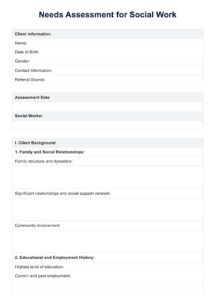
When we talk about assessing mental health in a social work context, we’re looking beyond just symptoms. We’re delving into a person’s entire biopsychosocial world, understanding how their environment, relationships, history, and physical health all intersect with their emotional and psychological state. A comprehensive assessment is a holistic narrative, not just a checklist of disorders. It helps us paint a full picture, which is where a robust social work mental health assessment template truly shines.
An effective template guides you through gathering critical information systematically. It starts with the basics but quickly moves into more nuanced areas, ensuring that all relevant factors are considered. This structured approach helps in identifying underlying issues, potential risk factors, and existing coping mechanisms that might not be immediately apparent during an initial conversation.
Key Areas to Cover
Here’s a closer look at the vital sections you’d typically find within an excellent assessment framework:
-
Client Demographics and Presenting Problem: This section captures who the client is – their age, gender, ethnicity, living situation – and, most importantly, *why* they are seeking help now. What are their immediate concerns? What do they hope to achieve?
-
Social History: Understanding a client’s journey involves exploring their family background, educational and employment history, relationship status, and cultural identity. How have these elements shaped their experiences and current situation?
-
Medical History: Physical health and mental health are often intertwined. Details about past and current medical conditions, medications, allergies, and substance use history are crucial for a complete picture.
-
Mental Status Examination (MSE): This is a snapshot of the client’s current mental state. It assesses appearance, behavior, mood, affect, speech, thought process and content, perceptions, cognition, and insight. It’s a clinical observation that informs immediate intervention planning.
-
Risk Assessment: One of the most critical aspects. This involves evaluating any risk of harm to self or others, including suicidal ideation, homicidal ideation, or any signs of neglect or abuse. Safety planning is often initiated directly from this section.
-
Strengths and Resources: It’s not just about problems! Identifying a client’s personal strengths, coping skills, support networks, and community resources is paramount. These are the building blocks for resilience and recovery.
-
Goals and Treatment Plan: Based on all the gathered information, this section outlines the client’s identified goals and the proposed interventions. It’s often collaborative, ensuring the plan aligns with the client’s wishes and needs.
Each of these components plays a vital role in constructing a comprehensive assessment. By diligently working through them, social workers can develop well-informed, client-centered intervention strategies.
Why Using a Social Work Mental Health Assessment Template Matters
Implementing a dedicated social work mental health assessment template into your practice isn’t merely about following a protocol; it’s about elevating the standard of care you provide. For busy practitioners, it acts as a reliable co-pilot, ensuring that even under pressure, no stone is left unturned when evaluating a client’s mental health needs. This systematic approach fosters a sense of consistency, which is particularly beneficial in multi-disciplinary teams where different professionals might be involved in a client’s care journey.
One of the most immediate benefits is the remarkable increase in efficiency. Instead of piecing together information haphazardly or relying solely on memory, a template provides a clear structure. This means less time spent figuring out what to ask next and more time engaging meaningfully with the client. It streamlines the documentation process, making it quicker and less prone to errors, which ultimately frees up valuable time for direct client interaction and intervention.
Beyond efficiency, a good template significantly enhances the comprehensiveness of your assessments. It nudges you to explore areas you might otherwise overlook, especially when dealing with complex cases. This thoroughness leads to a more accurate understanding of the client’s situation, allowing for more precise diagnoses (where applicable) and, crucially, more effective and tailored intervention plans. It’s about building a robust foundation for all future work with that individual.
Furthermore, templates play a crucial role in maintaining professional standards and ethical responsibilities. They provide clear, defensible documentation that can be essential for supervision, case reviews, and even in legal contexts. When an assessment is consistently thorough and well-documented, it demonstrates due diligence and a commitment to best practices, safeguarding both the client and the practitioner. It also supports training for new social workers, offering a practical guide to the assessment process.
Ultimately, using a structured approach helps to ensure equity in service delivery. Every client, regardless of their presenting issue or the social worker they encounter, benefits from the same high-quality, comprehensive assessment. This commitment to thoroughness not only supports individual well-being but also strengthens the overall integrity and effectiveness of social work practice.
Embarking on the journey of mental health assessment requires both skill and a thoughtful, systematic approach. It’s about weaving together various threads of a client’s life story to form a coherent understanding of their current state and future needs. The right tools empower social workers to navigate these complexities with confidence, ensuring that every piece of critical information is thoughtfully considered.
By adopting well-structured assessment methods, professionals can build stronger foundations for intervention, foster greater trust with their clients, and ultimately contribute more effectively to healing and well-being. It’s an investment in both professional practice and, most importantly, in the lives of the individuals we serve.