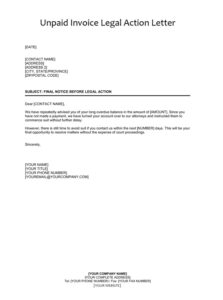
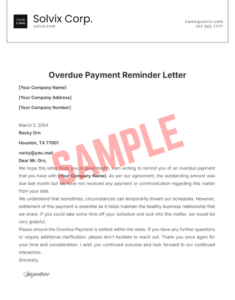
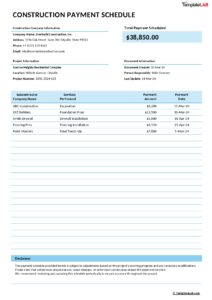
Securing payment for work performed or materials supplied on a construction project can often be a complex challenge. Many contractors, subcontractors, and suppliers face situations where their invoices go unpaid, putting their financial stability at risk. This is precisely where a well-crafted mechanics lien intent to lien letter template becomes an invaluable tool, offering a crucial step in protecting your payment rights and encouraging debtors to settle outstanding balances before more drastic legal action is required.
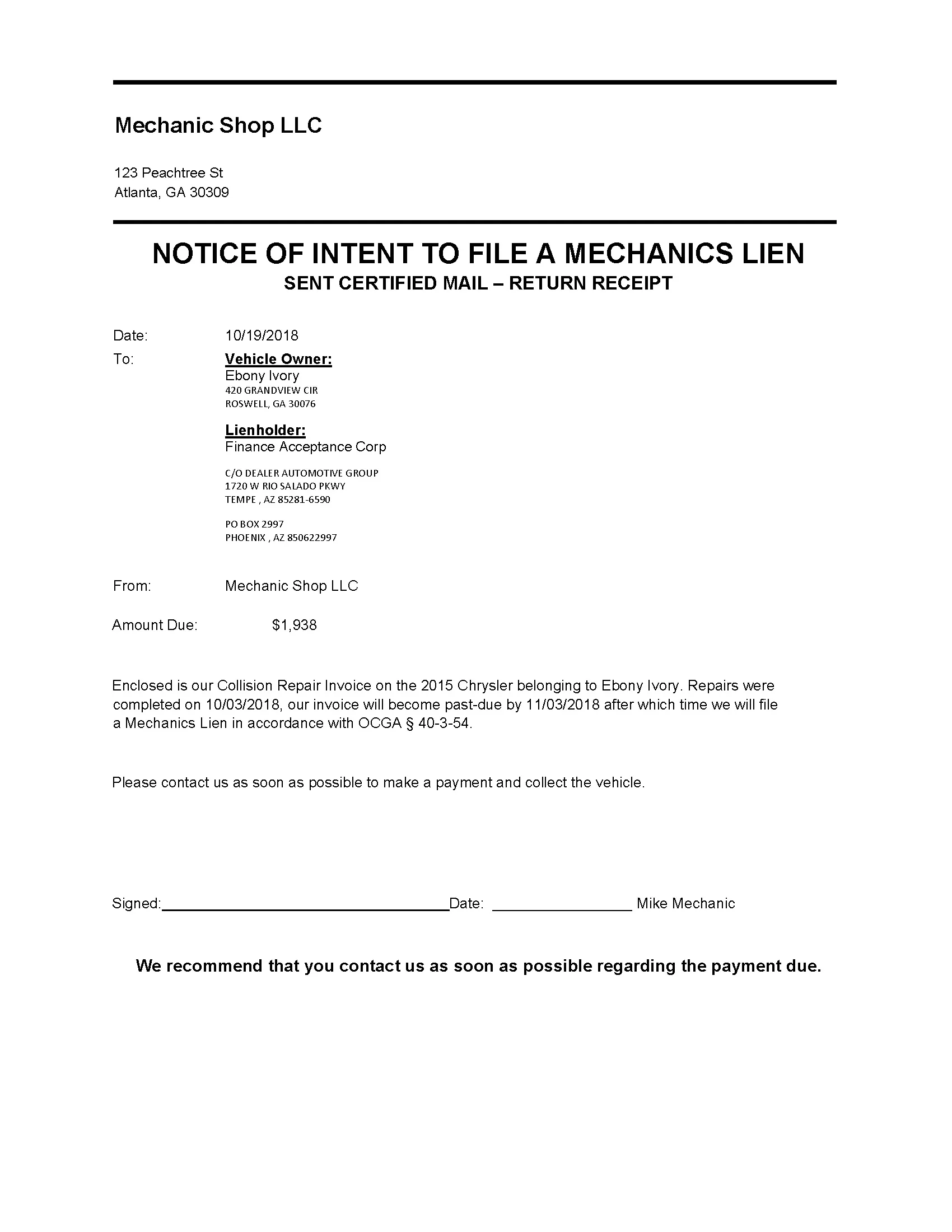

Understanding how and when to use such a document can significantly improve your chances of getting paid without lengthy court battles. This article will guide you through the importance of a notice of intent to lien, explain its key components, and provide a practical mechanics lien intent to lien letter template you can adapt for your own needs. We will explore best practices for sending this pre-lien notice and highlight how this strategic communication can often resolve payment disputes efficiently.
Understanding the Purpose of an Intent to Lien Notice
A notice of intent to lien, also commonly referred to as a pre-lien notice or a preliminary notice in some states, serves as an official warning to property owners, general contractors, and sometimes lenders that a mechanics lien may be filed if payment is not received. This letter acts as a formal demand for payment, clearly stating the amount owed and the intent to encumber the property with a lien if the debt remains unsettled. It’s an essential preliminary step in the lien process, often required by state law before a lien can actually be filed.
Sending this letter can often spur the responsible party into action. Property owners and general contractors typically want to avoid the complexities and negative implications of a mechanics lien on their property or project. A filed lien can complicate property sales, refinancing, and further construction, making the intent to lien letter a powerful motivator for timely payment. This formal communication also helps establish a clear record of your efforts to collect payment, which can be beneficial if legal action becomes necessary later.
It is crucial to understand that the specific requirements for an intent to lien letter vary significantly by state. Some states mandate this notice for all claimants, while others only require it for certain parties (e.g., those without a direct contract with the owner) or for projects exceeding a certain value. Missing these deadlines or failing to include specific information can invalidate your right to file a mechanics lien. Therefore, using a reliable mechanics lien intent to lien letter template and customizing it with state-specific details is vital.
Crafting an Effective Mechanics Lien Intent to Lien Letter Template
When preparing your intent to lien letter, precision and clarity are paramount. The letter should leave no doubt about your claim, the amount owed, and the potential consequences of non-payment. Below is a sample mechanics lien intent to lien letter template that you can adapt. Remember to fill in the bracketed information with your specific project and claim details.
[Your Company Letterhead]

[Date]

VIA CERTIFIED MAIL, RETURN RECEIPT REQUESTED
AND FIRST-CLASS MAIL

[Owner's Name]
[Owner's Address]
[City, State, Zip Code]

[General Contractor's Name (if applicable)]
[General Contractor's Address (if applicable)]
[City, State, Zip Code (if applicable)]

Subject: Notice of Intent to File Mechanics Lien for [Project Name]

Dear [Mr./Ms. Owner's Last Name or General Contractor's Last Name],

Please consider this letter as a formal Notice of Intent to File a Mechanics Lien on the property located at [Project Property Address] (the "Property"). This notice is being sent pursuant to [Relevant State Statute, e.g., [State] Code § XXXX.XX], informing you of our intention to pursue all available legal remedies to secure payment for services and materials provided.

Our company, [Your Company Name], provided [Labor/Services/Materials] to the Property beginning on [Start Date of Work] and concluding on [End Date of Work], under an agreement with [Name of Party You Contracted With]. The total amount due and owing for these services and materials is [Total Amount Owed] (detailed in attached invoices). A breakdown of the outstanding invoices is as follows:

*   Invoice #[Invoice Number 1]: [Amount Due 1]
*   Invoice #[Invoice Number 2]: [Amount Due 2]
*   Invoice #[Invoice Number 3]: [Amount Due 3]

Despite our repeated attempts to collect this outstanding balance, as of the date of this letter, payment has not been received. We hereby demand full payment of [Total Amount Owed] within [Number] days from the date of this notice.

If full payment is not received by [Date – e.g., 10-15 days from letter date], [Your Company Name] will proceed with filing a Mechanics Lien against the aforementioned Property without further notice. Please be advised that the filing of a Mechanics Lien will encumber the Property, potentially affecting its sale, refinancing, or further development, and may result in additional legal costs and fees.

We urge you to contact us immediately to resolve this matter and avoid the necessity of filing a Mechanics Lien. You may reach us at [Your Phone Number] or [Your Email Address].

Sincerely,

[Your Signature]
[Your Printed Name]
[Your Title]
[Your Company Name]

Enclosures: Copies of unpaid invoices, contract (if applicable)
Remember to attach all relevant supporting documents, such as unpaid invoices and a copy of your contract. This provides clear evidence of the debt and the services or materials provided. Utilizing a robust mechanics lien intent to lien letter template like this ensures you cover the essential legal and practical elements needed to prompt payment and protect your interests effectively.
Sending Your Notice of Intent to Lien Effectively
Once your notice of intent to lien is complete, the method of delivery is just as important as the content itself. Most states require that the notice be sent via certified mail with a return receipt requested. This provides undeniable proof that the letter was sent, received, and by whom, which can be critical evidence if a dispute arises or if you proceed with filing the actual mechanics lien.
Consider also sending the letter via first-class mail, or even email, as a backup, though certified mail is typically the legally recognized method. Ensure you keep copies of the sent letter, the certified mail receipt, and the return receipt for your records. This diligent record-keeping is a fundamental aspect of protecting your payment rights and helps build a strong case if further legal action becomes necessary to secure your rightful payment.
Taking proactive steps and leveraging tools like a carefully prepared mechanics lien intent to lien letter template can significantly empower construction professionals. This strategic document not only serves as a powerful warning but also streamlines the process of collecting overdue payments, allowing you to focus on your projects rather than chasing down invoices. Implementing these best practices will help you safeguard your financial interests in the competitive construction landscape.