Running a successful cleaning business isn’t just about sparkling floors and spotless surfaces; it’s also profoundly about ensuring the safety of your team and clients. From the moment your cleaners step onto a property until the job is done, they navigate a variety of environments, each presenting its own set of potential hazards. Thinking ahead and preparing for these risks is not just good practice; it’s essential for peace of mind and business continuity.
That’s where a well-structured approach to safety comes in. Identifying, evaluating, and controlling potential dangers before they lead to an accident is a cornerstone of responsible business ownership. By proactively addressing these concerns, you not only protect your most valuable assets – your employees – but also safeguard your reputation and comply with legal requirements.
Understanding the Core of Risk Assessment for Cleaning Businesses
At its heart, a risk assessment for a cleaning company is a systematic process of looking at your work activities and considering what could cause harm to people. It’s not about creating unnecessary paperwork; it’s about being smart and proactive. Think of it as a detailed safety checklist, helping you pinpoint potential dangers before they turn into real problems like slips, trips, falls, chemical burns, or even musculo-skeletal injuries from improper lifting.
This crucial exercise isn’t just about ticking boxes for compliance. It’s about fostering a culture of safety within your team, ensuring everyone understands the risks involved in their daily tasks and how to mitigate them. A thorough assessment protects your staff from harm, prevents costly accidents, reduces liability, and ultimately enhances the quality and reliability of your service delivery. It demonstrates to clients that you take safety seriously, building trust and strengthening your professional image.
Key Steps in a Cleaning Company Risk Assessment
- **Identify Hazards:** What in your workplace could cause harm? This could be anything from cleaning chemicals, wet floors, working at heights, electrical equipment, or even biological contaminants.
- **Decide Who Might Be Harmed and How:** Is it your cleaning staff, clients, or other visitors? How might they be affected? For example, a wet floor could lead to a slip for anyone walking on it.
- **Evaluate the Risks and Decide on Precautions:** How likely is it that harm will occur, and how severe could it be? What are you already doing to control the risks? Can you do more? This might involve providing personal protective equipment (PPE), better training, or safer equipment.
- **Record Your Findings:** If you employ five or more people, you’re legally required to write down what you find. Even if you don’t, it’s good practice to keep a record. This record acts as a clear action plan.
- **Review and Update:** Workplaces and tasks change, so your risk assessment should be a living document. Review it regularly, especially after any incident, or when new equipment, substances, or procedures are introduced.
This structured approach helps you systematically address every aspect of safety, ensuring no stone is left unturned in protecting your team and your business.
Building Your Own Cleaning Company Risk Assessment Template
Once you grasp the principles, the next logical step is to create a practical, usable framework. A dedicated cleaning company risk assessment template serves as your blueprint for consistent and thorough safety evaluations. It ensures that every assessment covers all necessary bases, regardless of who is conducting it or where the cleaning job is located. This template should be designed to be comprehensive yet straightforward, making it easy for your team to understand and implement.
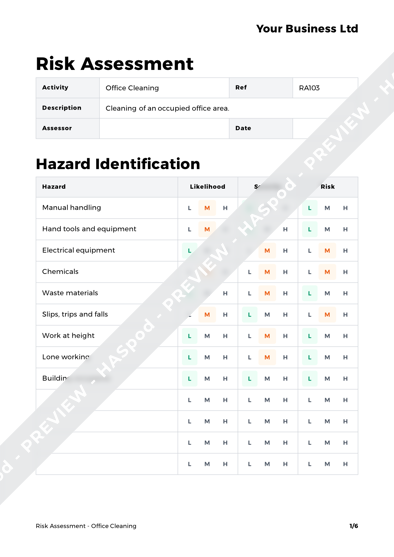
Your template needs to capture essential information for each risk identified. Think about categories like the specific task being performed (e.g., mopping floors, window cleaning at height, chemical disinfection), the identified hazard (e.g., slippery surface, ladder instability, chemical fumes), who is at risk, and the likelihood and severity of potential harm. Most importantly, it should detail the existing control measures and any additional actions required to reduce the risk further, alongside who is responsible and by when.
Here are some key elements to include in your cleaning company risk assessment template:
- **Assessment Details:** Date of assessment, name of assessor, location/site, and the specific cleaning activity being assessed.
- **Hazard Description:** A clear explanation of the potential danger.
- **Persons at Risk:** Identify who might be harmed (e.g., cleaning staff, client, visitors).
- **Existing Control Measures:** What steps are already in place to reduce the risk?
- **Risk Rating:** A simple method to score the likelihood and severity of harm (e.g., Low, Medium, High).
- **Additional Control Measures:** What further actions are needed to reduce the risk?
- **Action By/Completion Date:** Assign responsibility and set deadlines for new controls.
- **Review Date:** When should this assessment be looked at again?
Consider common hazards unique to cleaning, such as manual handling of heavy equipment, exposure to various cleaning chemicals, working in confined spaces, dealing with biological waste, or electrical risks from vacuum cleaners and floor buffers. Each of these requires specific consideration and documented controls within your template.
Finally, remember that the template itself is just a tool. Its effectiveness hinges on regular training for your staff on how to use it, encouraging them to identify and report hazards, and fostering open communication about safety concerns. A well-designed cleaning company risk assessment template, combined with a strong safety culture, empowers your team to work safely and efficiently, contributing to a thriving and responsible business.
Implementing a robust system for identifying and managing risks provides more than just regulatory compliance; it cultivates a safer, more productive work environment for everyone involved. When your team feels secure and understands how to mitigate potential dangers, their confidence and performance naturally improve, leading to higher quality service and greater job satisfaction.
Embracing this proactive approach to safety allows your cleaning business to operate with greater resilience and professionalism. By consistently evaluating and addressing potential hazards, you build a reputation not only for exceptional cleanliness but also for unwavering commitment to welfare, ensuring your company remains strong and trusted for years to come.