Embarking on a journey to the cloud can feel like standing at the edge of a vast, exciting new landscape. The promise of scalability, flexibility, and cost efficiency is incredibly appealing, and it’s easy to get swept up in the potential benefits. However, like any significant undertaking, cloud migration comes with its own set of challenges and potential pitfalls that, if not addressed proactively, can derail your efforts and lead to unexpected headaches.

That’s precisely where foresight becomes your greatest ally. Before you take that leap, it’s crucial to thoroughly understand the terrain, identify potential obstacles, and chart a safe course. This isn’t about stifling innovation or delaying progress; it’s about ensuring a smooth, secure, and successful transition. A well-constructed cloud migration risk assessment template is your indispensable guide for navigating these complexities, transforming potential threats into manageable considerations.
Understanding the Pillars of a Robust Cloud Migration Risk Assessment
When we talk about a risk assessment for cloud migration, we’re not just ticking boxes. We’re engaging in a strategic exercise designed to safeguard your assets, ensure business continuity, and optimize the return on your cloud investment. Without a structured approach, you might find yourself battling unforeseen data breaches, grappling with performance issues, or struggling with ballooning costs long after your systems are supposedly “in the cloud.” A comprehensive assessment acts as a shield, protecting your organization from these common pitfalls.
The foundation of any effective assessment lies in identifying and categorizing potential risks across various domains. It demands a holistic view, considering not just the technical aspects but also the operational, financial, and compliance implications. This multi-faceted examination allows you to paint a complete picture of your risk landscape, moving beyond generic concerns to specific, actionable insights relevant to your unique environment and migration strategy.
Key Risk Categories to Evaluate
To truly understand and mitigate risks, we need to break them down into digestible categories. Each area presents unique challenges that require dedicated attention and specific strategies. Ignoring even one of these pillars can create a weak link in your overall migration plan, leaving you vulnerable to future issues.
Consider the following critical areas:
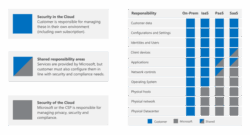
- Data Security and Compliance Risks: This includes data residency, encryption, access controls, compliance with regulations like GDPR, HIPAA, or industry-specific standards, and the shared responsibility model.
- Performance and Availability Risks: Potential latency issues, service level agreement (SLA) mismatches, network bandwidth limitations, and the impact of outages on business operations.
- Cost Management Risks: Unforeseen expenses, vendor lock-in leading to limited negotiation power, mismanaged resource provisioning, and the potential for “cloud sprawl” increasing costs.
- Vendor Lock-in and Exit Strategy Risks: The difficulty or cost associated with moving from one cloud provider to another, and the clarity of contractual terms regarding data portability and service discontinuation.
- Operational and Skill Gap Risks: The need for new skill sets within your IT team, changes to operational processes, integration challenges with existing on-premises systems, and incident response procedures in a cloud environment.
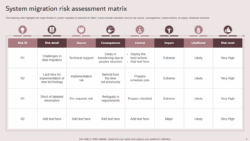
Ultimately, a detailed cloud migration risk assessment template provides a framework to systematically analyze each of these categories. It helps you quantify the potential impact and likelihood of each risk, moving beyond vague worries to a data-driven understanding. This structured analysis is essential for prioritizing mitigation efforts and allocating resources effectively, ensuring that your migration is not just fast, but also resilient and secure.
How to Effectively Utilize Your Cloud Migration Risk Assessment Template
Simply having a cloud migration risk assessment template in your hands is only the first step; the real value comes from how diligently and intelligently you use it. Think of it as a sophisticated diagnostic tool. Just like a doctor wouldn’t just look at an X-ray, you need to interpret the information, collaborate with experts, and formulate a treatment plan. An effective assessment is a living document, evolving alongside your project and providing continuous guidance.
The process typically begins with a thorough inventory of your existing infrastructure, applications, and data. You can’t assess the risks of moving something if you don’t fully understand what that something is. This means cataloging dependencies, identifying sensitive data, and mapping out current operational workflows. Only then can you accurately project how these elements will interact with your chosen cloud environment and identify potential friction points.
Crucially, this isn’t a task for a single individual or department. A successful risk assessment is a collaborative effort, bringing together stakeholders from across your organization. This includes IT operations, security, legal, compliance, finance, and even business unit leaders who rely on the applications being migrated. Each perspective adds a vital layer of insight, ensuring that no potential risk, whether technical or business-oriented, is overlooked. Their collective input is invaluable for accurately assessing both the likelihood and impact of various risks.
Once risks are identified, quantified, and prioritized, the template guides you in developing specific mitigation strategies. This could involve re-architecting applications, implementing new security controls, negotiating specific contractual terms with your cloud provider, or upskilling your internal team. It’s not enough to simply list risks; you must also outline clear, actionable steps to reduce their probability or minimize their impact. Furthermore, the assessment process should extend beyond the initial migration, incorporating continuous monitoring and periodic reviews to address new risks that may emerge as your cloud footprint grows and evolves.
The journey to the cloud, while promising, is not without its bumps and turns. Proactively identifying and addressing potential issues through a rigorous risk assessment process transforms uncertainty into informed decision-making. It ensures that your organization is not just reacting to problems but is instead prepared for them, with strategies in place to maintain continuity and security.
Embracing a systematic approach to risk management empowers you to migrate with confidence, knowing that you’ve considered the various facets of this complex undertaking. The peace of mind that comes from a well-executed cloud migration risk assessment template allows you to focus on innovation and leveraging the full potential of your new cloud environment, rather than being bogged down by preventable challenges.