Navigating co-parenting can often feel like a complex puzzle, especially when it comes to figuring out a schedule that works best for your children and both parents. Finding a reliable, fair, and consistent routine is key to providing stability for your kids and reducing stress for everyone involved. That’s where structured custody schedules come into play, offering a clear framework for when children spend time with each parent.
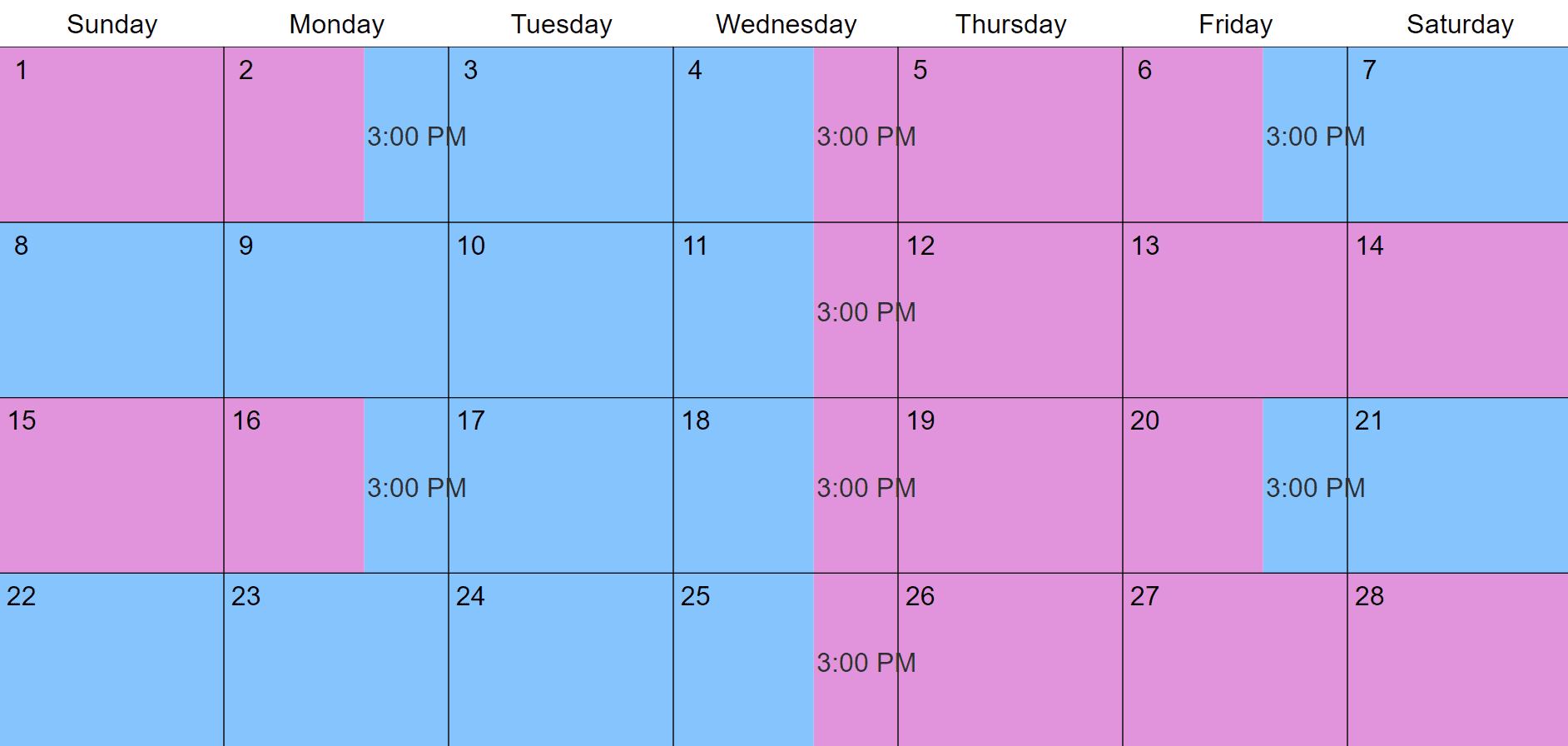
Among the many options available, the 5 5 2 2 custody schedule template has gained significant popularity for its balanced approach and relatively even distribution of time. It’s designed to give children consistent contact with both parents without long stretches away from either, making it an attractive choice for many families seeking an equitable co-parenting arrangement. Let’s explore what makes this schedule so effective and how you can tailor it to your unique family needs.
Understanding the Mechanics of a 5 5 2 2 Custody Schedule
The 5 5 2 2 custody schedule is essentially a two-week rotation that ensures children spend an almost equal amount of time with each parent. The beauty of this schedule lies in its predictable pattern, which allows children to settle into a routine and reduces the back-and-forth often associated with less structured plans. This particular arrangement allocates five consecutive overnights to one parent, followed by five consecutive overnights with the other parent. Then, the first parent has the children for two overnights, and the second parent finishes the two-week cycle with another two overnights.
This structure, therefore, looks like this for Parent A and Parent B over a 14-day period: Parent A has the children for 5 nights, then Parent B has them for 5 nights, then Parent A has them for 2 nights, and finally Parent B has them for 2 nights. This totals 7 nights for Parent A and 7 nights for Parent B within a two-week cycle, achieving a near 50/50 split. The consistency of the longer blocks (the 5-day segments) can be especially beneficial for school-aged children, allowing them to settle into a rhythm at each home without constant transitions.
Advantages of the 5 5 2 2 Schedule
There are several compelling reasons why families often gravitate towards the 5 5 2 2 custody schedule. For starters, the extended blocks of five days with each parent can foster a deeper sense of stability. Children have enough time to engage in activities, complete homework, and simply relax without feeling like they are always packing their bags. This can lead to less stress and more peace for the children, which is always the primary goal of any custody arrangement. It also gives each parent substantial individual time to bond and manage daily routines.
Furthermore, the 5 5 2 2 schedule is often seen as equitable by courts and co-parents because of its near 50/50 time distribution. This can minimize disputes over fairness and ensure both parents feel adequately involved in their children’s lives. The predictability of the pattern also makes it easier for parents to plan their work schedules, appointments, and personal lives around their co-parenting responsibilities, leading to fewer last-minute conflicts and a smoother overall operation of the family unit.
Crafting Your Own Effective 5 5 2 2 Custody Schedule Template
While the basic framework of a 5 5 2 2 custody schedule is straightforward, customizing it to fit your family’s unique dynamics is crucial for its long-term success. No two families are exactly alike, and what works beautifully for one might present challenges for another. Think about your children’s ages, school schedules, extracurricular activities, and the proximity of each parent’s home. These factors will all play a significant role in how smoothly the transitions occur and how well the schedule integrates into your daily lives.
For younger children, frequent transitions can sometimes be more disruptive, so the 5-day blocks can be a real benefit, offering them time to settle. For older children, their social lives and academic commitments might necessitate slight adjustments to pickup and drop-off times. Always communicate openly and honestly with your co-parent about these practical considerations. The goal isn’t just to implement a schedule, but to create a harmonious environment where your children can thrive with both parents.
When you’re ready to put pen to paper and start building your own 5 5 2 2 custody schedule template, consider these practical steps:
- Define Start and End Times: Clearly specify when exchanges take place. Is it after school on a Friday, or Sunday evening? Be precise to avoid confusion.
- Holiday and Vacation Planning: Decide how holidays, school breaks, and summer vacations will be handled. These often override the regular schedule and should be agreed upon well in advance.
- Transportation Arrangements: Who is responsible for transportation during exchanges? Will it always be the receiving parent, or will you alternate?
- Communication Protocols: Establish clear rules for communication between parents and with the children when they are with the other parent.
- Flexibility Clause: While consistency is key, life happens. Include a clause that allows for mutual agreement on occasional changes, understanding that unforeseen circumstances can arise.
Remember, a well-thought-out schedule isn’t just a document; it’s a living plan designed to evolve as your children grow and your family’s needs change. Regularly review the schedule, perhaps once a year, to ensure it’s still serving everyone effectively. Open communication and a willingness to adapt are the cornerstones of any successful co-parenting plan built around a robust 5 5 2 2 custody schedule template.
Choosing the right custody schedule is a significant step in establishing a stable and positive co-parenting relationship. The 5 5 2 2 schedule offers a balanced and predictable structure that can greatly benefit children by providing them with consistent time with both parents. Its equal time distribution and longer blocks of time at each home can foster a sense of security and reduce the stress of constant transitions, allowing children to simply be children.
Ultimately, the most effective custody arrangement is one that prioritizes your children’s well-being and facilitates respectful cooperation between parents. Taking the time to understand the nuances of this schedule and adapt it to your family’s unique circumstances will lay a strong foundation for a peaceful co-parenting journey, ensuring your kids feel loved and supported in both homes.