Navigating the complexities of lease accounting can often feel like trying to solve a puzzle with missing pieces. For businesses and property owners alike, dealing with leases that have varying payment schedules, free rent periods, or escalation clauses can quickly turn into a headache. This is where the concept of straight line rent becomes not just useful, but essential for accurate financial reporting and compliance. It smooths out the peaks and valleys of irregular cash payments, presenting a consistent expense over the life of the lease.

Understanding and implementing straight line rent is crucial for adhering to accounting standards like GAAP and the newer ASC 842, which mandate how leases are recognized on financial statements. However, manually calculating these schedules for multiple leases can be incredibly time-consuming and prone to errors. This is precisely why a reliable straight line rent schedule template is an invaluable tool, transforming a daunting task into a manageable process that ensures accuracy and saves countless hours of work.
Understanding Straight Line Rent and Its Importance
Straight line rent is an accounting methodology designed to recognize lease expense or income evenly over the entire lease term, even if the actual cash payments vary from month to month or year to year. This approach is fundamental for compliance with generally accepted accounting principles GAAP, particularly under the ASC 842 standard for leases. The core idea is that the total financial obligation or benefit of a lease should be spread out consistently across its duration, providing a clearer and more representative picture of a company’s financial performance and position.
Imagine a lease agreement that starts with a few months of free rent, then escalates annually, or includes a large payment at the beginning or end. While these payment structures are common in real estate, simply recording cash payments as they occur would distort financial statements, making it difficult to compare performance across different periods or with other companies. Straight line rent addresses this by calculating the total expected cash payments over the lease term, then dividing that sum by the number of periods in the lease, resulting in a consistent rent expense or income figure for each period.
This method is particularly important for both lessors and lessees. Lessors need to recognize rent income evenly to accurately reflect their ongoing revenue stream, rather than experiencing artificial spikes or dips due to payment schedules. Lessees, on the other hand, must ensure their rent expense aligns with the matching principle, which dictates that expenses should be recognized in the same period as the revenues they help generate. A failure to correctly apply straight line rent can lead to misstatements on financial reports, potentially impacting investor decisions, loan applications, and regulatory compliance.
Key Components of a Straight Line Rent Calculation
To accurately compute straight line rent, several critical pieces of information from the lease agreement are necessary. These components contribute to the total expected cost or income that will then be averaged over the lease term.
- Total Lease Payments: This includes all fixed payments specified in the lease, such as base rent, scheduled escalations, and any fixed common area maintenance charges, over the entire lease period.
- Lease Term: The full duration of the lease, expressed in months or years, from the commencement date to the termination date. This is the period over which the total payments will be spread.
- Free Rent Periods: Any initial periods where no rent is charged are still factored into the total lease term, even though they contribute zero to the total payment sum. These periods effectively increase the overall term over which the total paid amount is averaged.
- Rent Escalations: Pre-determined increases in rent over the lease term are included in the total payment calculation. Variable escalations or those based on market rates or indices are typically excluded from the initial straight line calculation and handled separately.
By meticulously gathering these details, a comprehensive calculation can be performed. The goal is to arrive at a single, consistent rent amount that can be recognized each period, regardless of the actual cash flow. This consistency provides stability and clarity in financial reporting, a cornerstone of sound accounting practice.
Streamlining Your Accounting with a Straight Line Rent Schedule Template
In today’s fast-paced business environment, efficiency and accuracy are paramount, especially when it comes to financial reporting. Manually creating straight line rent schedules for every lease agreement can be an incredibly time-consuming and error-prone process, even for experienced accountants. This is where leveraging a well-designed straight line rent schedule template truly shines. It provides a structured framework that automates the complex calculations, ensures consistency, and significantly reduces the risk of human error.
A robust straight line rent schedule template isn’t just about crunching numbers; it’s about providing clarity and control over your lease portfolio. For both landlords managing numerous tenant leases and businesses with extensive property portfolios, the ability to quickly generate accurate schedules for each agreement is invaluable. It helps in budgeting, forecasting, and ultimately, making informed financial decisions. Without a template, the effort required to update schedules every time a lease changes or a new one is added can become overwhelming, diverting valuable resources from other critical tasks.
Moreover, regulatory compliance is a non-negotiable aspect of financial reporting. With standards like ASC 842 requiring specific treatment for leases, having a tool that helps ensure adherence is not merely convenient but essential. A reliable straight line rent schedule template is designed with these standards in mind, providing the necessary outputs for auditors and ensuring that your financial statements accurately reflect your lease obligations or income in accordance with GAAP. This proactive approach to compliance can save businesses from potential penalties and reputational damage.
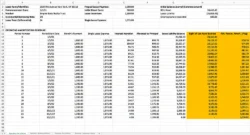
Consider the diverse range of lease agreements that exist: commercial leases with varying terms and escalation clauses, equipment leases, or even embedded leases within service contracts. Each one potentially requires its own straight line calculation. A good template allows you to input the specific details of each lease, such as the lease commencement and end dates, base rent, free rent periods, and annual escalations, and then automatically generates the periodic straight line rent amount along with a detailed amortization schedule. This not only simplifies the current accounting period but also provides a clear audit trail for future reference.
The adoption of an effective straight line rent schedule template means freeing up your accounting team to focus on higher-value activities, rather than repetitive data entry and complex manual calculations. It transforms a potential source of stress and inaccuracy into a streamlined process that contributes positively to your financial management. By providing a clear, consistent, and compliant view of your lease expenses or income, these templates empower businesses to maintain better financial health and make more strategic operational decisions.
Embracing a systematic approach to lease accounting, particularly through the use of a comprehensive straight line rent schedule template, is a strategic move for any entity dealing with multiple lease agreements. It simplifies complex calculations, enhances accuracy, and ensures compliance with critical accounting standards, ultimately leading to more transparent and reliable financial reporting. By smoothing out irregular payment patterns into a consistent expense or income, you gain a clearer picture of your financial position over the long term. This proactive management of lease obligations not only streamlines your internal processes but also provides a solid foundation for robust financial health and informed decision-making.