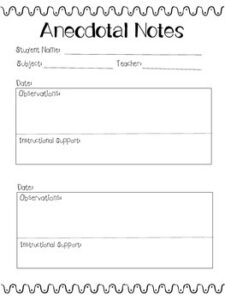
In the vibrant world of early childhood education, understanding and documenting a child’s development is paramount. This is where a well-designed running record template for preschool becomes an invaluable tool. It’s not just about ticking boxes; it’s about capturing those fleeting moments of learning, growth, and interaction that paint a comprehensive picture of a young learner’s journey. For educators and parents alike, having a systematic way to observe and record these observations can truly make a difference in supporting a child’s unique developmental path.

Think of it as a narrative snapshot, an objective account of what a child says and does in a specific context. These records help us move beyond subjective impressions, providing concrete evidence of skills emerging, challenges being faced, and interests being pursued. They highlight patterns in behavior, reveal preferred learning styles, and even shed light on a child’s social-emotional landscape.
Throughout this article, we’ll explore the profound benefits of incorporating running records into your daily practice, delve into what makes an effective template, and offer practical advice on how to use them to foster a deeper understanding of the preschoolers in your care. Get ready to unlock a new level of insight into early childhood development!
Understanding the Power of Running Records in Early Childhood Education
A running record is essentially a detailed, objective narrative of a child’s behavior and language in a specific context. Unlike anecdotal notes that might summarize an event, running records aim to capture the sequence of events as they unfold, almost like a script. The goal is to record exactly what happened, what was said, and how the child interacted with their environment and peers, without immediate interpretation or judgment.
For preschoolers, this method is particularly powerful because their development is rapid and often non-linear. They are constantly exploring, experimenting, and making new connections. A running record allows educators to document these dynamic processes in real-time. It helps in understanding not just *what* a child is doing, but *how* they are approaching tasks, solving problems, expressing emotions, and communicating, which are crucial indicators of their cognitive, social, and emotional growth.
From an educator’s perspective, running records provide the rich, descriptive data needed for individualized planning. By regularly observing and documenting a child’s engagement with materials, their problem-solving strategies during play, or their interactions with friends, teachers can identify emerging skills, areas needing support, and specific interests to build upon. This informed approach leads to more tailored activities and a learning environment that truly meets each child where they are.
For parents, these records offer a window into their child’s day beyond simple reports. When teachers share specific observations, like “Liam spent fifteen minutes meticulously building a tower with specific blocks, testing its balance each time,” it provides far more insight than “Liam played with blocks.” It fosters a deeper partnership between home and school, allowing parents to celebrate specific achievements and understand the rationale behind certain educational strategies.
Running records stand apart from other assessment tools, such as checklists or rating scales, because of their purely observational and descriptive nature. They are less about evaluating against a standard and more about understanding the unique unfolding of a child’s learning journey. This method captures the nuances and complexities of real-life situations, providing a holistic perspective that quantitative assessments often miss.
The key to an effective running record lies in its objectivity and detail. It means writing down exactly what you see and hear, using descriptive language rather than interpretive statements. Instead of “She was sad,” you might write, “Her lip quivered, eyes welled up, and she moved to sit alone in the corner.” This allows for later analysis and ensures that the record remains a factual account, useful for multiple interpretations over time.
What to Look For When Documenting Preschoolers
When observing preschoolers, focus on their interactions, language, and engagement. For social-emotional development, note instances of sharing, conflict resolution attempts, empathy shown towards peers, expressions of frustration or joy, and how they seek comfort or assistance. Pay attention to independent play versus cooperative play, and their ability to follow rules or express their own ideas within a group setting.
Regarding cognitive and language development, look for problem-solving strategies, such as how they might try different methods to fit puzzle pieces or construct a building. Document their vocabulary, sentence structure, storytelling abilities, and how they ask questions or follow instructions. Also, observe their fine motor skills (e.g., cutting, drawing, manipulating small objects) and gross motor skills (e.g., running, jumping, balancing) during various activities, noting any progress or areas where they might be developing new competencies.
Crafting Your Ideal Running Record Template
Now that we appreciate the immense value of running records, let’s turn our attention to the practical side: creating or selecting a running record template for preschool. A well-structured template guides your observations, ensures consistency, and makes the information easy to retrieve and analyze later. It should be user-friendly, allowing you to capture details quickly and efficiently without disrupting your interaction with the children.
While the exact layout can vary, certain essential fields make a running record truly effective. These elements provide context for the observation and help categorize the information, making it much more useful for tracking development and planning next steps. Think of it as your framework for capturing those precious moments of learning.
Here are the key components you should consider including in your running record template:
- Child’s Name and Date of Observation
- Observer’s Name
- Time of Observation (Start and End)
- Setting or Activity (e.g., “Block Area,” “Outdoor Play,” “Story Time”)
- Objective Observation Notes (The “what happened” section, focusing on descriptive language)
- Interpretation or Analysis (Optional section for your reflections, separate from the objective notes)
- Next Steps or Recommendations (Ideas for supporting the child’s learning based on the observation)
When using your template, aim for consistency. Try to observe each child regularly, perhaps once a week or every two weeks, focusing on different contexts. Keep your observation notes concise but descriptive; you’re aiming for a snapshot, not a novel. Remember, the goal is to provide a clear, factual account that can inform your teaching and enrich discussions with families about a child’s progress and potential, truly making a difference in their early learning journey.