Have you ever found yourself caught in a whirlwind of sudden, often unhelpful thoughts that seem to appear out of nowhere? These “automatic thoughts” can significantly influence our mood, reactions, and overall well-being, sometimes without us even realizing it. Learning to identify and understand these fleeting mental snippets is a crucial step towards cultivating greater emotional resilience, and a well-designed automatic thought record template can be your most valuable ally in this journey. It provides a structured way to observe your inner world, turning chaotic thoughts into manageable data.

The core idea behind a thought record is rooted in cognitive behavioral therapy (CBT), a widely recognized approach that helps individuals understand the connection between their thoughts, feelings, and behaviors. By meticulously recording these elements, you begin to see patterns, challenge irrational thinking, and ultimately develop more balanced and realistic perspectives. It’s about becoming a detective of your own mind, uncovering the hidden narratives that might be holding you back.
Embracing the practice of using a thought record isn’t about eliminating all negative thoughts – that’s often an unrealistic goal. Instead, it’s about gaining awareness and developing the skills to respond to them in a more constructive way. This empowerment allows you to break free from unhelpful mental loops, reduce emotional distress, and foster a greater sense of control over your emotional landscape.
What Exactly is an Automatic Thought Record?
An automatic thought record is essentially a structured journal entry that helps you pinpoint, analyze, and reframe those quick, often unconscious thoughts that pop into your head throughout the day. These thoughts are “automatic” because they tend to arise spontaneously, without deliberate effort. They might be things like, “I’m going to mess this up,” “They think I’m incompetent,” or “This is hopeless.” They are often highly believable in the moment, even if they aren’t entirely accurate.
The power of this tool lies in making the invisible visible. When you’re feeling a strong emotion – будь то sadness, anger, anxiety, or frustration – there’s almost always an automatic thought or a series of thoughts driving that feeling. For example, if you receive a critical email, your automatic thought might be, “I’m a failure,” leading to feelings of sadness and withdrawal. Without the thought record, you might just experience the sadness without understanding its origin.
A typical automatic thought record guides you through a series of columns or sections, prompting you to detail different aspects of an experience. These usually include the situation that triggered the thought, the automatic thought itself, the emotions you felt, and then a critical examination of that thought. This systematic approach is what makes it so effective in breaking down complex emotional reactions into manageable components.
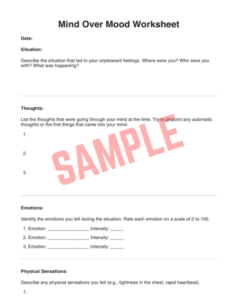
Let’s consider the initial steps of filling out a thought record. The first crucial piece of information is the “Situation.” This isn’t just about what happened, but also where, when, and with whom. It’s important to be as objective as possible, sticking to the facts rather than your interpretations or feelings about the event. For instance, instead of writing “My boss was mean to me,” you would write, “My boss sent an email asking me to revise the report by end of day.”
Next comes identifying the “Automatic Thought.” This is often the trickiest part, as these thoughts are so quick and ingrained. The goal is to capture the exact words or images that flashed through your mind just before or during the emotional reaction. Ask yourself, “What was I thinking right then?” or “What image just popped into my head?” Write down all the thoughts, even if they seem silly or trivial.
Finally, you document your “Emotions.” Identify the specific feelings you experienced, such as anxiety, anger, shame, joy, or relief. It’s also helpful to rate the intensity of each emotion on a scale, perhaps from 0 to 100 percent. This allows you to track changes in your emotional state as you work through the record.
Challenging Your Thoughts
The core of cognitive restructuring within the thought record involves the “Evidence For” and “Evidence Against” your automatic thought. This is where you become a fair-minded detective. For “Evidence For,” list facts and observations that support your automatic thought. For “Evidence Against,” list facts, observations, and experiences that contradict it or offer an alternative perspective. Often, you’ll find there’s less evidence supporting negative automatic thoughts than you initially believed.
Crafting New Perspectives
After carefully weighing the evidence, you move to generating an “Alternative Thought.” This isn’t about forced positivity but about creating a more balanced, realistic, and helpful perspective. What’s a different way to look at the situation? What would a wise friend say? This new thought should be believable and ideally more adaptive than the original automatic thought.
The final step is to record the “Outcome,” including how you feel now after processing the situation and generating an alternative thought. Rate your emotions again and reflect on what you learned from the exercise. This step reinforces the learning and shows you the tangible benefit of challenging your thoughts.
Crafting Your Own Automatic Thought Record Template
While many ready-made templates are available online or through therapy resources, there’s significant power in creating or customizing your own automatic thought record template. Tailoring it to your specific needs and the types of thoughts you frequently encounter can make the process feel more personal and therefore more effective. You might prefer a digital version on your phone or computer, or a physical notebook that you carry with you.
Start by considering the columns that resonate most with you. Some people prefer a very detailed template, while others thrive with a more streamlined approach. The key is to include elements that prompt self-reflection and lead to a more balanced perspective. Don’t be afraid to experiment with the wording of the prompts or the order of the columns until it feels intuitive and helpful.
Here are the essential columns typically found in an effective automatic thought record template:
Remember that consistency is key when using any self-help tool like this. It might feel awkward or time-consuming at first, but with regular practice, identifying and challenging your automatic thoughts will become a more natural and fluid process. Be patient with yourself, acknowledge small victories, and view each entry as an opportunity for growth.
By diligently using an automatic thought record, you are actively training your mind to identify unhelpful patterns, scrutinize their validity, and intentionally cultivate more constructive ways of thinking. This deliberate practice fosters greater self-awareness, empowers you to manage challenging emotions, and ultimately paves the way for a more resilient and positive outlook on life. It’s an investment in your mental well-being that yields profound and lasting benefits.