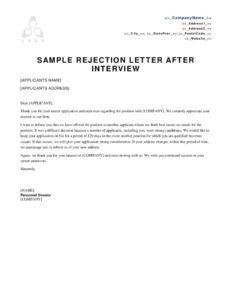
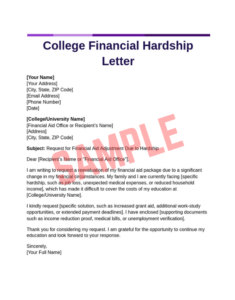
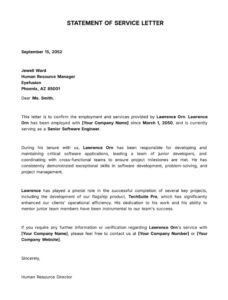
Navigating the complexities of funding applications is a common challenge for many individuals and organizations. Whether you are an educational institution, a non-profit, or a business, there are times when you must convey an unfavorable decision regarding a request for financial assistance. Providing clear, professional, and empathetic communication in such situations is crucial for maintaining relationships and upholding your entity’s reputation. This article will guide you through the process, offering a ready-to-use financial aid rejection letter template to streamline your administrative tasks.  Understanding how to professionally decline a financial aid application, grant request, or funding proposal is a vital skill. This guide delves into the essential components of an effective rejection notice, ensuring your correspondence is both legally sound and respectful. We will explore key considerations and provide a practical example to help you construct your own formal refusal documentation with confidence.
Crafting an Effective Funding Denial Letter
When it comes to informing an applicant about a denial of financial assistance, clarity and professionalism are paramount. A well-composed funding denial letter not only communicates the decision but also preserves goodwill and provides necessary information without inviting undue contention. This type of communication should be concise, yet complete, avoiding overly technical jargon where possible.
The goal is to deliver the news directly but politely, ensuring the recipient understands the outcome of their application. It’s important to state the decision unequivocally while also offering any relevant next steps or alternative resources. For instance, if an appeal process is available, this is the appropriate place to mention it. Remember, even a rejection can be delivered with dignity and respect.
Key elements for any robust financial aid rejection letter include:
- Clear Identification: Clearly state who the letter is from and to whom it is addressed.
- Direct Statement of Decision: Immediately convey that the application for financial aid has been denied.
- Brief, General Reason (Optional but Recommended): While not always necessary to give exhaustive details, a general reason can often help the applicant understand the decision. This might be “insufficient funds,” “failure to meet eligibility criteria,” or “overwhelming number of highly qualified applicants.”
- Next Steps or Appeal Process: Inform the applicant if there is an option to appeal the decision, request reconsideration, or explore other avenues of support. Provide specific instructions or contact information for these steps.
- Professional Closing: End the letter with a polite and professional closing statement.
 Below is a sample financial aid rejection letter template designed to be adaptable for various scenarios, from educational scholarships to grant applications. Using such a template ensures consistency and accuracy in your administrative communication.
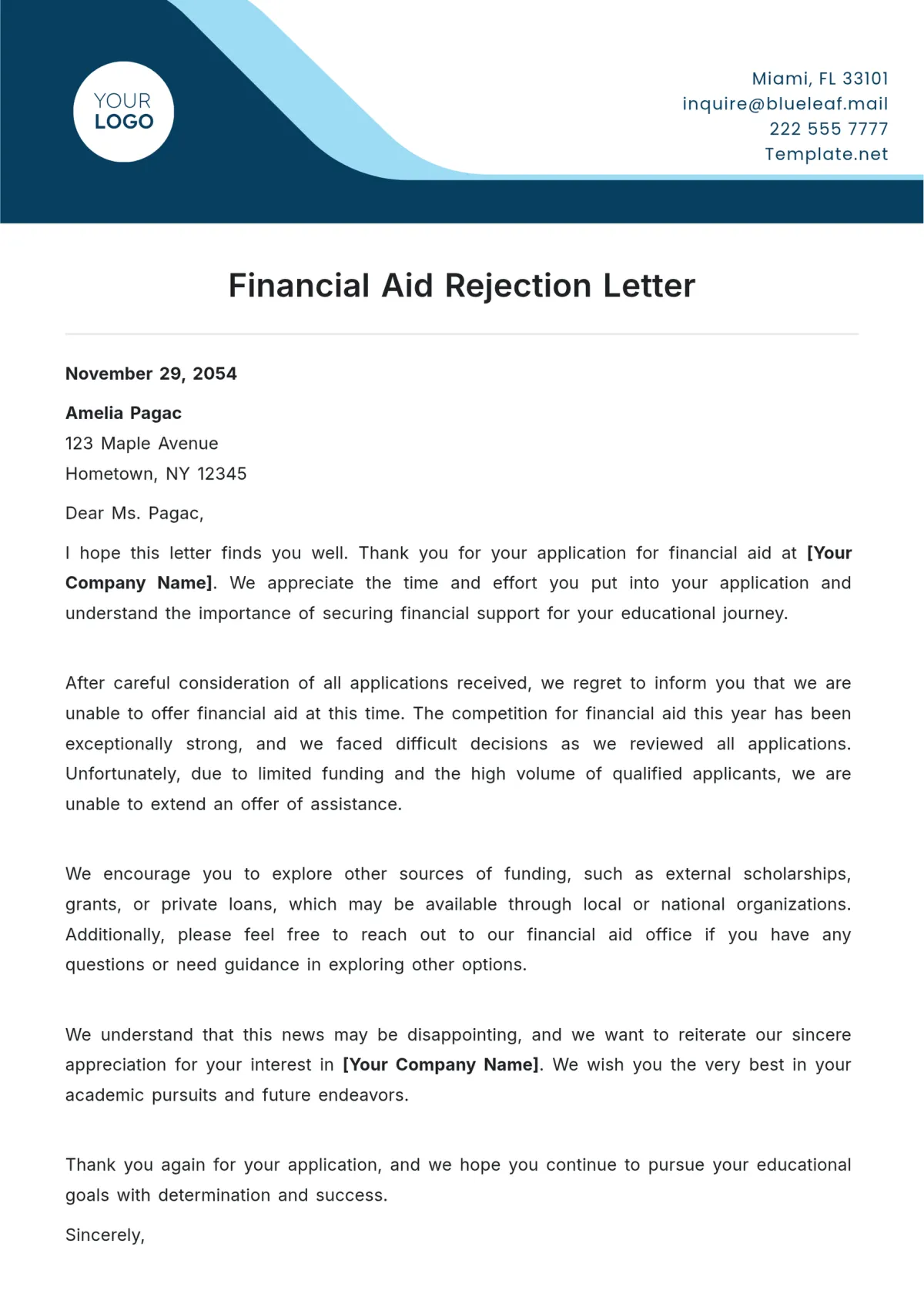
Sample Financial Aid Rejection Letter Template
This template serves as a robust framework. Remember to customize it with specific details relevant to your organization and the applicant. Maintain a consistent tone throughout the letter.
[Your Organization's Letterhead]
[Your Organization Name]
[Your Organization Address]
[Your Organization City, State, Zip Code]
[Your Organization Phone Number]
[Your Organization Email]
[Date]
[Applicant's Name]
[Applicant's Address]
[Applicant's City, State, Zip Code]
Dear [Mr./Ms./Mx. Last Name],
Thank you for your application for financial aid for the [Academic Year/Program Name/Specific Project]. We received a large volume of applications from highly qualified individuals, reflecting a strong interest in our programs and resources. We appreciate the time and effort you invested in preparing and submitting your materials.
After careful consideration and a thorough review of all submitted documents, we regret to inform you that we are unable to approve your request for financial aid at this time. Our decision was based on [state a general, non-specific reason, e.g., the competitive nature of our funding cycle, your application not meeting all specific eligibility criteria, the limited availability of funds].
We understand that this news may be disappointing. We encourage you to explore other funding opportunities, both internal and external, that may align with your needs. You may also wish to consult [mention a relevant department or resource, e.g., our financial aid office, a list of external scholarships on our website] for additional options.
Should you wish to appeal this decision, please submit a written appeal outlining new information for consideration within [Number] days of the date of this letter to [Contact Person/Department and Address]. Please note that submitting an appeal does not guarantee a reversal of the decision.
We wish you the best in your future endeavors and thank you again for your interest in [Your Organization Name].
Sincerely,
[Your Name]
[Your Title]
[Your Department]
Crafting a clear and professional rejection letter is more than a formality; it’s a testament to your organization’s commitment to respectful communication. By utilizing a structured approach and a well-designed financial aid rejection letter template, you can ensure every denial is handled with integrity and clarity. This practice helps to preserve relationships, even when delivering difficult news.
Ultimately, providing a concise, yet informative, funding denial letter reinforces your organization’s professional standards. It allows applicants to understand the decision without unnecessary ambiguity, enabling them to pursue other options or next steps effectively. A template simplifies this often sensitive process, ensuring all necessary details are included and presented professionally.