Ending a business partnership can be as complex as forming one, often requiring careful navigation and clear communication. While the excitement of starting a venture with others is often at the forefront, the process of bringing it to a close demands meticulous attention to detail. Formalizing this separation is not just a courtesy; it’s a legal and practical necessity to protect all parties involved. A well-crafted dissolution of partnership letter template becomes an invaluable tool in this critical transition.
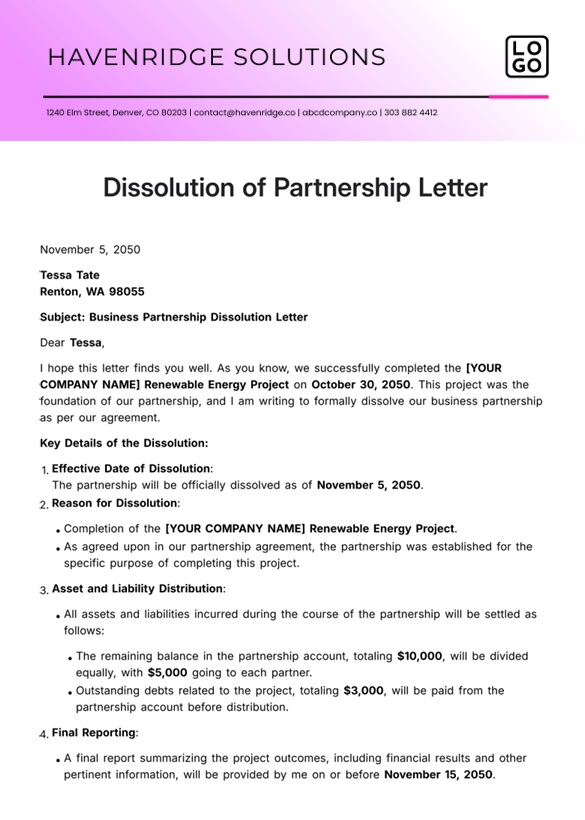
This comprehensive guide will walk you through the intricacies of drafting an effective partnership dissolution letter. We will explore the essential components, legal considerations, and practical advice to ensure a smooth and equitable separation. Understanding how to properly terminate a partnership agreement can prevent future disputes, safeguard assets, and maintain professional integrity.
By the end of this article, you’ll have a clear understanding of what goes into a formal notice of dissolution. Whether your partnership is ending amicably or due to irreconcilable differences, utilizing a robust dissolution of partnership letter template is the first step towards a clean break and a secure future for everyone involved.
Why A Formal Partnership Dissolution Letter Is Essential
When a business partnership reaches its end, the absence of clear, written communication can lead to significant complications. A formal dissolution letter serves as a legal document that articulates the terms of the separation. It minimizes ambiguity and provides a verifiable record for all parties.
Ignoring this crucial step can result in misunderstandings about assets, liabilities, and ongoing responsibilities. Without a formal letter, one partner might continue to operate under the partnership’s name, potentially incurring debts or obligations that inadvertently affect the other former partners. This can lead to costly legal battles and prolonged disputes.
Legal Compliance And Clarity
Many jurisdictions have specific requirements for formally ending a business partnership. A dissolution letter helps ensure compliance with these legal stipulations, preventing penalties or legal challenges later on. It legally signifies the cessation of the partnership’s operations.
This document clearly defines the effective date of the partnership’s termination. It also outlines the process for winding up the business affairs, which includes settling debts, distributing assets, and notifying relevant third parties. Such clarity protects each partner from future liabilities incurred by the other.
Legal clarity also means explicitly defining what happens to existing contracts, client relationships, and vendor agreements. Without this, confusion can arise, potentially damaging the reputation of individual partners or inviting litigation. A well-structured letter brings peace of mind and reduces the likelihood of future legal entanglements.
Protecting Business Interests And Assets
One of the primary functions of a dissolution letter is to safeguard the financial and operational interests of all partners. It establishes a formal process for dividing all partnership assets, ranging from physical property and intellectual property to client lists and brand equity. Without this, disputes over who owns what can quickly escalate.
The letter also addresses the distribution of outstanding debts and liabilities. It’s crucial to specify how these will be settled, whether through existing funds or contributions from partners. This prevents one partner from being solely responsible for debts incurred by the partnership as a whole. Studies indicate that legal disputes stemming from poorly managed business separations can cost companies an average of 15-20% of their total assets.
- Clearly outline the valuation and division of all physical assets.
- Detail the process for settling any outstanding business debts or loans.
- Address the handling of intellectual property, such as patents, trademarks, or copyrights.
- Specify how to notify clients, vendors, and employees about the partnership’s dissolution.
- Establish terms for non-compete agreements or confidentiality clauses if applicable.
Maintaining Professional Relationships
Even if a partnership ends due to disagreements, a formal and professionally worded dissolution letter can help preserve relationships. Approaching the separation with respect and clarity demonstrates professionalism. This is important for future career prospects and networking opportunities.
A well-drafted letter avoids personal attacks and focuses on the factual aspects of the dissolution. It sets a tone that facilitates an amicable separation, even under challenging circumstances. Maintaining professional courtesy can prevent negative word-of-mouth that might harm individual reputations in the long run.
The way a partnership dissolves can significantly impact how former partners are perceived in the business community. A clean and respectful break, facilitated by a formal letter, speaks volumes about one’s character and business acumen. This can be invaluable for future collaborations or career moves.
Key Elements Of An Effective Dissolution Of Partnership Letter Template
Crafting a robust dissolution of partnership letter template requires attention to several critical details. This document isn’t merely a formality; it’s a binding statement that dictates the terms of separation. Ensuring all essential elements are included will safeguard against future misunderstandings and legal challenges. Each section should be clear, concise, and leave no room for misinterpretation.
Critical Information And Dates
Every dissolution letter must begin with foundational information that identifies the parties involved and the exact nature of the termination. This includes the full legal names of all partners, the registered name of the partnership, and its primary business address. Accuracy here is paramount to avoid any legal ambiguities.
The most crucial date is the effective date of the dissolution. This date clearly marks when the partnership officially ceases to exist as a legal entity. It is also important to reference the original partnership agreement, including its date, as this forms the legal basis for the dissolution.
Other key dates might include deadlines for asset liquidation or debt settlement. These timelines provide a structured approach to winding up the business. Clearly stated dates help to keep all parties accountable and ensure the process moves forward efficiently.
Defining Responsibilities And Obligations
One of the most complex aspects of ending a partnership is allocating ongoing responsibilities and obligations. The dissolution letter must clearly detail who is responsible for which tasks during the winding-up period. This can include anything from notifying clients to closing bank accounts.
It is also essential to specify how outstanding debts and liabilities will be distributed among the partners. This might involve outlining repayment plans or agreements on how shared assets will be liquidated to cover these costs. Ambiguity in this area is a common source of conflict.
Furthermore, any post-dissolution obligations, such as non-compete clauses, confidentiality agreements, or clauses regarding the use of the partnership’s name, should be explicitly stated. This prevents former partners from undermining each other’s future ventures or misrepresenting their past affiliation.
Here is a table illustrating how responsibilities can be allocated:
| Responsibility Area | Assigned Partner(s) | Completion Deadline |
|---|---|---|
| Client Notification | Partner A | Within 7 days of dissolution |
| Vendor Account Closure | Partner B | Within 14 days of dissolution |
| Bank Account Closure | Partner A & B (jointly) | Within 30 days of dissolution |
| Final Tax Filings | Partner B (with accountant) | Prior to legal deadline |
| Asset Liquidation Oversight | Partner A | Within 60 days of dissolution |
Asset Distribution And Financial Settlements
A fundamental part of any partnership dissolution is the equitable distribution of assets and the final settlement of financial matters. The dissolution of partnership letter template should clearly outline the agreed-upon method for valuing and dividing all partnership assets, both tangible and intangible. This includes cash, real estate, equipment, inventory, and intellectual property.
It must also address how any remaining profits or losses will be distributed among the partners. This often refers back to the original partnership agreement’s terms regarding profit-sharing ratios. If there are outstanding loans or capital contributions from individual partners, the repayment schedule and priority should be specified.
Ensuring transparency and fairness in financial settlements is paramount. It helps prevent disputes and guarantees that each partner receives their rightful share or bears their appropriate portion of liabilities. Seeking professional legal and accounting advice during this phase is always recommended to ensure compliance and equity.
Bringing a business partnership to an end requires meticulous planning and clear, formal documentation. Utilizing a robust dissolution of partnership letter template is not just good practice; it is an absolute necessity to ensure a smooth, legal, and equitable separation for all involved. This crucial document helps prevent future disputes by clarifying responsibilities, liabilities, and the distribution of assets.
By understanding and incorporating the key elements discussed, from legal compliance to financial settlements, partners can navigate this transition with professionalism and minimize potential conflicts. Remember, a well-crafted dissolution letter protects your interests, preserves professional relationships, and sets a clear path forward for everyone involved. Always consider consulting with legal professionals to tailor a dissolution of partnership letter template to your specific situation, ensuring it meets all applicable legal requirements.