Navigating the complexities of real estate transactions can be challenging, especially when it comes to the due diligence period. This crucial phase allows buyers to thoroughly investigate a property before committing fully to a purchase. However, sometimes circumstances change, or issues arise that lead a buyer to decide against proceeding with the sale. In such cases, a properly executed due diligence release letter template becomes an indispensable tool.
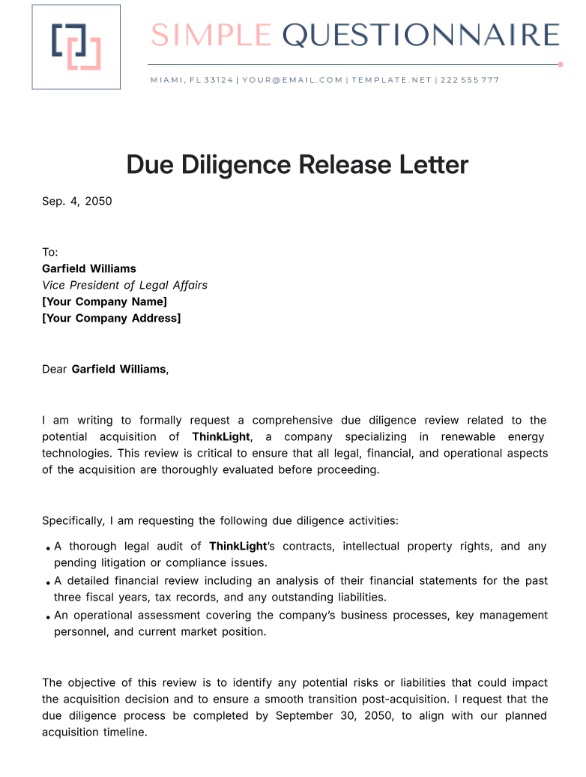
This formal document ensures that both parties understand their rights and obligations when a transaction is terminated during the due diligence phase. It protects the buyer’s earnest money and formally releases both the buyer and seller from further contractual obligations. Understanding how to use and customize a due diligence release letter template is essential for a smooth and legally sound exit from a real estate contract.
Throughout this article, we will explore the critical components of these letters, explain why they are so important, and guide you through crafting your own effective template. You’ll learn how to safeguard your interests and navigate potential pitfalls with confidence.
Understanding the Importance of a Due Diligence Release
The due diligence period is a standard clause in most real estate purchase agreements, granting the buyer a specific timeframe to conduct inspections, review documents, and investigate any aspects of the property they deem necessary. Should a buyer discover unsatisfactory conditions or simply decide not to proceed, they typically have the right to terminate the contract within this period. This is where a formal due diligence release letter template becomes vital.
Why a Formal Release is Crucial
A formal release letter serves as official notification to the seller that the buyer is exercising their right to terminate the purchase agreement. Without this document, ambiguity can arise regarding the contract’s status, potentially leading to disputes over earnest money deposits. It provides a clear, documented record that the buyer has opted out within the agreed-upon timeframe.
This document also protects the buyer’s earnest money, ensuring its return as per the terms of the purchase agreement. Statistics show that around 5% of real estate contracts fall through due to issues discovered during the inspection or due diligence phase. A properly executed release ensures these funds are not forfeited. It effectively severs the contractual ties, allowing both parties to move forward without lingering obligations.
Key Elements of an Effective Release Letter
An effective due diligence release letter template includes several non-negotiable components to be legally sound. It must clearly identify all parties involved in the transaction, including buyer and seller names and contact information. The property address must also be explicitly stated to prevent any confusion. Furthermore, the original purchase agreement date needs to be referenced.
The letter should explicitly state the buyer’s intent to terminate the purchase agreement, citing the specific clause related to the due diligence contingency. It should also include a clear request for the return of any earnest money deposit held in escrow. Finally, the letter needs to be signed and dated by all buyers involved in the transaction.
Here are some essential elements to include:
- Full names and addresses of buyer(s) and seller(s).
- Property address and legal description.
- Date of the original purchase agreement.
- Clear statement of termination based on the due diligence contingency.
- Request for release of earnest money deposit.
- Instructions for the escrow agent regarding the deposit.
- Signatures of all parties involved (buyer, seller, and potentially the escrow agent).
Legal Implications of Improper Due Diligence Release
Failing to properly execute a due diligence release can lead to significant legal and financial repercussions for both buyers and sellers. An incorrectly drafted letter, or one submitted past the due diligence deadline, might render the termination invalid. This could result in the buyer being considered in breach of contract, potentially forfeiting their earnest money deposit. Sellers could also face delays in relisting their property if the contract’s status remains unclear.
Ambiguity surrounding the release can lead to costly legal battles and arbitration processes. For instance, if the letter doesn’t clearly state the reason for termination within the due diligence period, the seller might argue that the buyer is in default. Therefore, using a precise due diligence release letter template and ensuring all details are accurate is paramount. Consulting with a real estate attorney is always advisable when in doubt.
Crafting Your Own Due Diligence Release Letter Template
Developing your own due diligence release letter template can streamline future transactions and ensure consistency in your approach. While templates provide a solid starting point, customization is always necessary to fit the specifics of each unique real estate deal. This involves carefully reviewing the original purchase agreement and tailoring the release letter to reflect its terms accurately.
Step-by-Step Guide to Customization
Customizing your due diligence release letter template involves more than just filling in blanks; it requires precision and attention to detail. First, always refer back to the specific purchase agreement for the property in question. Identify the exact clause that outlines the due diligence period and the buyer’s right to terminate. Ensure your letter directly references this clause.
Next, accurately input all relevant dates, including the original contract date and the date of the release letter itself. Double-check all party names and the property address to avoid any errors. Specify the exact amount of the earnest money deposit and provide clear instructions for its return. Finally, confirm that all necessary signatories are accounted for before formal submission.
Here is a simple breakdown of the information typically needed for customization:
| Field | Description | Example |
|---|---|---|
| Buyer’s Name(s) | Full legal name of all buyers | John & Jane Doe |
| Seller’s Name(s) | Full legal name of all sellers | XYZ Corporation |
| Property Address | Complete street address, city, state, zip code | 123 Main Street, Anytown, USA 12345 |
| Original Agreement Date | Date the Purchase Agreement was signed | January 15, 2024 |
| Earnest Money Amount | Exact dollar amount of the earnest money deposit | $5,000.00 |
| Contingency Clause | Specific section number/name in the agreement related to due diligence release | Section 7.1 (Inspection Contingency) |
| Desired Release Date | Date the buyer wishes the release to be effective (usually immediate) | February 20, 2024 |
Common Pitfalls to Avoid
When utilizing a due diligence release letter template, several common mistakes can undermine its effectiveness. One major pitfall is failing to adhere strictly to the timelines outlined in the purchase agreement. Missing a deadline for submitting the release can invalidate the buyer’s right to terminate and potentially lead to forfeiture of earnest money. Always mark your calendar and aim to send the letter well before the deadline.
Another common error is vague or unclear language regarding the reason for termination. While the due diligence clause often allows termination for any reason, a clear, concise statement helps avoid disputes. Do not assume that the seller or escrow agent will understand your intentions without explicit instructions. Lastly, ensure all required parties sign the document, as an unsigned letter holds no legal weight.
When to Consult Legal Counsel
While a due diligence release letter template can simplify the process, there are specific situations where seeking legal counsel is highly recommended. If the purchase agreement contains unusually complex clauses, or if there’s any ambiguity in the language, a real estate attorney can provide clarity. Their expertise ensures that your release letter fully complies with the contract and local real estate laws.
Furthermore, if the seller disputes your right to terminate or challenges the return of earnest money, legal intervention becomes crucial. An attorney can help negotiate on your behalf and protect your interests in a potential legal dispute. When significant financial assets are at stake, the cost of legal advice is a worthwhile investment to prevent larger future losses.
Effectively managing the due diligence period and, if necessary, terminating a contract requires precision and a clear understanding of legal documents. A well-crafted due diligence release letter template is an invaluable resource, ensuring a smooth and legally compliant exit from a real estate transaction. It protects both parties by providing clear communication and a documented resolution.
By carefully understanding the components of this vital letter, customizing it to your specific situation, and being aware of potential pitfalls, you can navigate real estate dealings with greater confidence. Remember, while templates offer a strong foundation, diligence in execution and an awareness of when to seek professional guidance are key to safeguarding your interests.