Managing outstanding debts is a critical aspect of any business, property management, or even individual financial interactions. Unpaid invoices or overdue rent can quickly impact cash flow and operational stability, requiring a clear and professional approach to recovery. A well-structured final notice collection letter template serves as a powerful tool in your administrative arsenal, signaling the seriousness of the situation while maintaining professionalism.

This article will guide you through the essential components of an effective final notice, offering insights into its legal implications and providing a ready-to-use template. By understanding the proper language and necessary details, you can significantly improve your chances of debt recovery before escalating to more drastic measures. You will learn how to draft a legally sound payment demand that encourages prompt action from the debtor.
Crafting an Effective Final Notice Collection Letter
Sending a clear and concise collection letter is often the penultimate step before considering legal action or involving a debt collection agency. The objective is to clearly communicate the outstanding obligation and the impending consequences of non-payment. This document should leave no room for misunderstanding regarding the debt or the expected response.
An effective final notice serves not only as a demand for payment but also as a formal record of your communication attempts. It documents the debtor’s failure to meet their financial obligations despite previous reminders. This paper trail can be invaluable if the matter proceeds to legal channels.
Several key elements must be included to ensure your payment demand letter is both professional and impactful. Each piece of information plays a vital role in encouraging a timely resolution and protecting your interests. Omitting crucial details can weaken your position and confuse the recipient.
Consider including the following essential information in your letter:
- Full legal name and contact information of both the creditor and debtor.
- A clear, itemized breakdown of the outstanding amount, including original invoice numbers or dates.
- The original due date and any previous payment reminders sent.
- A new, strict payment deadline (e.g., 7-10 business days from the letter’s date).
- A clear statement of the consequences of non-payment by the new deadline (e.g., late fees, credit report impact, referral to collections, legal action).
- Accepted payment methods and instructions on how to submit payment.
- Contact information for the debtor to discuss the payment or dispute the debt.
Maintaining a firm yet professional tone is paramount throughout the letter. Avoid accusatory language and focus on the facts of the outstanding debt. The goal is to motivate compliance, not to alienate the debtor further.
Legal considerations, such as adhering to state and federal debt collection laws, are also crucial. Ensuring your letter complies with these regulations can prevent legal complications for your business or individual capacity. Always verify local statutes that may apply to your specific situation.
Sample Final Notice Collection Letter Template
A robust final notice collection letter template provides a structured framework, allowing you to quickly adapt it to various scenarios, whether for overdue rent, unpaid client invoices, or outstanding personal loans. This adaptable sample ensures you cover all necessary legal and administrative points, saving you time and reducing potential errors.
The structure of the letter is designed to be straightforward and easily digestible for the recipient. It guides them through the specifics of their debt and the actions they need to take. Using a clear format helps to prevent any claims of misunderstanding on the part of the debtor.
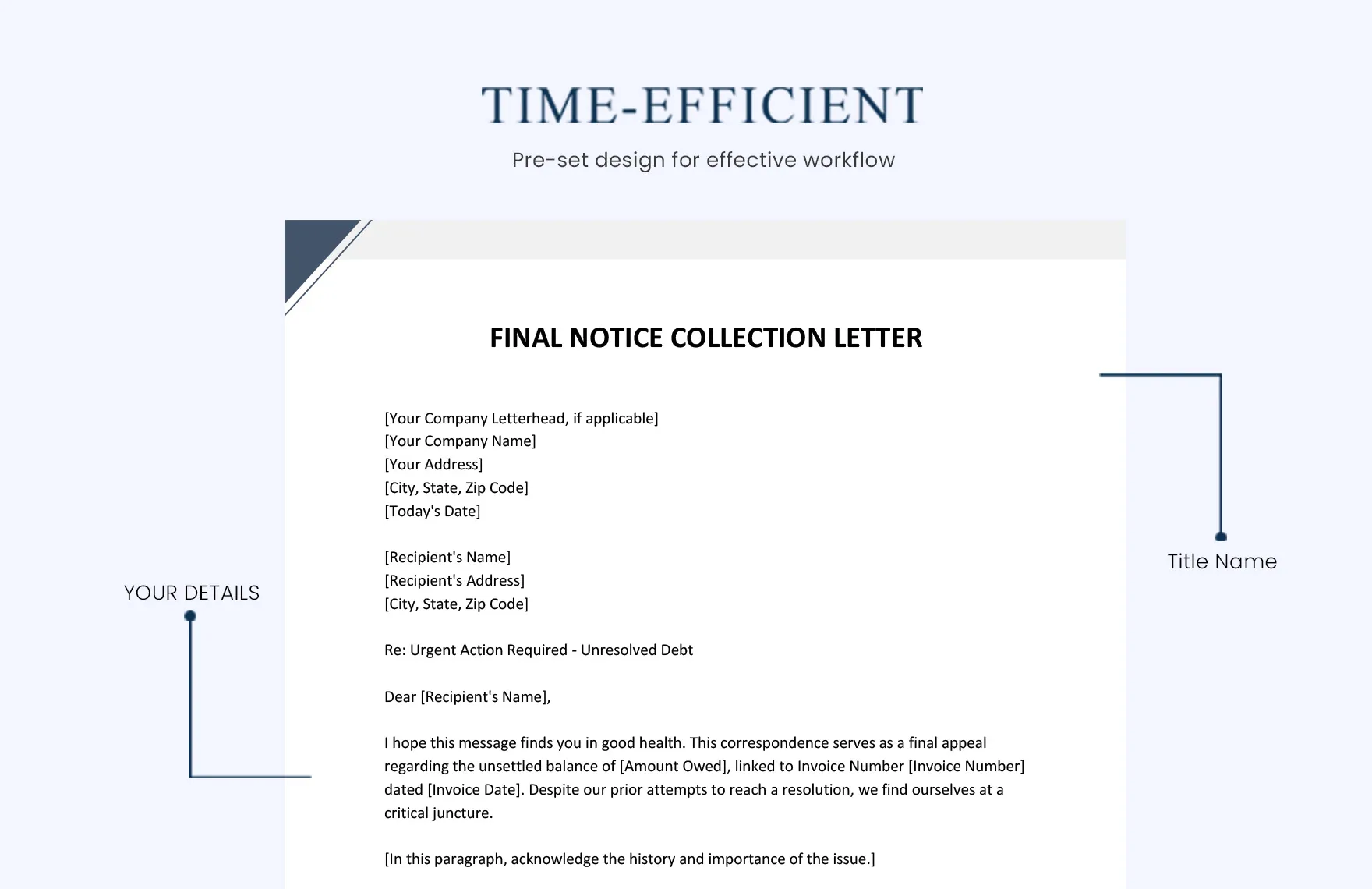
Here is a comprehensive sample that can be tailored to your specific needs:
[Your Company Letterhead/Your Name and Address]
[Your Street Address]
[Your City, State, Zip Code]
[Your Phone Number]
[Your Email Address]
[Date]
[Debtor’s Name]
[Debtor’s Street Address]
[Debtor’s City, State, Zip Code]
Subject: FINAL NOTICE – Overdue Payment for Account [Account Number/Invoice Number]
Dear [Debtor’s Name],
This letter serves as a final notice regarding your outstanding balance of [Total Amount Due] for [Service Rendered/Goods Provided/Rent Due] under Account Number [Account Number] / Invoice Number [Invoice Number(s)]. The original due date for this payment was [Original Due Date].
Despite our previous attempts to contact you regarding this matter on [Date of First Reminder], [Date of Second Reminder], etc., the payment remains outstanding. We have attached copies of the original invoice(s) for your reference.
Please be advised that immediate payment of the full outstanding balance of [Total Amount Due] is now required by [New Payment Deadline – e.g., 7-10 days from letter date]. Failure to submit payment by this date will result in further action without exception.
Consequences of non-payment may include, but are not limited to: the application of additional late fees as per our terms and conditions, referral of your account to a third-party collection agency, reporting the delinquency to credit bureaus, and/or initiation of legal proceedings to recover the debt. These actions may negatively impact your credit rating and incur additional costs.
To resolve this matter promptly and avoid further action, please remit payment in the amount of [Total Amount Due] via [Preferred Payment Method(s) – e.g., online portal, check payable to Your Company Name, direct deposit]. If you believe this notice is in error or require an immediate payment plan, please contact us immediately at [Your Phone Number] or [Your Email Address] before [New Payment Deadline].
We urge you to take this matter seriously and make arrangements for payment without delay.
Sincerely,
[Your Name/Your Company Name]
[Your Title]
When using this final notice collection letter template, customize all bracketed information accurately and ensure it reflects your specific situation. Double-checking amounts, dates, and contact details is crucial to avoid any discrepancies. Accurate documentation protects both parties and streamlines the recovery process.
Legal Considerations for Debt Collection Notices
Beyond simply demanding payment, your final notice collection letter must adhere to various legal standards to be enforceable and avoid legal pitfalls. Understanding these regulations is vital for anyone sending out such a document. Compliance protects you from potential lawsuits and ensures your debt recovery efforts are legitimate.
In the United States, third-party debt collectors are governed by the Fair Debt Collection Practices Act (FDCPA). While this primarily applies to collection agencies, it’s wise for businesses or individuals acting as original creditors to adopt similar ethical practices. Knowing the FDCPA guidelines can help you avoid harassment or misrepresentation, which are often prohibited.
Furthermore, state-specific laws may dictate what can and cannot be included in a collection letter, allowable late fees, interest rates, and the required notice period before legal action. For instance, some states require specific disclosures or a certain number of days’ notice before eviction or wage garnishment proceedings. It is always prudent to consult with a legal professional to ensure your collection practices align with local and federal regulations, especially for larger debts or complex situations.
A well-drafted final notice collection letter can be a powerful instrument for debt recovery, provided it is used correctly and legally. It offers a structured way to communicate serious intent while still offering a path to resolution. By utilizing a comprehensive template and understanding the underlying principles, you can effectively manage overdue accounts and protect your financial interests.
Embrace proactive administrative writing and thorough documentation as cornerstones of sound financial management. Employing a ready-to-use, legally informed template like the one provided empowers you to address outstanding balances with confidence and professionalism. This approach not only facilitates debt collection but also reinforces clear communication in all your professional interactions, helping maintain healthy financial relationships.