Organizing a sports league, whether it’s for basketball, soccer, baseball, or even a fantasy league, can be a lot of fun, but the administrative tasks often feel like a Herculean effort. One of the biggest challenges, especially when you’re dealing with a specific number of teams, is creating a fair and balanced schedule that works for everyone involved. You want to ensure every team gets an equal chance, no one feels unfairly treated with too many back-to-back games, or travel woes.
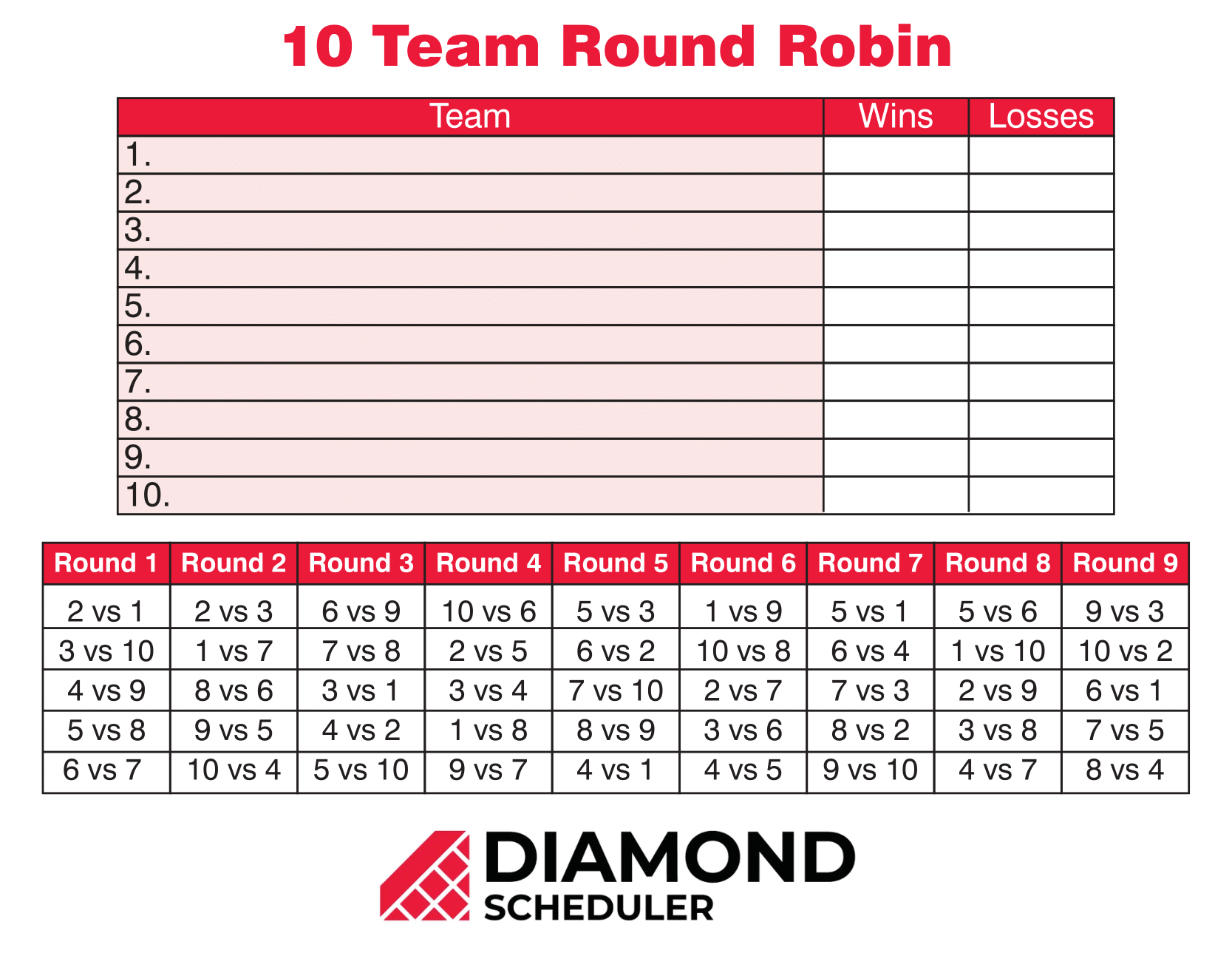
This is where having a reliable framework comes into play. If you’re running a league with ten teams, you know the complexity increases significantly compared to smaller groups. Manually juggling game times, venues, and opponent pairings can quickly turn into a headache. Thankfully, you don’t have to start from scratch every time. This article is designed to guide you through creating and utilizing a robust 10 team league schedule template to streamline your season planning and ensure smooth sailing from the first game to the final whistle.
Understanding the Basics of a 10 Team League Schedule
A 10-team league is a fantastic size for many recreational and amateur sports. It’s large enough to offer a good variety of matchups and competitive play, but not so large that scheduling becomes unmanageable or the season drags on indefinitely. However, with ten distinct entities, ensuring fairness in opponent rotation, home and away allocations, and even bye weeks (if applicable) requires careful thought. You want to avoid situations where one team always plays stronger opponents early on, or another always has to travel further.
The core principle behind any good league schedule is balance. For a 10-team setup, the most common and equitable approach is often a round-robin format, where every team plays every other team at least once. Depending on the length of your season and desired number of games, this might be a single round-robin (each team plays the other 9 once) or a double round-robin (each team plays the other 9 twice, home and away). The choice here significantly impacts the total number of games and the overall duration of your league.
Beyond the basic format, several other factors contribute to a successful schedule. You need to consider game days and times – are games played only on weekends, or are weeknight slots also available? What about facility availability? Some venues might be booked on certain days, which immediately narrows down your options. Furthermore, think about potential holiday breaks or other significant dates that might require a pause in play.
Having a solid 10 team league schedule template means having a pre-designed structure that accounts for these variables. It’s not just about listing who plays whom, but also about building in flexibility and fairness from the outset. This foundational understanding will save you countless hours of last-minute adjustments and disputes once the season is underway, providing clarity for all participants and administrators.
Common Scheduling Formats for 10 Teams
- **Single Round-Robin:** Each team plays every other team exactly once. This results in 45 games total (10 * 9 / 2) and is suitable for shorter seasons.
- **Double Round-Robin:** Each team plays every other team twice (once home, once away, or just two separate matchups). This leads to 90 games total and offers a more extensive season.
- **Conference or Division Play (Less Common for 10 Teams):** While more typical for larger leagues, you could theoretically split 10 teams into two 5-team divisions, with intra-division play being more frequent than inter-division. However, this is usually overkill for just 10 teams.
Crafting Your Perfect 10 Team League Schedule Template
Once you understand the basic principles, the next step is to actually put together your schedule. Many league organizers start with a simple spreadsheet program like Microsoft Excel or Google Sheets. These tools are incredibly powerful for creating a custom 10 team league schedule template because they allow you to easily list teams, dates, times, and locations, then make adjustments as needed. You can even use formulas to track things like home and away game counts, ensuring an equitable distribution.
Begin by listing all your ten teams. Assigning them a simple Team 1 through Team 10 identifier can make the initial drafting process less cluttered, especially if team names are long. Then, block out your available game slots for the entire season. This might mean every Saturday morning for ten weeks, or a combination of Tuesday evenings and Sunday afternoons. Once you have your slots, you can start populating the matchups based on your chosen format, such as a single or double round-robin. There are many online schedule generators that can produce a basic round-robin layout which you can then adapt.
After the initial matchups are laid out, it’s crucial to review the schedule for balance and potential conflicts. Are any teams playing three games in a row without a break? Does one team have significantly more early morning games than another? Are there any specific venue requirements that might clash with the current assignments? This iterative process of drafting, reviewing, and refining is key to creating a schedule that genuinely works for everyone. Don’t be afraid to shuffle games around to improve fairness or accommodate specific requests, as long as the overall integrity of the schedule remains intact.
Finally, once you’re satisfied with your 10 team league schedule template, it’s time for distribution. A clear, easy-to-read schedule communicated well in advance will be greatly appreciated by all participants. Consider sharing it as a printable PDF, an online spreadsheet link, or even integrating it into a league management app if you use one. Providing contact information for schedule questions and a clear process for reporting issues will ensure the season runs smoothly from beginning to end, minimizing confusion and maximizing enjoyment for everyone involved.
Creating a well-organized schedule for your 10-team league doesn’t have to be a source of stress. By leveraging the power of a thoughtfully constructed template, you can transform a complex administrative task into a straightforward process. This foresight and planning will not only save you valuable time but also lay the groundwork for a fair, competitive, and highly enjoyable season for every participant.
Ultimately, the goal is to foster a sense of community and friendly competition. A clear, equitable schedule is a huge part of achieving that. With your well-prepared schedule in hand, you’ll be able to focus less on logistics and more on the thrilling action on the field or court, making for a truly memorable league experience for all.