Addressing workplace issues or behavioral concerns is a crucial aspect of effective management and clear communication. A well-structured first verbal warning letter template serves as an essential tool for documenting initial discussions, ensuring all parties understand the situation, and setting clear expectations for improvement. This guide provides a comprehensive, legally sound template designed to help professionals, property managers, and employers navigate these delicate conversations with clarity and confidence.

Utilizing a standardized template not only streamlines the administrative process but also provides a vital record should further actions be necessary. Understanding the components of an effective initial notice can prevent misunderstandings, promote positive changes, and protect all involved parties. Here, you will learn the key elements of such a document and how to implement it effectively.
Crafting an Effective Initial Disciplinary Notice
When performance or behavioral issues arise, delivering a verbal warning is often the first step in a progressive disciplinary process. However, relying solely on a spoken conversation can lead to misinterpretations or forgetfulness. A formal written confirmation, often referred to as an initial disciplinary notice, acts as an official record of the discussion and reiterates the expectations clearly. This document ensures accountability and provides a tangible reference point for both the issuing party and the recipient.
The primary goal of this written notice is to confirm the verbal warning, specify the nature of the concern, and outline the expected corrective actions. It also serves to inform the recipient of the potential consequences if the issue persists, emphasizing the seriousness of the situation. While the tone should remain professional and objective, it should also convey the importance of the matter at hand. This documentation can be critical for future reference, particularly if the issue escalates.

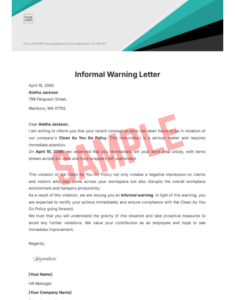
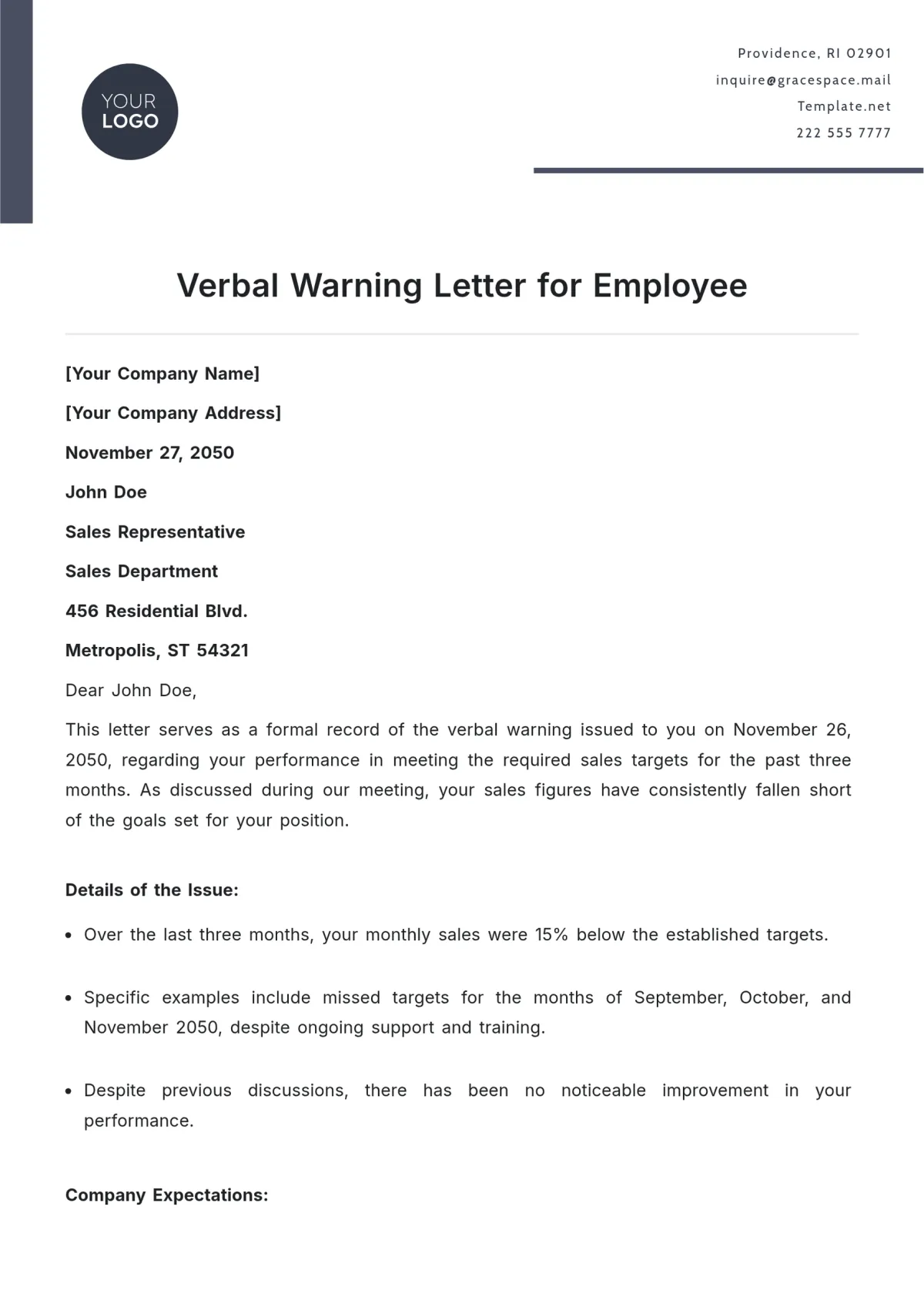
Below is a comprehensive first verbal warning letter template designed for various professional contexts. This adaptable format can be customized for employee performance, tenant behavior, or contractor issues, ensuring all essential details are included. Remember to tailor the specifics of the incident and expected improvements to your unique situation before sending.
[Your Company Letterhead/Name]
[Your Address]
[Your City, State, Zip Code]
[Date]

[Recipient's Name]
[Recipient's Address]
[Recipient's City, State, Zip Code]

Subject: Confirmation of Verbal Warning - [Brief Description of Incident/Issue]

Dear [Recipient's Name],

This letter serves to formally confirm the verbal warning issued to you on [Date of Verbal Warning] regarding [briefly state the specific issue, e.g., "your attendance," "violation of noise policy," "non-compliance with safety procedures"].

During our meeting on [Date of Meeting], we discussed the following specific incident(s) or behavior:
*   [Date of Incident]: [Detailed description of the incident or behavior, e.g., "Arriving late for your shift without prior notification." or "Loud music being played during quiet hours."]
*   [Date of Incident, if applicable]: [Further details or examples if multiple occurrences.]

This behavior is a violation of [specific company policy, lease agreement clause, or standard of conduct, e.g., "Company Policy Section 3.1: Attendance and Punctuality" or "Paragraph 7 of your Lease Agreement regarding noise."]. We emphasize the importance of adhering to these standards for a productive and harmonious environment.

We expect immediate and sustained improvement in this area. Specifically, we require you to [clearly state the expected corrective action, e.g., "ensure you arrive on time for all scheduled shifts," "abide by the quiet hours specified in your lease," "review and adhere to all safety protocols."]. We are committed to supporting your success and are available to discuss any challenges you may be facing.

Please understand that failure to correct this behavior may result in further disciplinary action, up to and including [state potential next steps, e.g., "a written warning," "lease termination," "employment termination"]. This is a serious matter, and we expect a prompt and lasting resolution.

We encourage you to reach out if you have any questions or require clarification regarding this warning or the expectations outlined.

Sincerely,

[Your Name]
[Your Title]
[Your Contact Information]
Implementing an initial disciplinary notice, even after a verbal conversation, is a cornerstone of responsible administrative practice. It ensures consistency in how issues are handled across an organization or property, fostering a fair and transparent environment. Moreover, this written record provides essential documentation for legal compliance and can protect you from future disputes or claims of unfair treatment.
Having a robust system for documenting warnings, beginning with a first verbal warning letter template, strengthens your position and clarifies expectations. It allows for a clear progression in addressing concerns, providing individuals with multiple opportunities to improve before more severe actions become necessary. This proactive approach benefits everyone involved by promoting accountability and professional conduct.