Navigating the complexities of shared time, whether it is for co-parenting arrangements or managing rotating employee shifts, often requires a clear and predictable structure. Finding an effective way to organize days, weeks, and even months can significantly reduce stress and promote harmony for everyone involved. This is where a well-designed schedule comes into play, offering a visual roadmap for consistent routines.
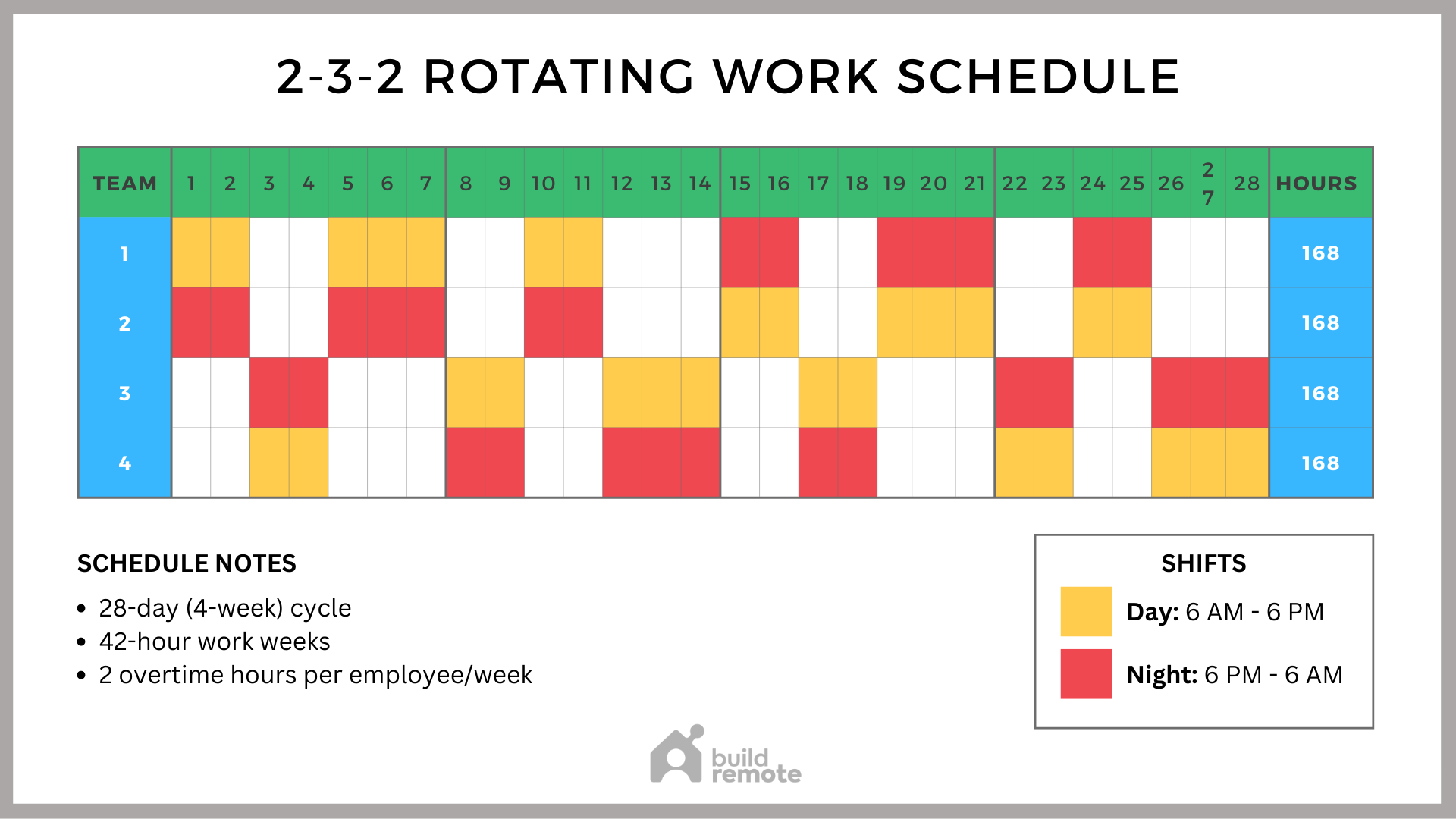
Among the many scheduling patterns available, one particular structure has gained considerable popularity due to its balanced approach and relatively simple rotation: the 2 3 2 schedule. This particular framework provides a clear framework that can be adapted to various needs, ensuring that all parties have a solid understanding of their upcoming responsibilities and shared time. It is designed to offer fairness and consistency, which are crucial elements for any successful long-term arrangement.
Understanding the 2 3 2 Schedule Template
The fundamental concept behind the 2 3 2 schedule is quite straightforward and its name directly reflects its pattern. It typically involves one party having two days, followed by the other party having three days, and then the first party again having two days. This sequence completes a full seven-day week before the pattern cycles back to the second party having two days, and so on. For instance, in a co-parenting scenario, Parent A might have Monday and Tuesday, Parent B would then have Wednesday, Thursday, and Friday, and Parent A would conclude the week with Saturday and Sunday. The following week would then begin with Parent B having Monday and Tuesday, ensuring a consistent rotation of weekend time and weekdays.
This specific arrangement is particularly favored in shared custody situations because it ensures that children do not go for extended periods without seeing either parent. It offers a regular and predictable rhythm that can be very beneficial for a child’s sense of stability, even with the weekly transitions. While it involves a handover each week, the length of each segment provides enough time for bonding and establishing routines in both households.
Why the 2 3 2 Schedule Works
The appeal of the 2 3 2 schedule template lies in its inherent balance and flexibility. It ensures that both parents get a mix of weekdays and weekends with their children over a two-week period, which can feel equitable. For children, it means regular contact with both parents, preventing long stretches of absence and fostering strong relationships in both homes. The consistent pattern, once established, becomes easy to remember and follow.
Furthermore, this schedule offers a degree of adaptability that can be customized to suit individual family dynamics or professional demands. It provides a solid foundation from which slight modifications can be made, such as adjusting handover times or making special arrangements for holidays, without completely disrupting the core structure. Its clarity helps in minimizing confusion and potential conflicts, making it a powerful tool for maintaining predictable routines.
Creating Your Own 2 3 2 Schedule Template
When it comes to putting a 2 3 2 schedule template into practice, the first step involves clearly defining the specific days for each party. Whether you are outlining a child custody arrangement or an employee shift rotation, visual clarity is key. Start by assigning the initial two-day block to one party, then the three-day block to the second, and finally the concluding two-day block back to the first. Remember that this pattern then reverses for the following week, ensuring an alternating schedule of weekend time over a two-week cycle.
Effective communication is absolutely essential for any scheduling system, and the 2 3 2 schedule is no exception. Before finalizing any template, all parties involved should discuss their availability, needs, and any potential conflicts. This proactive approach helps to anticipate issues and create a schedule that is not only fair but also practical for everyone. A template is a living document that works best when there’s an open channel for discussion and mutual understanding.
Beyond the basic day assignments, consider adding crucial details to your template to make it truly comprehensive. This might include specific handover times and locations for children, or clear instructions for shift changes in a work environment. Anticipate common challenges, such as school holidays, sick days, or special events, and consider how your template can accommodate these without causing major disruptions. The more detail you can incorporate, the less room there is for misinterpretation.
To make your 2 3 2 schedule template truly robust, consider including the following elements:
- Clearly defined start and end times for each day of responsibility.
- Specific instructions for handovers or shift changes, including who is responsible for transportation or communication.
- A section for important contact information for all involved parties, including emergency contacts.
- Guidelines for making changes or requesting swaps, outlining the notification period required.
- A designated review date to assess how the schedule is working and make any necessary adjustments as circumstances evolve.
Adopting a structured approach to shared time can bring significant benefits, fostering predictability and reducing potential friction. The clarity and balanced nature of a well-implemented 2 3 2 schedule template can serve as a cornerstone for effective co-parenting or streamlined team management. It provides a reliable framework that adapts to the ongoing demands of life, offering a sense of stability for everyone.
Ultimately, the most successful schedules are those that are not only well-planned but also regularly reviewed and adjusted as needs change. While a template offers a fantastic starting point, an ongoing commitment to flexibility and open communication will ensure that the arrangement continues to work smoothly and efficiently for years to come.