Have you ever dreamed of a three-day weekend, every single week? In today’s evolving work landscape, the traditional 9-to-5, five-day workweek is no longer the only option. Many organizations and employees are discovering the benefits of alternative schedules that offer greater flexibility and work-life balance. One such increasingly popular model is the 4/10 work schedule, which condenses the standard 40-hour week into four longer days.
This innovative approach allows individuals to complete their full work commitments while gaining an extra day off, typically for personal pursuits, family time, or simply recharging. For both businesses and their teams, adopting a 4/10 schedule can lead to enhanced productivity, reduced stress, and a more engaged workforce. Understanding how to structure and implement such a system effectively is key, and that’s where a well-designed template becomes invaluable.
Understanding the 4/10 Work Schedule
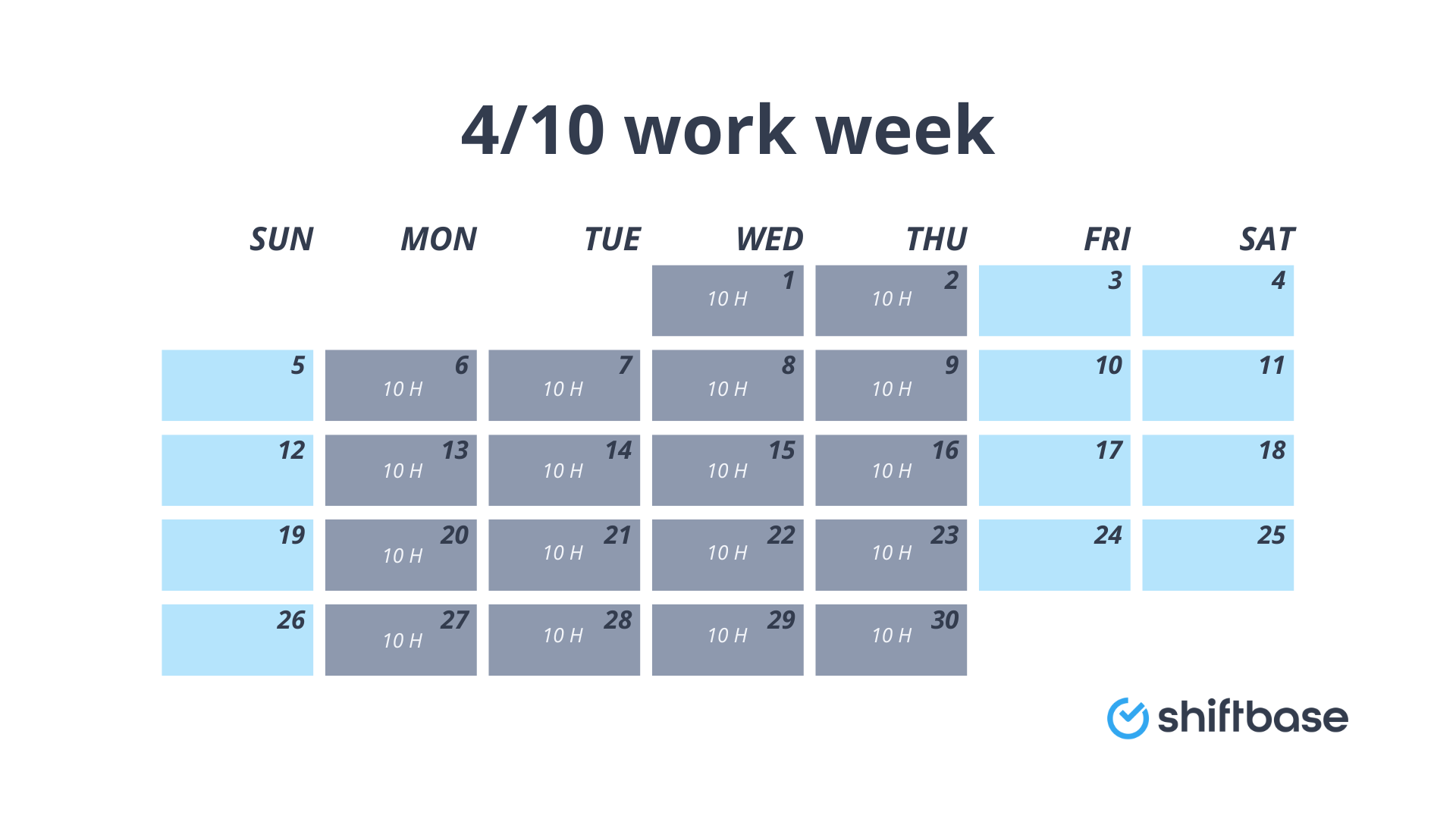
The 4/10 work schedule is exactly what it sounds like: employees work four days a week, ten hours each day, totaling 40 hours. This is in contrast to the more common 5/8 schedule, where employees work five days a week for eight hours a day. The primary appeal of the 4/10 model lies in the creation of a consistent three-day weekend. Imagine having every Friday, Monday, or Wednesday off without using vacation time – it’s a significant perk that can drastically improve an individual’s personal life and overall wellbeing.
From an employee perspective, the benefits extend beyond just the extra day off. Many report reduced commuting costs and time, as they make one less round trip to work each week. The longer workdays can also lead to fewer interruptions and more focused blocks of work, potentially boosting productivity during their active days. It allows for better scheduling of appointments, errands, or simply more leisure time, leading to less burnout and higher job satisfaction.
Employers also stand to gain considerably from implementing a 4/10 schedule. Happy employees are often more loyal and productive, reducing turnover rates and recruitment costs. Depending on how shifts are staggered, businesses might even achieve extended operating hours without incurring overtime, providing better customer service or maximizing equipment usage. It can also be a powerful tool for attracting new talent, especially in competitive industries where work-life balance is highly valued.
However, it’s not a one-size-fits-all solution. Careful planning is essential to ensure that business operations aren’t negatively impacted. Some roles might struggle with 10-hour days, or a business might face coverage gaps if not thoughtfully implemented. Communication is crucial, both internally with employees and externally with clients, to manage expectations and ensure a smooth transition.
Key Elements of a Successful 4/10 Implementation
- Clear Communication: Establish transparent guidelines and expectations for all employees.
- Fair Scheduling: Develop a system that ensures equitable distribution of desired days off and avoids undue burden on any team member.
- Legal Compliance: Research and adhere to all local, state, and federal labor laws regarding hours, breaks, and overtime.
- Technology Support: Utilize scheduling software or tools to manage shifts, track hours, and maintain coverage.
A successful transition involves evaluating your team’s needs, understanding the nature of the work, and being flexible enough to adapt the schedule as necessary. The goal is to create a win-win situation where employees thrive and business objectives are met or exceeded.
Crafting Your Own 4/10 Work Schedule Template
While the concept of a 4/10 work schedule is straightforward, the actual implementation requires careful planning and organization. This is where a dedicated 4 10 work schedule template becomes an indispensable tool. Rather than just haphazardly deciding who works when, a template provides a structured framework to ensure consistent coverage, fair distribution of shifts, and clear communication for everyone involved. It removes guesswork and helps to visualize the entire workweek and month ahead.
A robust template should include several key pieces of information. At a minimum, it needs to clearly indicate which days each employee is scheduled to work, their start and end times, and any designated break periods. Beyond the basics, you might consider adding columns for specific tasks or responsibilities assigned on certain days, contact information, or even a section for notes regarding shift swaps or time-off requests. The level of detail will depend on your team’s size and the complexity of your operations.
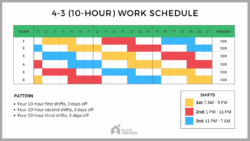
For businesses that require continuous coverage, such as customer service centers, manufacturing plants, or healthcare facilities, a template allows for the careful staggering of shifts. For example, some employees might work Monday through Thursday, while others work Tuesday through Friday, ensuring that critical functions are staffed throughout the entire week, including traditional “off” days. This strategic planning prevents service interruptions and maximizes operational efficiency.
Fortunately, you don’t need to be a scheduling expert to create an effective template. Many digital tools and even simple spreadsheets can be adapted to serve this purpose. The important thing is to have a clear, easy-to-read document that all employees can access and understand. This transparency fosters trust and helps everyone stay on the same page regarding their commitments and their well-deserved time off.
- Spreadsheet Software: Programs like Microsoft Excel or Google Sheets offer customizable grids to lay out schedules.
- Dedicated Scheduling Tools: Software designed specifically for workforce management can automate much of the process.
- HRIS Systems: Many Human Resources Information Systems now include robust scheduling modules.
Regularly reviewing and refining your schedule template is also a good practice. As your team grows, roles change, or business needs evolve, your template should be flexible enough to accommodate these adjustments, ensuring it remains an effective planning tool.
Adopting a 4/10 work schedule can truly redefine the work experience for both individuals and organizations. It’s a powerful move towards a more balanced and efficient work environment, offering the gift of extended weekends and improved well-being without compromising productivity. This progressive approach demonstrates a commitment to employee welfare while also leveraging the benefits of optimized operational flow.
By carefully planning and utilizing a structured approach, any team can successfully implement this model. The key lies in clear communication, thoughtful organization, and a willingness to adapt. Embracing this flexible work option can lead to a happier, healthier, and more engaged workforce, ultimately contributing to the long-term success and sustainability of the business.