In today’s fast-paced world, where businesses face an ever-evolving landscape of challenges, understanding and managing potential threats is no longer optional—it’s absolutely essential. Whether you’re a small startup or a large enterprise, the ability to proactively identify vulnerabilities and prepare for adverse events can be the difference between thriving and merely surviving. It’s about building resilience and ensuring continuity in the face of uncertainty.
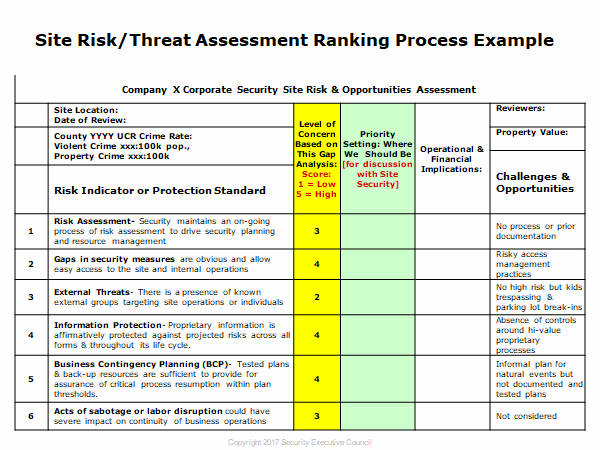
That’s where a structured approach comes into play. You need a systematic way to look at what could go wrong, how likely it is, and what impact it might have. This is precisely the role of a well-defined process that helps categorize, evaluate, and prioritize risks, giving you a clear roadmap for mitigation.
Understanding the Core Components of Threat Analysis and Risk Assessment
At its heart, threat analysis and risk assessment, often abbreviated as TARA, is a methodical examination of potential threats and vulnerabilities to an organization’s assets, followed by an evaluation of the associated risks. It’s not just about listing things that could go wrong; it’s about understanding the context, the probability, and the potential consequences. This comprehensive understanding allows businesses to make informed decisions about where to invest resources for protection and prevention.
The first crucial step in this process is the “Threat Analysis.” This involves identifying all potential sources of harm that could exploit vulnerabilities within your systems, processes, or even your people. A thorough analysis considers various categories of threats, ensuring nothing is overlooked.
Identifying Threats
Threats can come from many directions, each requiring a different lens for examination:
- Natural Threats: Earthquakes, floods, severe storms, fires not caused by human error.
- Human Threats: Intentional (cyber attacks, theft, sabotage, fraud) or unintentional (employee error, negligence).
- Technical Threats: Hardware failures, software bugs, network outages, power fluctuations.
- Environmental Threats: Loss of utilities, supply chain disruptions, political instability.
Once potential threats are identified, the next step naturally flows into “Risk Assessment.” Here, you take those identified threats and evaluate the likelihood of them occurring, along with the potential impact if they do. This isn’t just a guessing game; it involves gathering data, consulting experts, and considering historical incidents. By combining likelihood and impact, you can assign a risk level, allowing you to prioritize which risks need immediate attention and which can be managed over time. A robust threat analysis and risk assessment template helps streamline this entire process, ensuring consistency and thoroughness.
Building Your Own Effective Threat Analysis and Risk Assessment Template
Having a standardized threat analysis and risk assessment template is incredibly powerful. It provides a consistent framework for evaluating risks across different departments, projects, or even an entire organization. Without a template, the process can become ad hoc, leading to inconsistencies, missed threats, and inefficient allocation of resources. A good template acts as a checklist, ensuring all critical aspects are considered every time.
When constructing your own template, consider breaking it down into logical sections that guide you through the entire risk management lifecycle. Start with defining the scope of your assessment, then move into identifying the assets you need to protect. These assets could be anything from critical data and IT infrastructure to intellectual property, reputation, or even specific personnel.
Key elements that should be part of a comprehensive threat analysis and risk assessment template include:
- Assessment Scope and Objectives: Clearly define what you are assessing and why.
- Asset Identification and Valuation: List all critical assets and understand their value to the organization.
- Threat Identification: Detail potential threats relevant to your assets.
- Vulnerability Identification: Pinpoint weaknesses in your systems or processes that threats could exploit.
- Risk Likelihood Assessment: Estimate the probability of each threat exploiting a vulnerability.
- Risk Impact Assessment: Determine the potential consequences if a risk materializes.
- Risk Level Calculation: Combine likelihood and impact to assign a risk score.
- Mitigation Strategies: Outline specific actions to reduce or eliminate identified risks.
- Residual Risk: Document the risk level remaining after mitigation efforts.
- Owner and Review Date: Assign responsibility and schedule regular re-evaluation.
Remember, a threat analysis and risk assessment template isn’t a static document; it’s a living tool that requires regular review and updates. As your organization evolves, so do its assets, vulnerabilities, and the threats it faces. Periodic assessments ensure your risk management strategies remain relevant and effective.
By investing time in creating or adopting a robust threat analysis and risk assessment template, you empower your organization to proactively defend against potential disruptions. It fosters a culture of preparedness, allowing you to not only identify dangers but also to strategize effective responses, ultimately safeguarding your operations and securing your future growth.