Medication errors represent a significant challenge in healthcare, posing serious risks to patient safety and well-being. These preventable events can lead to adverse drug reactions, prolonged hospital stays, and even fatalities. Effective documentation is a cornerstone of preventing such errors, ensuring that every medication administered is tracked accurately and thoroughly.
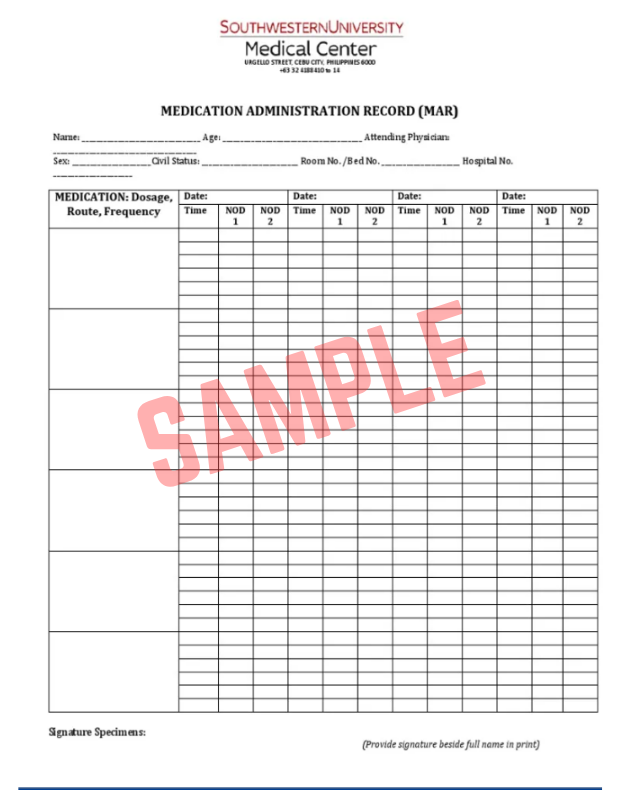
A robust hospital medication administration record template is not just a regulatory requirement; it is a critical tool for minimizing mistakes and enhancing the quality of patient care. It provides a clear, consistent, and legally defensible record of all drugs given to a patient during their stay. This article will explore the vital role of a well-designed template, its essential components, and how its effective implementation contributes to a safer hospital environment.
Understanding the nuances of medication charting forms is paramount for all healthcare facilities. From large university hospitals to smaller community clinics, a standardized drug administration record supports nurses, pharmacists, and physicians in their shared goal of safe and effective patient outcomes. By the end of this article, you will have a comprehensive understanding of how to optimize your medication documentation processes.
The Critical Role of a Standardized Medication Administration Record
A standardized medication administration record (MAR) is far more than just a piece of paper or a digital screen; it is a fundamental element of patient safety infrastructure. It ensures every member of the care team has access to consistent, reliable information about a patient’s medication regimen. This consistency is crucial in fast-paced healthcare environments where multiple providers may interact with a single patient.
Adopting a uniform hospital medication administration record template across all units helps to eliminate ambiguity and reduces the likelihood of misunderstandings. It creates a common language for medication documentation, improving communication during shift changes and interdepartmental transfers. Without such standardization, variations in charting practices can easily lead to missed doses, duplicate administrations, or incorrect drug choices.
Enhancing Patient Safety and Reducing Errors
The primary purpose of any medication administration record is to safeguard patients from harm. Medication errors are a leading cause of preventable harm in healthcare worldwide, impacting millions of patients annually. A comprehensive MAR template serves as a critical checkpoint, reinforcing the “five rights” of medication administration: the right patient, right drug, right dose, right route, and right time.
By providing clear prompts and spaces for verification, a well-designed template guides nurses through the administration process systematically. It helps them to confirm patient identification, cross-reference medication orders, and document observations before and after drug delivery. This systematic approach significantly reduces the potential for human error, creating a safer environment for everyone.
Ensuring Regulatory Compliance and Accountability
Healthcare facilities are subject to stringent regulations from various bodies, including federal and state agencies, as well as accrediting organizations like The Joint Commission. Accurate and complete medication records are a non-negotiable requirement for maintaining compliance and accreditation. A standardized MAR template ensures that all necessary data points are consistently captured.
Beyond compliance, these records provide an invaluable audit trail. In the event of an adverse patient outcome or a medication incident, the detailed drug administration record offers a factual account of the care provided. This documentation is crucial for legal protection, quality improvement initiatives, and demonstrating accountability to patients and their families.
Streamlining Nursing Workflow and Communication
Efficient workflow is vital for nurses who often manage multiple patients with complex needs. A clear, intuitive **hospital medication administration record template** can significantly streamline their documentation process, saving valuable time. When information is organized logically and consistently, nurses can quickly locate critical details and complete their charting tasks more efficiently.
Improved communication is another key benefit. During handoffs between shifts, a well-maintained MAR ensures that the outgoing and incoming nurses have an identical, up-to-date picture of the patient’s medication status. This continuity of care prevents communication gaps that could otherwise lead to errors or delays in treatment. It also facilitates smoother collaboration among the entire care team.
Essential Components of an Effective Hospital Medication Administration Record Template
A truly effective medication administration record template must be comprehensive yet user-friendly, capturing all necessary data without overwhelming the healthcare provider. Its design should reflect best practices in patient safety and regulatory requirements, ensuring that every piece of information is relevant and actionable. The structure of the template directly impacts its usability and the accuracy of the documentation.
Every section within the template serves a specific purpose, contributing to a complete pharmaceutical record. From patient demographics to detailed administration notes, each component plays a role in preventing errors and supporting informed decision-making. Thinking carefully about each element is key to developing a superior drug administration record.
Patient and Medication Identification Details
At the top of any MAR template, clear patient identification information is paramount. This includes the patient’s full name, medical record number, date of birth, and any known allergies. Accurate patient identification is the first line of defense against administering medication to the wrong individual. This section often includes a space for a barcode scan in electronic systems.
Equally important are the detailed specifics of each prescribed medication. This typically covers the generic and brand name of the drug, its prescribed dosage, the route of administration (e.g., oral, IV, subcutaneous), and the frequency (e.g., daily, twice daily, PRN). Clear labeling prevents confusion and ensures the correct medication is identified before administration.
Administration Schedule and Documentation Fields
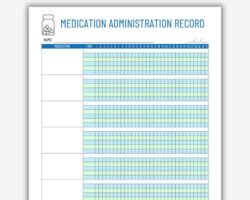
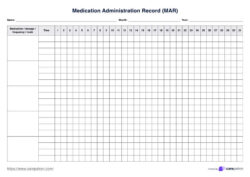
The core of the MAR template is the schedule of medication administrations and the corresponding documentation fields. This section usually features a grid-like format, with dates and times spanning horizontally and medications listed vertically. For each scheduled dose, there must be a designated space for the administering nurse to initial or sign.
Additionally, fields for the exact time of administration are crucial, allowing for precise tracking of medication delivery. Spaces for recording the site of administration (for injections) or specific observations related to the dose (e.g., patient refused, held due to low blood pressure) are also vital. This meticulous recording creates a complete and defensible record.
Special Considerations and Verification
Beyond routine administrations, an effective MAR template accounts for special circumstances. This includes sections for PRN (as needed) medications, where the nurse documents the reason for administration, the patient’s response, and any follow-up actions. It may also include fields for pre-administration assessments, such as vital signs required before certain medications like insulin or blood pressure drugs.
Verification processes, such as a double-check by another nurse for high-alert medications, should also be reflected in the template design. Space for patient education provided, or specific instructions given upon discharge, can further enhance the template’s utility. A comprehensive template ensures all aspects of medication management are thoroughly documented.
Sample Hospital Medication Administration Record Template Structure
Developing an effective **hospital medication administration record template** involves structuring information logically and clearly. While specific designs can vary, a common and highly functional structure involves a tabular format that allows for easy tracking of multiple medications over a period. This approach provides a quick visual reference for nurses and other care providers.
Below is a conceptual outline of how such a template might be organized, detailing the key columns and the information they typically contain. This textual sample aims to illustrate the format and the types of data that are crucial for comprehensive nursing documentation. It prioritizes clarity and ease of use in a busy clinical setting.
Each row generally corresponds to a specific medication order, while columns track various administration details over time. This makes it simple to follow the history of a particular drug’s delivery to the patient.
| Date | Time | Medication Name (Generic/Brand), Dose, Route | Frequency | Nurse Initials | Site (for Injections) | Comments/Reason (e.g., PRN, Refused, Held) | Verification (e.g., Double Check, Vital Signs) |
|---|---|---|---|---|---|---|---|
| MM/DD/YYYY | HH:MM | Drug X (e.g., Metformin 500mg PO) | BID | [Initials] | N/A | [Any notes] | [e.g., Blood Glucose] |
| MM/DD/YYYY | HH:MM | Drug Y (e.g., Insulin Aspart 10 units SC) | AC meals | [Initials] | Left Abdomen | [Any notes] | [e.g., 2nd Nurse Initial] |
| MM/DD/YYYY | HH:MM | Drug Z (e.g., Morphine 2mg IV PRN pain) | Q4H PRN | [Initials] | N/A | Patient c/o 7/10 pain | [e.g., Pain Scale Pre/Post] |
The “Date” column specifies when the medication was administered. This provides a chronological overview of all doses given. The “Time” field records the precise moment of administration.
“Medication Name, Dose, Route” clearly identifies the drug, its strength, and how it was given. This includes both generic and brand names to avoid confusion. “Frequency” indicates how often the medication is prescribed, helping to track adherence to the order.
The “Nurse Initials” column is where the administering nurse provides their unique identifier, establishing accountability. “Site (for Injections)” is critical for rotating injection sites and preventing tissue damage. “Comments/Reason” allows for detailed notes, especially for PRN medications or when a dose is not given as scheduled. Lastly, “Verification” captures any required checks, such as vital signs taken before administration or a second nurse’s initial for high-alert drugs.
Implementing and Optimizing Your Medication Administration Record System
The most meticulously designed **hospital medication administration record template** is only as effective as its implementation. Successful integration into daily clinical practice requires a thoughtful approach, focusing on user training, system compatibility, and continuous improvement. It’s not enough to simply have a template; it must be used consistently and correctly by all staff members.
A well-executed implementation strategy ensures that the benefits of a standardized drug administration record are fully realized. This involves ongoing support for healthcare providers and a commitment to refining the system based on real-world feedback. The goal is to create a seamless process that enhances patient safety without burdening clinical staff.
Training Staff for Consistent Use
Comprehensive and ongoing training is paramount for the effective use of any medication administration record template. All nursing staff, including new hires and temporary personnel, must receive thorough education on how to accurately complete the MAR. This training should cover every field, specific charting conventions, and the importance of timely and precise documentation.
Regular refresher courses are also beneficial to reinforce best practices and address any common errors identified during audits. When staff are confident and competent in using the template, documentation becomes more consistent, reliable, and contributes more effectively to patient safety. Effective training empowers nurses to leverage the MAR as a powerful tool.
Integrating with Electronic Health Records (EHRs)
While paper-based MAR templates are still in use, the trend is moving towards electronic medication administration records (eMARs) integrated within Electronic Health Record (EHR) systems. This integration offers numerous advantages, including real-time access to patient information, automated alerts for drug interactions or allergies, and reduced transcription errors.
An eMAR system can automate many of the checks and balances that a paper template requires manual oversight for, significantly enhancing patient safety. It provides a more robust audit trail and facilitates easier data analysis for quality improvement initiatives. Transitioning to or optimizing an eMAR system can greatly elevate a hospital’s medication management capabilities.
Regular Audits and Quality Improvement
To ensure the ongoing effectiveness of the medication administration record system, regular audits and a commitment to quality improvement are essential. Periodically reviewing completed MARs can help identify patterns of errors, areas where documentation is inconsistent, or sections of the template that may be confusing. This data is invaluable for refining the process.
Feedback from nurses and other users should be actively solicited and incorporated into template revisions. Continuous improvement means being responsive to the evolving needs of clinical practice and regulatory changes. A flexible approach to optimization ensures that the hospital medication administration record template remains a dynamic and highly effective tool for patient safety.
The diligent use of a well-designed medication administration record template is indispensable for maintaining high standards of patient safety and operational efficiency within any hospital. It serves as a bedrock for clear communication among the healthcare team, ensuring that every medication administered is accounted for with precision and accuracy. Prioritizing the development, implementation, and continuous optimization of your MAR system represents a direct investment in the well-being of your patients and the efficacy of your clinical practice.
Healthcare facilities should regularly assess their current medication charting forms, seeking opportunities to enhance clarity, reduce potential for errors, and streamline workflow. By doing so, they can significantly mitigate risks associated with medication administration and uphold their commitment to excellent patient care. A robust hospital medication administration record template is not just a document; it is a fundamental component of safe, effective, and compliant healthcare delivery.