Have you ever felt like certain areas of your life are thriving while others are lagging behind, leaving you feeling a little off-kilter? It is a common experience, and often, we are so caught up in the daily grind that we do not take the time to step back and get a clear overview of where we truly stand. Imagine having a simple, yet profound, tool that can help you visualize your current life balance, pinpoint areas needing attention, and ultimately guide you toward a more fulfilling existence.
That is precisely what a Wheel of Life offers. This powerful self-assessment tool provides a snapshot of your satisfaction across various key areas of your life, allowing you to gain clarity and direction for personal growth. It is not just about identifying problems; it is about empowering you to proactively shape the life you desire, making it an invaluable resource for anyone committed to self-improvement.
Understanding the Wheel of Life: Your Blueprint for Balance
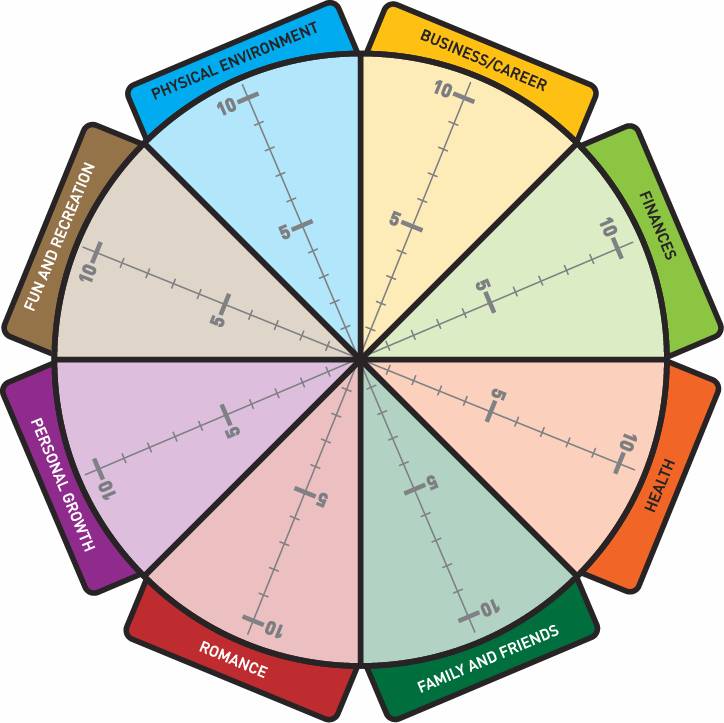
At its core, a Wheel of Life is a visual representation of your life’s current balance, typically depicted as a circle divided into 8 to 12 segments. Each segment represents an important area of your life, such as career, health, relationships, finances, personal growth, and fun and recreation. The beauty of this tool lies in its simplicity and its ability to provide immediate insights into where your energy and focus are currently distributed.
To use this self-reflection exercise, you rate your level of satisfaction with each life area on a scale of 1 to 10, with 1 being very dissatisfied and 10 being completely satisfied. Once you have assigned a rating to each segment, you then connect the dots. The resulting shape within the circle is your personal “wheel.” If the shape is lopsided or jagged, it indicates areas where you might feel out of balance or where you are experiencing significant dissatisfaction.
This visual feedback is incredibly powerful. It is one thing to vaguely know you are unhappy with your career, but it is another to see it represented visually as a small slice on your wheel, starkly contrasted against a robust segment for your relationships. This visual clarity acts as a catalyst for awareness, helping you to understand which aspects of your life demand more attention or a shift in perspective. It makes the abstract concept of “life balance” tangible and actionable.
Choosing the right categories for your wheel is also crucial for a meaningful assessment. While there are standard categories, you have the flexibility to customize them to truly reflect what is important to you. A well-designed wheel of life assessment template will often provide a starting point, but encourage personalization to make the exercise resonate deeply with your unique values and aspirations.
Common Wheel of Life Categories
- Career or Work
- Health and Well-being Physical and Mental
- Relationships Family, Friends, Romantic
- Finances and Money
- Personal Growth and Learning
- Fun, Recreation, and Hobbies
- Physical Environment Home, Workspace
- Spirituality or Contribution
Transforming Insights into Action with Your Wheel of Life
Completing your Wheel of Life is just the first step; the real magic happens when you use the insights gained to create meaningful change. Once you have your visual representation of balance, take some time to reflect on what it tells you. What areas are surprisingly strong? Where are the significant dips? Are there any areas that you consistently neglect, or perhaps over-prioritize, leading to imbalance elsewhere?
The goal is not necessarily to have a perfect circle where every area is a 10. Life is dynamic, and sometimes certain areas will naturally demand more of our energy. Instead, the aim is to ensure that your wheel feels “rollable” – that you are moving forward purposefully and that no single area is causing undue friction or preventing progress. Identify one or two areas with lower scores that, if improved, would have the biggest positive impact on your overall well-being. Focusing on too many areas at once can be overwhelming.
Next, it is time to brainstorm specific, actionable steps you can take to improve your satisfaction in those chosen areas. For example, if your “Health” score is low, your actions might include scheduling a doctor’s appointment, committing to a daily walk, or planning healthier meals. If “Personal Growth” is lacking, perhaps you could sign up for an online course, read a new book each month, or dedicate time to learning a new skill. Break these down into small, manageable tasks.
Remember, the Wheel of Life is not a one-time exercise. It is a tool for ongoing self-reflection and growth. Revisit your wheel periodically – perhaps quarterly or semi-annually – to track your progress and adjust your focus as your life evolves. Using a wheel of life assessment template regularly allows you to monitor your journey, celebrate your successes, and adapt your strategies as needed. This regular check-in helps you stay aligned with your values and ensures you are continuously moving towards a more balanced and fulfilling life. It is a powerful practice for intentional living.
Embracing the Wheel of Life as a regular practice empowers you to take charge of your personal development journey with clarity and purpose. By regularly assessing and reflecting on different dimensions of your life, you are not just identifying areas for improvement; you are actively engaging in the process of shaping a more intentional and satisfying existence.
This simple yet profound tool serves as a constant reminder to nurture all aspects of your being, fostering a holistic approach to well-being. It is about creating a life that truly resonates with your values and aspirations, ensuring you are not just living, but thriving in every dimension that matters to you.