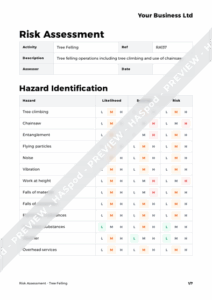
Working with trees is a rewarding profession, but let’s be honest, it’s also incredibly demanding and comes with its fair share of inherent dangers. From the moment you size up a towering oak to the final cut of a branch, you’re constantly evaluating potential risks. Accidents can happen quickly, often with severe consequences for both the crew and the public. That’s why meticulous planning and a proactive approach to safety aren’t just good practice; they’re absolutely essential.
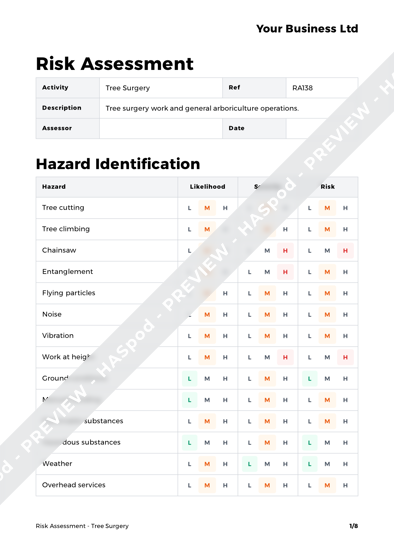
Before any chainsaw revs or arborist ascends, a thorough understanding of the job site, the task at hand, and the potential hazards is paramount. This isn’t merely about ticking a box; it’s about safeguarding lives, protecting property, and ensuring your team returns home safely at the end of each day. Having a clear, structured system for identifying, assessing, and mitigating these risks is crucial, and that’s where a well-designed tree surgery risk assessment template truly shines.
Navigating the Perils: Why a Tree Surgery Risk Assessment is Non-Negotiable
Let’s face it, tree surgery is not for the faint of heart. It involves working at height, handling powerful machinery, and dealing with unpredictable natural elements. Each job site presents its unique set of challenges, from dense urban environments with overhead power lines to remote rural locations with uneven terrain. Ignoring these risks isn’t an option; in fact, it’s a direct route to serious accidents, legal issues, and irreparable damage to your reputation. A robust risk assessment is your first line of defense, a proactive measure that allows you to identify potential problems before they escalate.
Beyond the moral imperative to protect your team and the public, there are significant legal obligations. Health and safety regulations across many regions mandate that employers conduct suitable and sufficient risk assessments for all work activities. This means systematically thinking through what might cause harm and deciding what precautions you need to take to prevent it. A well-documented tree surgery risk assessment template provides clear evidence of your commitment to safety and your compliance with these essential laws.
The process typically involves a few key steps: first, identifying all potential hazards associated with the task; second, deciding who might be harmed and how; third, evaluating the risks and determining what existing control measures are in place; and finally, recording your findings and regularly reviewing the assessment. This structured approach helps ensure nothing is overlooked, from the most obvious dangers to the subtle, less apparent ones.
Consider the sheer variety of hazards encountered daily in this line of work. It’s not just about the big, obvious risks, but a combination of many factors that can lead to an incident.
Common Hazards in Tree Surgery
- Working at height: Falls from ladders, ropes, or platforms.
- Machinery and tools: Chainsaw kickback, chipper accidents, stump grinder mishaps.
- Falling objects: Branches, tools, or other debris.
- Overhead and underground services: Electrical cables, gas pipes, water lines.
- Weather conditions: Strong winds, heavy rain, lightning.
- Biological hazards: Pests, diseases, poisonous plants.
- Manual handling: Lifting heavy logs or equipment.
Key Control Measures
- Personal Protective Equipment (PPE): Helmets, eye protection, hearing protection, chainsaw trousers.
- Safe systems of work: LOTO (Lock Out, Tag Out) for machinery, precise cutting techniques.
- Training and competence: Ensuring all staff are qualified and experienced for their tasks.
- Equipment maintenance: Regular checks and servicing of all tools and machinery.
- Emergency planning: Clear rescue procedures and first aid provision.
Your Step-by-Step Guide to Building a Practical Tree Surgery Risk Assessment Template
Developing your own effective tree surgery risk assessment template doesn’t have to be a daunting task. In fact, having a standardized template is incredibly beneficial. It brings consistency to your safety procedures, ensures that no critical steps are missed, and streamlines the planning process for every job. Think of it as your company’s safety blueprint, a document that guides your team through the necessary precautions, ensuring everyone is on the same page regarding potential dangers and how to mitigate them.
A robust template will prompt you to consider every facet of the job. It should be comprehensive enough to cover a wide array of scenarios but also flexible enough to be adapted to specific site conditions. This adaptability is key; while the core framework remains, the details will naturally shift from one job to the next. The beauty of a well-designed template is that it nudges you to ask the right questions and document the answers clearly, leaving no room for assumptions.
When constructing your template, you’ll want to include sections that guide you through a logical safety process. This ensures that you cover everything from initial client contact to the final site clear-up. It’s not just about listing hazards; it’s about connecting those hazards to specific tasks, evaluating their severity, and outlining actionable steps to reduce the risk.
Here’s a breakdown of essential elements you should consider incorporating into your tree surgery risk assessment template:
- Job Details: Client name, site address, date of assessment, assessor’s name.
- Task Description: A clear outline of the tree surgery work to be undertaken (e.g., crown reduction, felling, stump grinding).
- Site Information: Details about the working environment, including ground conditions, access points, public access, and proximity to buildings or services.
- Identified Hazards: A comprehensive list of all potential dangers relevant to the specific job.
- Who is at Risk: Identify workers, public, or property that could be affected.
- Existing Control Measures: Document any safety procedures already in place.
- Risk Rating: A method to quantify the risk (e.g., a simple matrix of likelihood x severity).
- Additional Control Measures: Specific steps to further reduce the risk.
- Residual Risk Rating: The risk level after implementing additional controls.
- Emergency Procedures: Clear plans for accidents, including first aid, rescue, and contact numbers.
- Review and Sign-off: Spaces for team members to acknowledge they understand the assessment and for regular review dates.
Once your template is built, the next crucial step is implementation. This involves more than just filling out a form; it requires a detailed site visit, open discussion with your team, and a willingness to adapt as circumstances change. A risk assessment isn’t a static document; it’s a living tool that should be reviewed and updated if the scope of work changes or new hazards emerge. Make sure everyone involved understands the assessment and their role in maintaining a safe working environment.
Ultimately, a proactive approach to safety, supported by a meticulously crafted and consistently used risk assessment, becomes a cornerstone of any professional tree surgery operation. It fosters a culture where safety is everyone’s responsibility, reducing the likelihood of incidents and building confidence among your team and clients alike. By embracing comprehensive planning and continuous vigilance, you ensure that every project is executed not only efficiently but, most importantly, safely, protecting both your workforce and your valuable reputation in the industry.