Navigating the complex world of business relationships means constantly being aware of potential risks. As organizations increasingly rely on external vendors, suppliers, and service providers, the security and operational integrity of these third parties become paramount to your own success. Overlooking these external dependencies can lead to significant vulnerabilities, from data breaches and regulatory non-compliance to reputational damage and financial losses.
This is precisely why a structured approach to evaluating these partners is not just good practice, but an absolute necessity. Understanding who your third parties are, what data they access, and what potential risks they introduce to your environment is the first step toward building a resilient and secure operational framework. A well-designed tool can simplify this daunting task, providing a clear roadmap for due diligence and continuous monitoring.
Understanding the Core Components of a Robust Template
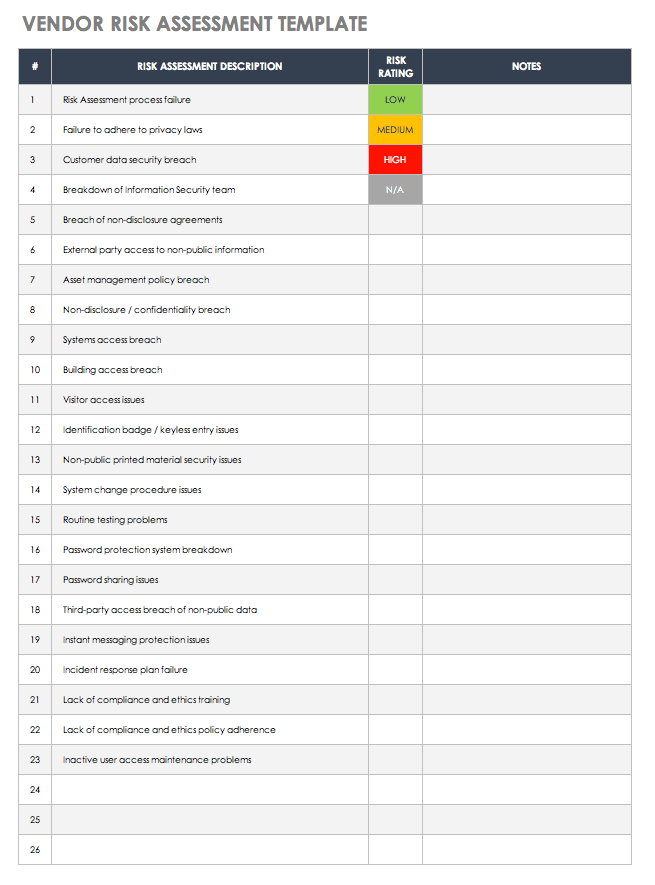
When it comes to safeguarding your organization against external threats, a comprehensive third party risk assessment template is an invaluable asset. It provides a standardized framework, ensuring that every vendor undergoes a consistent, thorough evaluation process. This consistency is crucial for both efficiency and compliance, allowing you to systematically identify, analyze, and mitigate potential risks before they escalate. Without such a template, assessments can become ad hoc, leading to critical oversight and inconsistent levels of protection across your vendor ecosystem.
A robust template typically begins with fundamental vendor identification details, moving into the nature of the relationship and the services provided. It then delves deep into various risk domains, ensuring a holistic view of potential exposures. This structured approach helps in categorizing risks effectively, allowing you to prioritize your efforts and allocate resources where they are most needed. Imagine trying to compare the risk profiles of ten different vendors without a common set of questions or a standardized scoring mechanism – it would be an administrative nightmare.
Furthermore, a well-crafted template doesn’t just ask questions; it guides you through the process of evaluating the answers. It often includes sections for evidence collection, clear scoring methodologies, and fields for documenting mitigation strategies. This ensures that the assessment isn’t just a checklist but a dynamic tool for ongoing risk management. It provides a clear audit trail, demonstrating due diligence to regulators and stakeholders, which is increasingly vital in today’s regulatory landscape.
Ultimately, the goal of incorporating such a template is to transform a potentially overwhelming task into a manageable and actionable process. It empowers your team to conduct thorough reviews, make informed decisions about third-party engagements, and maintain a proactive stance against evolving threats. By having a clear, repeatable process, you can onboard new vendors with confidence and continuously monitor existing relationships for changes in their risk posture.
Key Areas Covered by an Effective Template
- Vendor identification and basic company information
- Type of service or product provided and its criticality
- Access levels to sensitive data or systems
- Information security controls and certifications
- Data privacy practices and compliance (e.g., GDPR, CCPA)
- Financial stability and business continuity planning
- Legal and regulatory compliance adherence
- Insurance coverage and liability provisions
- Physical security measures at vendor facilities
- Subcontractor management and oversight
Implementing and Maximizing Your Template’s Effectiveness
Simply having a third party risk assessment template is only half the battle; its true value comes from effective implementation and consistent use within your organization. To truly maximize its benefits, consider integrating it into your broader vendor management lifecycle. This means it should be used not just during initial vendor selection, but also during contract renewals, significant changes in service scope, and as part of a regular review cycle. By making it a standard operating procedure, you embed risk awareness into your organizational culture.
Start by customizing the template to perfectly align with your specific industry, regulatory requirements, and risk appetite. Not all organizations face the same level or type of third-party risk, so a generic template might miss crucial elements or include irrelevant ones. Tailoring the questions, scoring mechanisms, and risk categories will ensure that the assessments are both relevant and efficient, providing meaningful insights without creating unnecessary administrative burden. This initial customization is a critical step that pays dividends in the long run.
Training your team on how to properly use the template is also paramount. Ensure they understand not just what questions to ask, but also how to interpret the responses, identify red flags, and document findings accurately. Clear guidelines on what constitutes an acceptable level of risk versus what requires further investigation or mitigation are essential. This empowers assessors to make consistent and informed judgments, reducing subjective biases and improving the overall quality of your risk assessments.
Finally, remember that third-party risk management is an ongoing process, not a one-time event. Regularly review and update your third party risk assessment template to reflect new threats, evolving regulatory landscapes, and changes in your business operations. As technology advances and new attack vectors emerge, your assessment methodologies must also adapt. Building a feedback loop where lessons learned from past incidents or new vendor engagements can inform template improvements will ensure its continued effectiveness and relevance over time.
Establishing a robust framework for managing your external partnerships is a foundational element of any resilient organization. By leveraging a well-designed and consistently applied template, you transform a potentially overwhelming task into a strategic advantage, ensuring that your reliance on third parties strengthens rather than weakens your overall security posture.
Embracing this proactive approach allows your business to not only mitigate immediate threats but also build long-term trust and stability with your partners. It fosters an environment where growth and innovation can thrive, supported by a clear understanding and management of the risks inherent in today’s interconnected business world.