In today’s interconnected financial landscape, banks increasingly rely on a complex web of third-party vendors for critical services, ranging from IT infrastructure and payment processing to loan origination and customer support. While these partnerships offer immense benefits in terms of efficiency and innovation, they also introduce a significant layer of risk. Managing these external relationships effectively is no longer optional; it is a fundamental pillar of sound banking practice, dictated by regulatory mandates and the imperative to protect sensitive data and customer trust.
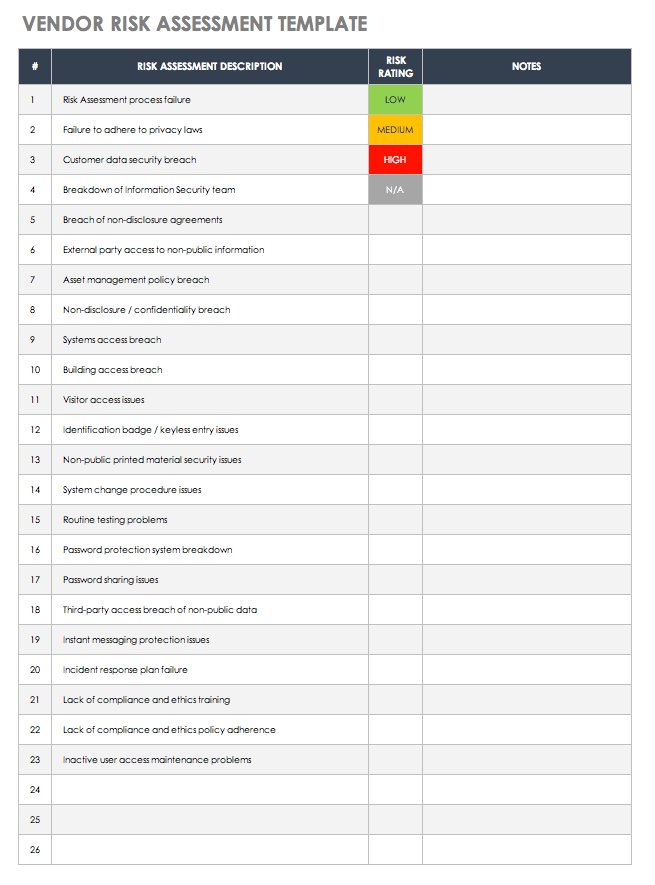
Navigating this intricate environment requires a structured and consistent approach. This is where a robust bank vendor risk assessment template becomes an indispensable tool. It provides a standardized framework to systematically identify, evaluate, and mitigate the potential risks associated with each vendor relationship, ensuring that your institution remains secure, compliant, and resilient in the face of evolving threats and operational challenges.
Why a Robust Bank Vendor Risk Assessment Template is Essential
The pressure on financial institutions to meticulously manage vendor risk has never been greater. Regulators worldwide, including the OCC, Federal Reserve, and FDIC in the US, demand comprehensive third-party risk management programs. Failure to comply can result in substantial fines, enforcement actions, and significant reputational damage that can erode customer confidence and impact market standing. A well-designed bank vendor risk assessment template serves as your first line of defense, demonstrating due diligence and a commitment to protecting your institution.
Beyond regulatory compliance, a standardized template brings a level of consistency to your vendor assessments that ad-hoc processes simply cannot achieve. It ensures that every vendor, regardless of the service they provide or the department they interact with, undergoes the same rigorous scrutiny. This uniform approach helps in identifying gaps, comparing risks across different vendors, and making informed decisions based on objective criteria rather than subjective judgments.
Furthermore, implementing a comprehensive template dramatically improves operational efficiency. Instead of reinventing the wheel for each new vendor or annual review, your team can leverage pre-defined questions, risk categories, and scoring methodologies. This not only saves valuable time and resources but also allows for a quicker onboarding process for new vendors, provided they meet your established risk thresholds. It transforms a potentially cumbersome task into a streamlined, repeatable process.
Ultimately, a bank vendor risk assessment template empowers better decision-making. By clearly outlining potential risks and requiring vendors to provide detailed information on their controls and safeguards, banks gain a clearer picture of their exposure. This insight enables proactive mitigation strategies, helps in negotiating stronger contracts, and ensures that the overall risk profile of the bank remains within acceptable limits. It’s about understanding who you’re doing business with and what potential vulnerabilities they might introduce.
Key Components to Include
- **Vendor Information:** Basic details about the vendor, their services, contact persons, and contract terms.
- **Risk Categories:** Clearly defined areas of potential risk, such as operational, cybersecurity, compliance, financial, and reputational.
- **Detailed Assessment Questions:** A comprehensive set of questions tailored to each risk category, designed to elicit specific information about the vendor’s controls, policies, and procedures.
- **Risk Scoring Methodology:** A standardized system for evaluating responses and assigning a risk score, allowing for objective comparison and prioritization.
- **Mitigation Strategies:** Sections to document identified risks and the planned actions to reduce or eliminate them.
- **Review Schedule:** A plan for ongoing monitoring and periodic reassessment to ensure risks remain managed.
A crucial aspect within these components is the depth of the assessment questions. These shouldn’t be generic but specifically address banking-related concerns, such as data encryption standards, business continuity plans, incident response protocols, and compliance with financial regulations like GLBA or PCI DSS. The more specific and probing these questions are, the more effective your risk assessment will be in uncovering potential issues.
Implementing and Maximizing Your Bank Vendor Risk Assessment Template
Simply having a bank vendor risk assessment template is only the first step; its true value is realized through effective implementation and continuous refinement. Begin by customizing the template to align with your institution’s specific risk appetite, operational structure, and regulatory obligations. No two banks are identical, and your template should reflect your unique business model and the types of vendors you engage with. This customization might involve tailoring risk categories, adjusting scoring methodologies, or adding specific questions relevant to your regional regulations.
Once your template is refined, it’s crucial to integrate it seamlessly into your overall vendor management lifecycle. This means using it not just for initial due diligence, but also for ongoing monitoring and periodic reviews. Vendor risks are not static; they evolve with changes in technology, regulations, and even the vendor’s own operational circumstances. Establishing a schedule for reassessing high-risk vendors annually and lower-risk ones biennially, using the same template, ensures that your risk posture remains current and managed.
Effective implementation also requires robust internal processes. Clearly define roles and responsibilities for conducting assessments, reviewing responses, and approving vendor relationships. Ensure that all stakeholders, from procurement and legal to IT and compliance, understand their part in the vendor risk management framework. Communication channels must be open and clear, allowing for efficient collaboration and swift action when risks are identified.
Consider leveraging technology to maximize the efficiency and effectiveness of your template. While a manual process can work for smaller institutions, larger banks with numerous vendors often benefit from automated GRC (Governance, Risk, and Compliance) platforms. These tools can house your bank vendor risk assessment template, automate the sending and tracking of questionnaires, facilitate risk scoring, and provide centralized reporting, turning data into actionable insights and reducing the administrative burden on your team.
Finally, invest in training your team. Even the most perfectly designed template is only as good as the people using it. Provide comprehensive training to all employees involved in vendor management, from those initiating new vendor relationships to those conducting detailed risk reviews. This ensures a consistent understanding of the template’s purpose, proper usage, and the importance of thorough and objective assessment. Well-trained personnel are key to extracting the maximum value from your risk management efforts.
A well-executed vendor risk management program, anchored by a robust and continuously updated template, is foundational to maintaining the security and integrity of any financial institution. It moves beyond mere compliance, embedding a culture of proactive risk awareness throughout the organization, safeguarding against unforeseen challenges, and protecting the trust placed in the institution by its customers and stakeholders. By diligently applying these principles, banks can navigate the complexities of third-party relationships with greater confidence and resilience, ensuring sustained success in a constantly evolving financial landscape.