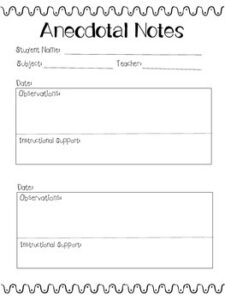
In the bustling world of childcare, where every moment is a new discovery for a child, keeping track of their unique journey can feel like a monumental task. That’s where a well-crafted anecdotal record template for childcare comes into play, offering a structured yet flexible way to document those precious “aha!” moments, little triumphs, and even the occasional challenging interactions that are all part of a child’s growth. It’s more than just paperwork; it’s a window into their world, helping us understand their development and tailor our support effectively.
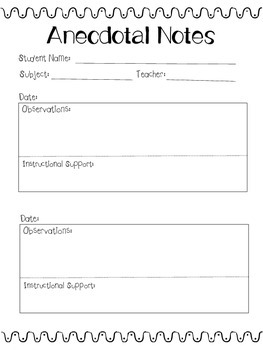
Think of it as collecting snapshots of a child’s day, but with a purpose. These records aren’t meant to be exhaustive daily diaries, but rather focused observations of significant events, behaviors, or conversations. They provide rich, descriptive accounts that highlight a child’s learning style, social skills, emotional responses, and emerging abilities, giving caregivers, educators, and parents a much clearer picture than a simple checklist ever could.
By systematically noting down these observations, we gain invaluable insights into individual children, identify patterns, and can make informed decisions about their care and education. It empowers childcare providers to be more responsive, intentional, and truly connect with each child’s unique developmental path, fostering an environment where every child feels seen, understood, and supported.
The Power of Observation: Why Anecdotal Records Are Indispensable
Anecdotal records are truly a game-changer in the childcare setting because they move beyond generic assessments to capture the nuanced, individual experiences of each child. Unlike standardized tests or simple rating scales, these records provide a narrative, telling a story about what a child said, did, or how they interacted in a specific situation. This detail is crucial for understanding the whole child, not just isolated skills.
These powerful tools allow us to witness development unfold in real-time. Imagine a child who has been struggling with sharing suddenly offering a toy to a peer. A quick, objective anecdotal record of this incident captures the moment, including the context, the child’s exact words or actions, and the outcome. This single entry can highlight a significant leap in social-emotional development that might otherwise go unnoticed or be forgotten in the busy flow of the day.
Furthermore, anecdotal records are invaluable for identifying a child’s interests and strengths. By noting what activities a child gravitates towards, what questions they ask, or how they solve problems, we can tailor learning experiences to be more engaging and effective. If a child consistently shows fascination with building blocks, for example, multiple records might point to an emerging interest in engineering or spatial reasoning, prompting caregivers to provide more related resources.
They also play a critical role in addressing challenges. When a child exhibits a particular behavior that requires attention, detailed anecdotal records can help pinpoint triggers, observe patterns over time, and assess the effectiveness of interventions. Without these specific observations, caregivers might be left guessing, but with concrete examples, they can develop more targeted and supportive strategies.
Communication with parents is significantly enhanced through the use of these records. Instead of simply saying, “Your child had a good day,” caregivers can share specific, positive anecdotes that illustrate their child’s learning or social achievements. Conversely, when discussing concerns, having objective records provides a factual basis for the conversation, making it less subjective and more constructive for both parties.
Ultimately, these records contribute to a more holistic and responsive childcare environment. They help educators and caregivers become better observers, fostering a deeper understanding of child development and promoting individualized care that truly meets the needs of every child in their charge.
Designing Your Perfect Anecdotal Record Template
Creating an effective anecdotal record template for childcare doesn’t have to be complicated, but it does require thought about what information is most useful for your specific setting and goals. The aim is to make it easy to use consistently, ensuring that the observations you capture are clear, objective, and meaningful. A good template acts as a guide, prompting you to include key details without feeling overly prescriptive.
Start by considering the essential elements that every record should contain. These foundational pieces of information help contextualize the observation and ensure that it can be easily understood by anyone reviewing it later. Clarity and organization are paramount to making the records useful for tracking progress, communicating with parents, and informing curriculum planning.
Once you have your core elements, you might consider adding sections that help categorize the observation by developmental domain. This makes it easier to track progress in specific areas like cognitive, social-emotional, language, or physical development over time. It also highlights areas where a child might need additional support or enrichment.
Here are some key components to include in your anecdotal record template:
- Child’s Name: Clearly identifies the subject of the observation.
- Date and Time: Provides a precise timestamp for the event, essential for tracking development over time.
- Observer’s Name: Identifies who made the observation, useful for follow-up questions or consistency.
- Setting/Context: Briefly describes where and what was happening when the incident occurred (e.g., “during free play in the block area,” “at the snack table”).
- Objective Observation: This is the most crucial part – a factual, descriptive account of what you saw and heard. Focus on specific actions and words, avoiding interpretation or judgment (e.g., “Child A picked up a red block and placed it on top of a blue block,” not “Child A was playing nicely”).
- Interpretation/Reflection (Optional but Recommended): A brief section where the observer can reflect on what the observation might mean regarding the child’s development, learning, or behavior. This is where you connect the “what” to the “why” or “how.”
- Follow-up/Action: Note any immediate actions taken or planned follow-ups based on the observation (e.g., “Discussed with parent,” “Will observe again tomorrow,” “Provided additional sensory bins”).
- Developmental Domain(s): A checklist or space to indicate which developmental areas the observation relates to (e.g., Social-Emotional, Cognitive, Language, Fine Motor, Gross Motor).
Remember, the goal is to create a template that is practical for daily use. It should encourage detailed, objective recording without becoming a burden. By capturing these rich details, you build a comprehensive story of each child’s development, fostering an environment where growth is celebrated and challenges are met with informed support.
Embracing the regular use of well-designed anecdotal records can profoundly transform how we understand and interact with the children in our care. These detailed snapshots of their daily lives provide a robust foundation for tailored educational plans, meaningful parent-teacher conferences, and a deeper appreciation for each child’s unique learning journey. It’s about building a living archive of progress, a testament to the growth that happens every single day within the childcare setting.
By diligently documenting these moments, caregivers empower themselves with insights that go far beyond surface-level interactions. They become keen observers, turning everyday occurrences into valuable data points that illuminate individual development, celebrate small victories, and guide future interactions, ultimately enriching the experience for both the children and those dedicated to nurturing their early years.