Receiving an acceptance letter marks a significant milestone for both children and their parents. It’s the moment when anticipation turns into excitement, signaling the start of a new educational journey. For elementary schools, sending out these formal notifications is a crucial part of the admissions process, setting the tone for future interactions with new families. This article will guide you through creating an effective and welcoming elementary school acceptance letter template, ensuring a smooth transition for everyone involved.
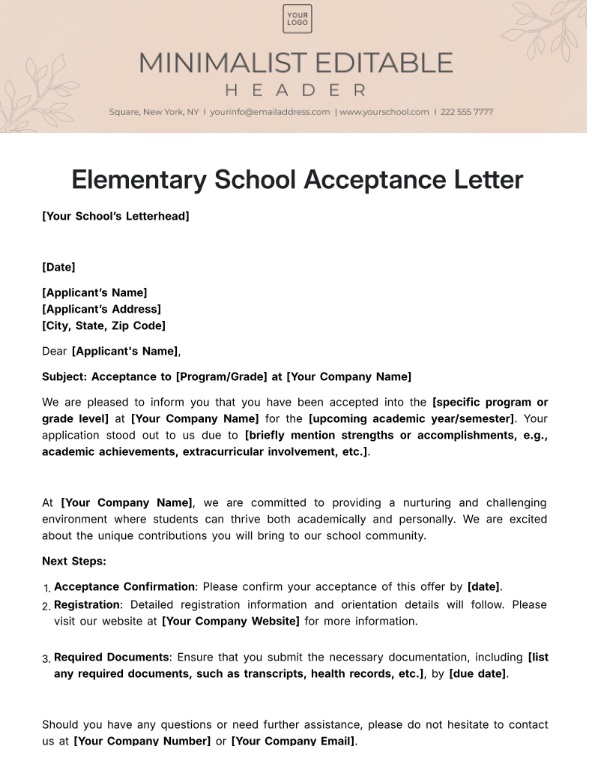
A well-crafted acceptance letter does more than just inform; it extends a warm invitation and clearly outlines the next steps. It serves as the official welcome, providing essential details while also building enthusiasm for the school community. Understanding the key elements and best practices for these communications is vital for any school administrator.
Throughout this guide, we’ll explore the critical components of a powerful acceptance letter, discuss how to tailor your messaging, and highlight the benefits of using a standardized template. Our aim is to help your school make a memorable and positive first impression on its newest members.
Crafting an Effective Elementary School Acceptance Letter
An acceptance letter is often the first formal communication a new family receives from your school. This makes its content and presentation incredibly important. A thoughtfully designed letter can significantly enhance a family’s perception of your institution and streamline their enrollment journey.
It’s an opportunity to reinforce the school’s values and commitment to nurturing young minds. Moreover, a clear and comprehensive letter can reduce follow-up questions, saving valuable administrative time. This initial communication sets the stage for a positive and productive partnership between the school and parents.
Essential Components of Your Acceptance Letter
Every effective elementary school acceptance letter template should include several key pieces of information. Begin with a clear statement of acceptance, congratulating the student on their admission. This primary message should be prominent and unambiguous.
Next, clearly state the student’s name, grade level, and the academic year they are admitted for. Include important dates for enrollment, such as deadlines for tuition deposits, registration forms, or orientation sessions. Providing a contact person or department for questions is also crucial.
- Student and Program Details: Clearly state the student’s full name, the grade level they are accepted into, and the academic year.
- Official Acceptance Statement: A direct and warm declaration of acceptance into the school.
- Key Dates and Deadlines: Specify dates for enrollment confirmation, tuition payments, and submission of required documents.
- Required Documents: List any forms or records parents need to submit, such as health records, birth certificates, or previous school transcripts.
- Financial Information: Briefly mention tuition fees, payment schedules, and any scholarship details, if applicable.
- Next Steps: Clearly outline what parents need to do to complete the enrollment process.
- Contact Information: Provide a designated person or office (e.g., Admissions Office) for any inquiries.
- Welcome Message: A warm closing statement that expresses excitement for the student to join the school community.
Tone and Language for New Families
The tone of your acceptance letter should be welcoming, professional, and enthusiastic. Remember that parents are reading this letter, and it should speak to their excitement and potential anxieties. Using positive and inclusive language helps build trust and rapport from the outset.
Avoid overly formal or jargon-filled language that might confuse or alienate families. Instead, aim for clear, concise sentences that are easy to understand. A friendly tone can make families feel more comfortable and eager to engage with your school community.
Personalizing the Welcome Experience
While using an elementary school acceptance letter template is efficient, adding a touch of personalization can make a significant difference. Addressing the letter directly to the student and their parents by name is a simple yet effective way to do this. Consider including a brief, heartfelt sentence about what makes your school special.
Perhaps mention a unique program or aspect of the school that aligns with the family’s interests, if known. A personalized welcome can create a stronger emotional connection and show families that they are already valued members of the community. This attention to detail can significantly enhance the enrollment experience.
Streamlining the Enrollment Process with Templates
Using a well-designed template for your elementary school acceptance letters can dramatically improve efficiency and consistency. It ensures that all crucial information is conveyed accurately and professionally to every prospective family. This standardization minimizes errors and speeds up the entire admissions workflow.
Templates also provide a foundation that can be easily adapted to various situations, from standard acceptances to waitlist notifications. By centralizing the core message and structure, schools can maintain a high level of communication quality without having to start from scratch each time. This strategic approach benefits both the administrative team and new families.
Benefits of Using a Standardized Template
A standardized elementary school acceptance letter template offers numerous advantages for busy admissions departments. Firstly, it ensures consistency in messaging and branding across all communications. Every family receives the same high-quality, professional letter, reflecting positively on your institution.
Secondly, templates save considerable time. Instead of drafting each letter individually, staff can quickly populate a template with specific student details. This efficiency is particularly valuable during peak admission periods. Moreover, a template reduces the likelihood of omitting essential information, ensuring compliance and completeness.
Customizing Templates for Different Scenarios
While standardization is key, a flexible template allows for necessary customization to address various admission scenarios. For instance, you might need slightly different versions for early admission, regular admission, or even waitlist offers. Each scenario might require specific instructions or deadlines.
Consider having merge fields for names, dates, and specific program details to make customization seamless. This flexibility ensures that while the core structure remains consistent, the content can be tailored to the unique circumstances of each applicant. Such adaptability makes the template a powerful tool in your admissions toolkit.
| Scenario Type | Key Customization Points | Example Instruction |
|---|---|---|
| Standard Acceptance | Student Name, Grade, Academic Year, Enrollment Deadline | “Please confirm enrollment by March 15th.” |
| Waitlist Offer | Original Acceptance Deadline, Waitlist Status, Response Deadline | “You are invited to join our waitlist; please respond by April 1st.” |
| Scholarship Recipient | Scholarship Name, Amount, Terms, Additional Forms | “Congratulations on receiving the Bright Futures Scholarship!” |
| Specific Program Acceptance | Program Name, Specific Orientation Dates, Relevant Contact | “Welcome to our STEM Enrichment Program. Orientation on August 20th.” |
| International Student | Visa Requirements, Housing Information, Specific Contacts | “Information regarding I-20 form processing is enclosed.” |
Beyond the Acceptance: Next Steps for Parents
The acceptance letter is just the beginning of the enrollment journey. It’s crucial to clearly guide parents through the subsequent steps. This might include instructions for completing online registration forms, scheduling a school tour, or attending a new student orientation. Providing a clear roadmap reduces confusion and stress for families.
Consider including a link to a dedicated “New Families” section on your school’s website, where they can find FAQs, important forms, and school calendars. Offering transparent and easily accessible information ensures that parents feel supported and well-informed as they prepare their child for elementary school. A comprehensive approach extends a genuine welcome.
Sending out acceptance letters is a moment of celebration and a key administrative task for elementary schools. A well-designed elementary school acceptance letter template not only streamlines your processes but also makes a lasting positive impression on new families. By focusing on clear communication, a welcoming tone, and essential details, you lay the groundwork for a successful and engaging educational experience for every incoming student.
Ensure your letters are comprehensive, warm, and easy to understand, guiding parents smoothly through their enrollment journey. This attention to detail reflects your school’s commitment to excellence and its community.