Embarking on the journey to pass the bar exam can feel like preparing for an academic marathon that tests not just your legal knowledge, but also your endurance and mental fortitude. The sheer volume of material to cover, coupled with the high stakes involved, often leaves aspiring attorneys feeling overwhelmed before they even begin. It is a monumental task, but with the right approach, it becomes manageable and even navigable.
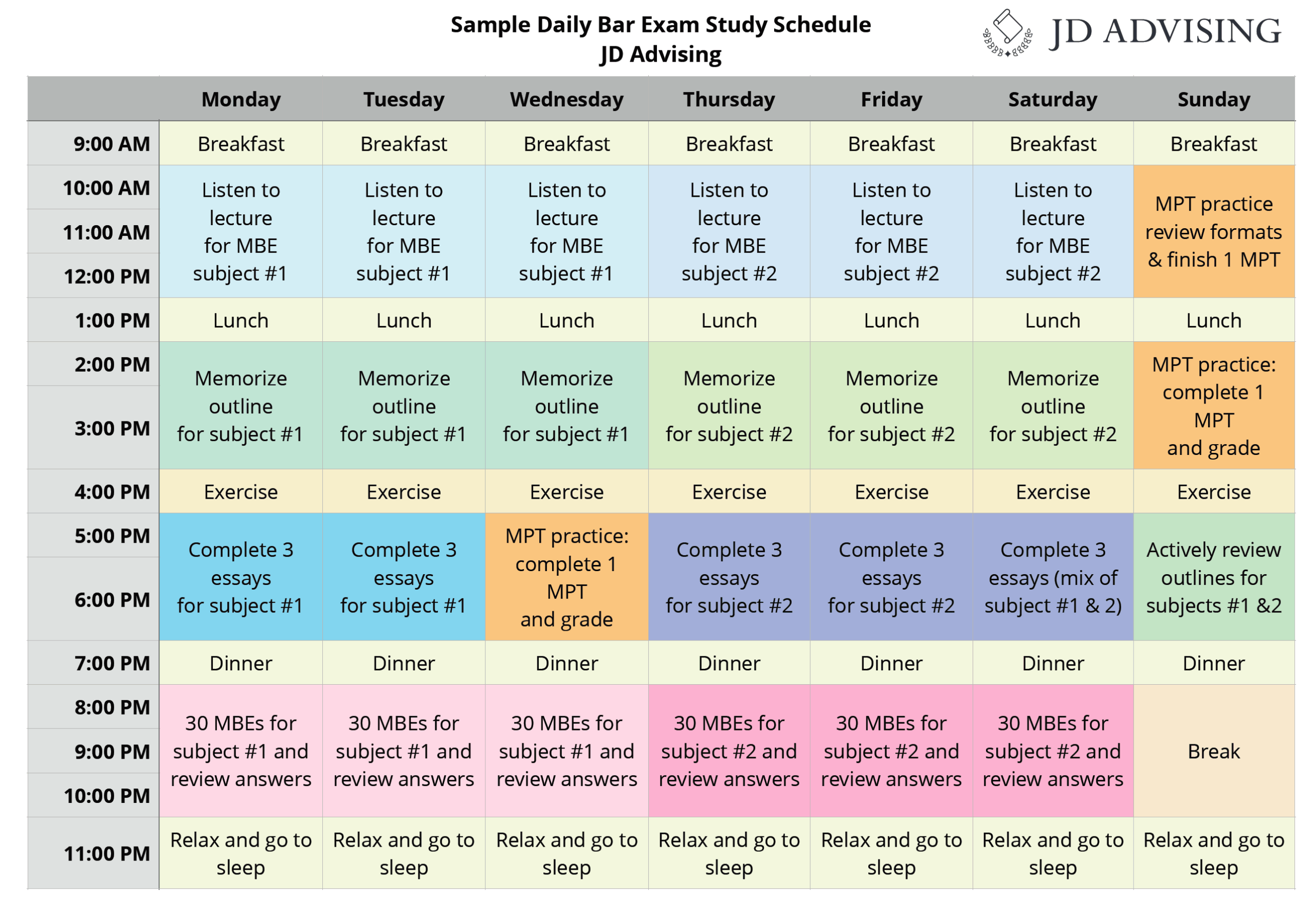
This is precisely where a meticulously crafted bar exam study schedule template comes into play. A well-designed plan acts as your personal roadmap, guiding you through the vast landscape of legal doctrines, practice questions, and essay writing. It helps alleviate anxiety, ensures comprehensive coverage, and optimizes your study efficiency, transforming a daunting challenge into a structured, achievable goal.
Crafting Your Personalized Bar Exam Study Schedule
Creating an effective bar exam study schedule template isn’t about finding a one-size-fits-all solution; it’s deeply personal and requires an honest assessment of your own strengths, weaknesses, and learning style. What works perfectly for one person might be entirely ineffective for another. Before you even think about blocking out time slots, take a moment to reflect on which subjects you naturally grasp quickly, and which ones always seem to trip you up. Consider your preferred study environment, your peak productivity hours, and how you best retain information, whether it’s through active recall, flashcards, or practice problems.
Once you have a clearer picture of your learning profile, the next step involves determining your overall timeline and daily commitment. Most candidates dedicate anywhere from 8 to 12 weeks to full-time study, or longer for part-time approaches. Be realistic about how many hours you can truly dedicate each day without burning out. It is far more beneficial to consistently study for 6-8 focused hours than to attempt an unsustainable 12-hour marathon only to crash and lose days to exhaustion. Remember, consistency trumps intensity, especially over a long preparation period.
Your schedule should be a living document, incorporating a balanced mix of activities designed to build and test your knowledge. Simply reading through outlines won’t cut it; active engagement is key. This means carving out time for subject review, but also significantly for applying that knowledge through practice questions, essays, and performance tests. The goal is not just to understand the law, but to master its application under timed, exam-like conditions.
Key Elements to Include in Your Schedule
As you build your bar exam study schedule template, ensure these critical components are thoughtfully integrated:
- Subject Matter Review: Allocate dedicated time for reviewing outlines, lectures, and flashcards for each bar exam subject. Break down large subjects into smaller, digestible chunks.
- Practice Questions (MBE): Regularly engage with multiple-choice questions from various sources. Analyze both correct and incorrect answers to understand the reasoning and identify areas for improvement.
- Essay Practice (MEE/state specific): Practice writing full-length essays under timed conditions. Focus on issue spotting, rule statements, analysis, and conclusions. Seek feedback if possible.
- Performance Tests (MPT/state specific): These often overlooked sections can significantly boost your score. Practice organizing materials, following instructions, and producing a legal document within the time limit.
- Review and Active Recall: Periodically revisit previously studied topics to reinforce memory. Techniques like spaced repetition and self-quizzing are incredibly effective.
- Breaks and Self-Care: Crucially, schedule regular breaks, meals, exercise, and social interaction. Neglecting your well-being will lead to burnout and hinder your retention and performance.
Remember, flexibility is paramount. While having a structure is essential, being able to adjust for unexpected events or to reallocate time to a particularly challenging subject will make your bar exam study schedule template much more robust and sustainable. It’s a guide, not a rigid prison sentence.
Implementing and Adapting Your Study Plan
Once you’ve meticulously crafted your bar exam study schedule template, the next vital step is putting it into action and, perhaps even more importantly, knowing when and how to adapt it. Starting can feel a bit like wading into cold water, but building a routine is key. Begin by sticking to your schedule as closely as possible for the first week or two. This initial period is crucial for establishing habits and for you to truly understand your own pace and how long certain tasks genuinely take you. Don’t be discouraged if you don’t hit every single target perfectly from day one; the goal is consistent effort over time.
As you progress, it becomes imperative to monitor your performance and internalize what works best for you. Are your MBE scores consistently low in a particular subject? Are you struggling to finish essays within the time limit? These are not failures, but rather valuable diagnostic tools. Use your practice scores, the time it takes you to complete tasks, and your general feeling of comprehension to inform adjustments to your schedule. Perhaps you need to dedicate an extra hour to Torts or spend more time deconstructing MPT prompts. Your bar exam study schedule template should evolve with you, becoming more refined as your understanding deepens and your weaknesses become clearer.
Life, as it often does, will inevitably throw curveballs. You might get sick, an unexpected family event could arise, or you might simply find yourself hitting a wall and needing a mental health day. Do not view these as catastrophic setbacks. Instead, learn to be kind to yourself and build in buffers or contingency plans. If you miss a study session, don’t try to cram double the material the next day; instead, look at your schedule for the upcoming week and see where you can reasonably shift things around. Sometimes, taking a planned break can be more productive than pushing through a period of low focus and high stress.
In the final weeks leading up to the exam, your focus will shift slightly. While continued practice and review remain critical, you’ll also want to start simulating exam conditions as much as possible. This means taking full-length practice exams to build stamina and identify any lingering time management issues. Your detailed study plan will naturally transition into a high-level review, consolidating your knowledge and building confidence for the big day. Trust the process you’ve built and the work you’ve put in.
Navigating the challenging waters of bar exam preparation requires both discipline and an effective strategy. By investing time into creating a thoughtful and adaptable study plan, you are not just organizing your hours; you are actively building a foundation for success. This structured approach empowers you to tackle the vast material with confidence, ensuring that you cover all the necessary ground without feeling lost or overwhelmed.
Ultimately, the power of a well-executed study schedule lies in its ability to transform an abstract, intimidating goal into a series of achievable daily tasks. It minimizes guesswork, maximizes efficiency, and allows you to focus your energy on learning and applying the law. Embrace this tool, make it your own, and approach your preparation with the organized resolve that will undoubtedly lead you to your goal of becoming a licensed attorney.