Crafting an effective daily schedule for an elementary school is a bit like solving a complex puzzle. You’re juggling diverse student needs, state curriculum requirements, specialist teacher availability, and the natural rhythms of young learners, all while trying to create a harmonious and productive learning environment. It’s a huge undertaking that impacts everything from student engagement to teacher morale, making it one of the most critical administrative tasks each year.
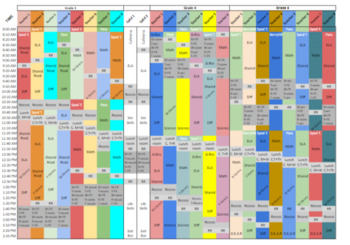
Imagine a school day where every minute is purposeful, transitions are smooth, and there’s ample time for both core academics and enriching activities. That’s the dream, right? Achieving this ideal often starts with a solid foundation, and that’s precisely where an elementary school master schedule template comes in handy. It provides a flexible framework that guides you through the intricate process of allocating time, ensuring no critical component is overlooked.
The Core Components of an Integrated Elementary Schedule
Building a master schedule from scratch can feel overwhelming, but breaking it down into its core components makes the process much more manageable. At the heart of any elementary schedule are the essential academic blocks that ensure students receive a robust education. This typically includes dedicated time for reading, writing, and mathematics, which often comprise the largest portions of the instructional day. The challenge lies in distributing these blocks effectively, ensuring adequate time for deep learning without causing student fatigue or rushed instruction.
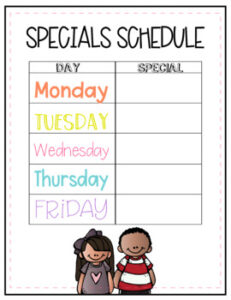
Beyond the core subjects, a truly integrated schedule must carefully weave in the arts, physical education, and other specialized instruction. These “specials” not only provide essential enrichment but also offer teachers valuable planning time. Coordinating specialist teachers who might serve multiple grade levels or even multiple schools requires meticulous planning to avoid conflicts and maximize their availability across the student body. It’s about creating a flow where all students get their fair share of these crucial experiences.
Considering the natural ebb and flow of the school day is also vital. Young children benefit from predictable routines, but also need breaks to recharge. Transitions between activities, lunch, and recess aren’t just empty spaces; they are integral parts of a healthy school day. Strategic placement of these breaks can significantly impact student focus and behavior, making the instructional time more effective. A well-designed schedule helps prevent student burnout and keeps energy levels balanced throughout the day.
Key Elements to Balance for an Optimal Schedule
- Dedicated core academic blocks for reading, writing, and math.
- Strategic placement of specialist subjects like art, music, and physical education.
- Adequate and appropriately timed breaks for lunch and recess.
- Smooth transitions between activities and classroom changes.
- Flexibility for intervention, enrichment, and small group instruction.
Beyond the Basics: Customizing Your Elementary School Schedule Template
While a generic elementary school master schedule template offers a great starting point, every school has its unique character, student demographics, and instructional priorities. Therefore, the true art of scheduling comes in customizing that template to reflect your school’s specific needs and philosophy. This means moving beyond the basic time slots and thinking about how the schedule can truly support your unique learning environment and educational goals.
Consider your student population. Do you have a significant number of students requiring additional academic support or English language services? The schedule needs to proactively carve out time for interventions and differentiated instruction, ensuring these students receive targeted support without missing out on core learning. Similarly, time for enrichment activities for advanced learners should also be a consideration, promoting a truly inclusive and equitable learning experience for all.
Teacher collaboration and planning time are another crucial element often overlooked in initial scheduling efforts. Teachers need dedicated, uninterrupted blocks to plan lessons, analyze student data, and collaborate with colleagues, especially across grade levels or subject areas. A schedule that supports professional development and team planning fosters a stronger, more cohesive instructional staff, which directly benefits student learning. Ignoring this can lead to teacher burnout and a less effective curriculum delivery.
Finally, think about the practicalities of your school building and resources. Are classrooms spread out? Are there shared resources like computer labs or maker spaces? The physical layout of your school can influence transition times and resource availability, impacting the flow of your day. A thoughtfully customized schedule takes these logistical elements into account, minimizing wasted time and maximizing the use of all your school’s assets.
- Integrate time for student interventions and enrichment programs.
- Allocate dedicated blocks for teacher planning and professional collaboration.
- Account for the physical layout of the school and shared resource availability.
- Build in flexibility for unforeseen events and ongoing adjustments.
- Align the schedule with the school’s specific educational philosophy and goals.
Creating an effective elementary school master schedule is a journey of careful consideration, collaboration, and continuous refinement. It’s not just about filling time slots; it’s about strategically designing a day that optimizes learning, supports well-being, and fosters a vibrant educational community. When done thoughtfully, a well-structured schedule becomes an invisible framework that empowers teachers and students to thrive, making every moment count in the pursuit of knowledge and growth.
By embracing a comprehensive approach and recognizing the dynamic nature of a school environment, you can develop a schedule that truly reflects your school’s vision. It’s a powerful tool that, when wielded effectively, can transform the educational experience, ensuring that every student has the opportunity to engage deeply with their learning and develop their full potential within a supportive and well-organized structure.