Effective emergency preparedness is a cornerstone of workplace safety, ensuring the well-being of everyone within a facility. Regular fire drills are not just a good practice; they are often a legal requirement designed to test and refine an organization’s emergency evacuation procedures. However, conducting a drill is only half the battle; thoroughly documenting its outcome is equally vital. This is where a robust fire drill record sheet template becomes an indispensable tool for any business or institution.
Documenting every aspect of a fire drill provides critical insights into what worked well and what needs improvement. It helps identify bottlenecks, assess response times, and ensure that all personnel understand their roles during an actual emergency. Without proper records, the valuable lessons learned from a drill can be easily forgotten, undermining the entire purpose of the exercise. This article will explore the importance of detailed fire drill documentation, delve into the key components of an effective record sheet, and provide a practical sample to guide your safety efforts.
Why Meticulous Fire Drill Documentation is Crucial for Safety Compliance
Recording the details of every fire drill goes far beyond simply ticking a box. It forms a vital part of an organization’s overall safety management system, offering tangible proof of commitment to employee protection and regulatory standards. Proper documentation helps create a safer environment and can protect the organization in unforeseen circumstances.
Ensuring Regulatory Adherence and Legal Protection
Many national and local regulations, such as those from OSHA (Occupational Safety and Health Administration) in the United States, mandate regular fire drills and require that records of these drills be maintained. These records demonstrate an organization’s compliance with fire safety laws and emergency preparedness standards. Failing to keep accurate records can lead to significant fines and legal penalties.
In the unfortunate event of a real fire or emergency, comprehensive drill records can serve as crucial evidence. They can show that due diligence was exercised, that staff were trained, and that evacuation procedures were regularly tested and improved. This level of documentation can be critical in defending against liability claims or regulatory investigations. Statistics show that workplaces with robust safety programs, including documented drills, experience significantly fewer incidents.
Identifying Improvement Areas and Enhancing Response Protocols
A well-maintained fire drill record sheet template is a powerful analytical tool. It allows safety managers to objectively review the performance of each drill, moving beyond anecdotal observations. By systematically recording various metrics, an organization can identify specific areas that require attention.
For instance, an evacuation time that consistently exceeds the target might indicate issues with exit routes or assembly points. Observations noted on the record sheet can highlight problems such as malfunctioning alarms, confused employees, or difficulties assisting individuals with special needs. This iterative process of conducting, documenting, analyzing, and improving ensures that emergency response protocols become increasingly effective and reliable over time.
Key Components of an Effective Fire Drill Record Sheet Template
A truly effective fire drill record sheet template is designed to capture all relevant information in a structured and easy-to-understand format. It should be comprehensive enough to provide a complete picture of the drill’s execution and outcomes, yet straightforward enough to be completed efficiently. Including specific categories ensures no critical details are overlooked.
Essential Information for Comprehensive Reporting
The initial sections of any robust record sheet should focus on basic administrative details and the overall context of the drill. These elements provide the fundamental framework for understanding the drill’s environment and scope. Without this core data, interpreting performance metrics becomes challenging.
Key information to record includes:
- Date and exact time the drill commenced and concluded.
- Specific building, floor, or area where the drill was conducted.
- Weather conditions during the drill (e.g., clear, raining, cold), as this can impact evacuation.
- Type of drill (e.g., announced, unannounced, partial evacuation).
- Number of occupants and visitors present at the time of the drill.
- Details of any specific simulated scenarios, such as a blocked exit or an injured person.
- Names of individuals responsible for conducting and observing the drill.
Tracking Performance Metrics and Observations
Beyond the basic details, the core value of a fire drill record sheet lies in its ability to capture quantitative and qualitative performance data. These sections allow for a detailed analysis of the evacuation process and the effectiveness of safety measures. Focusing on measurable outcomes helps drive continuous improvement.
Crucial performance metrics and observations to track include:
- Total Evacuation Time: The time from the alarm sounding to the last person reaching the designated assembly point.
- Alarm System Performance: Confirmation that all alarms (audible, visual) activated correctly and were heard/seen throughout the facility.
- Emergency Lighting: Verification that emergency lighting functioned during the drill.
- Exit Route Observation: Notes on any blockages, confusion regarding routes, or overcrowding at exits.
- Assembly Point Effectiveness: Confirmation that everyone reached the correct assembly point and was accounted for.
- Staff Roles: Assessment of how well fire wardens, first responders, and other designated personnel performed their duties.
- Issues Encountered: A detailed list of any problems, discrepancies, or safety concerns observed during the drill.
- Special Needs Assistance: Documentation of how individuals requiring assistance were evacuated and any challenges faced.
- Recommendations for Improvement: Specific actions or changes suggested based on the drill’s observations.
Practical Sample of a Fire Drill Record Sheet Template
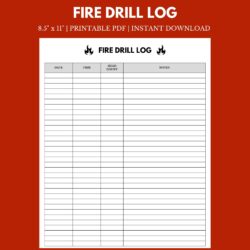
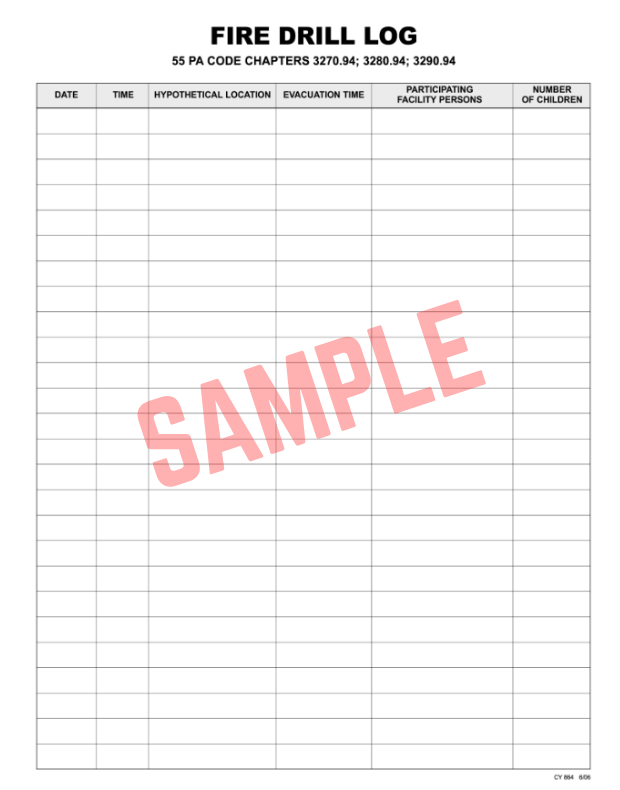
Understanding the theoretical components of a fire drill record sheet template is one thing; seeing a practical example helps solidify its structure and utility. A well-designed template is intuitive, guiding the user through each step of the documentation process. The following outlines the sections you would typically find, demonstrating how crucial information is captured systematically.
Imagine a template structured with clear headings and ample space for notes. It begins with administrative details and progresses through observation points, concluding with analysis and recommendations. This systematic approach ensures all vital data is collected for review.
Section 1: Drill Identification and Administrative Details
- Drill Date: [DD/MM/YYYY]
- Drill Start Time: [HH:MM]
- Drill End Time (Evacuation Complete): [HH:MM]
- Total Evacuation Time: [Minutes:Seconds]
- Location/Building: [Building Name/Number, Floor(s)]
- Type of Drill: (e.g., Unannounced, Announced, Partial)
- Drill Coordinator/Observer: [Name, Title]
- Weather Conditions: [e.g., Clear, Rainy, Snowy, Temperature]
- Number of Occupants (Present): [Total Employees, Visitors, Contractors]
Section 2: System and Equipment Performance
- Fire Alarm System Activation:
- Method: [Manual Pull Station, Smoke Detector, Heat Detector, Simulated]
- Sound/Visual Effectiveness: [Clear, Faint, Not Heard/Seen in all areas – specify]
- Emergency Lighting Operational: [Yes/No/Partial – specify]
- Public Address System Operational: [Yes/No/N/A]
- Sprinkler System Status: [Operational/N/A]
Section 3: Evacuation Process Observations
- Evacuation Routes:
- Were designated routes used correctly? [Yes/No – detail deviations]
- Were routes clear of obstructions? [Yes/No – detail obstructions]
- Exit Usage:
- Were all designated exits utilized effectively? [Yes/No – detail any issues]
- Any congestion at exits? [Yes/No – specify location/cause]
- Personnel Behavior:
- Did occupants respond promptly to the alarm? [Yes/No – detail delays]
- Any panic or confusion observed? [Yes/No – specify]
- Did occupants follow directions from wardens? [Yes/No – detail issues]
- Fire Wardens/Designated Personnel Performance:
- Visibility and Direction Giving: [Excellent, Good, Fair, Poor – explain]
- Accountability Procedures: [Effective, Partial, Ineffective – explain]
- Assistance to Others (e.g., special needs): [Adequate, Inadequate – explain]
Section 4: Assembly Point and Accountability
- Designated Assembly Point: [Location]
- Effectiveness of Assembly Point: [Adequate space, safe, accessible – specify issues]
- Accountability Process:
- Were all occupants accounted for? [Yes/No – detail missing/unaccounted]
- Method of roll call/headcount: [Manual, Electronic – specify]
- Time taken for full accountability: [Minutes:Seconds]
Section 5: Issues, Recommendations, and Follow-Up
- Identified Deficiencies/Issues: (List all problems observed, e.g., blocked fire door, slow response in area X, alarm not audible in room Y)
- [Issue 1]
- [Issue 2]
- [Issue 3]
- Recommendations for Improvement: (Specific actions to address deficiencies)
- [Recommendation 1]
- [Recommendation 2]
- [Recommendation 3]
- Follow-Up Actions Required: [e.g., Repair alarm system, Re-train wardens, Clear exit route, Review special needs plan]
- Responsible Person for Follow-Up: [Name, Title]
- Target Completion Date: [DD/MM/YYYY]
- Additional Comments: [Any other relevant observations or notes]
- Signature of Drill Coordinator: [Signature]
- Date of Report: [DD/MM/YYYY]
This structured format ensures that every aspect of the drill is reviewed, recorded, and acted upon. Utilizing such a detailed fire drill record sheet template transforms a routine drill into a valuable learning experience, continuously strengthening an organization’s emergency readiness. It’s an essential tool for any proactive safety program.
Maintaining thorough records of your fire drills is an investment in safety that pays dividends. It not only ensures compliance with critical regulations but also provides the data needed to continually refine and improve your emergency response plans. By systematically documenting each drill, organizations can identify weaknesses, implement targeted improvements, and ultimately foster a safer environment for everyone.
Embracing a well-structured fire drill record sheet template empowers you to conduct more effective drills and turn every exercise into a step towards greater preparedness. Take the initiative to review your current documentation processes and consider integrating a comprehensive template to elevate your safety standards. Proactive safety measures are always the most effective.