Ever found yourself deep in a design project, loving the creative flow, only to hit a snag when it comes to talking about money? You’re not alone. Pricing your expertise as an interior designer can feel like navigating a maze, trying to balance fair compensation for your brilliant work with keeping clients happy and understanding what they’re paying for. It’s a delicate dance, but it doesn’t have to be confusing or uncomfortable.
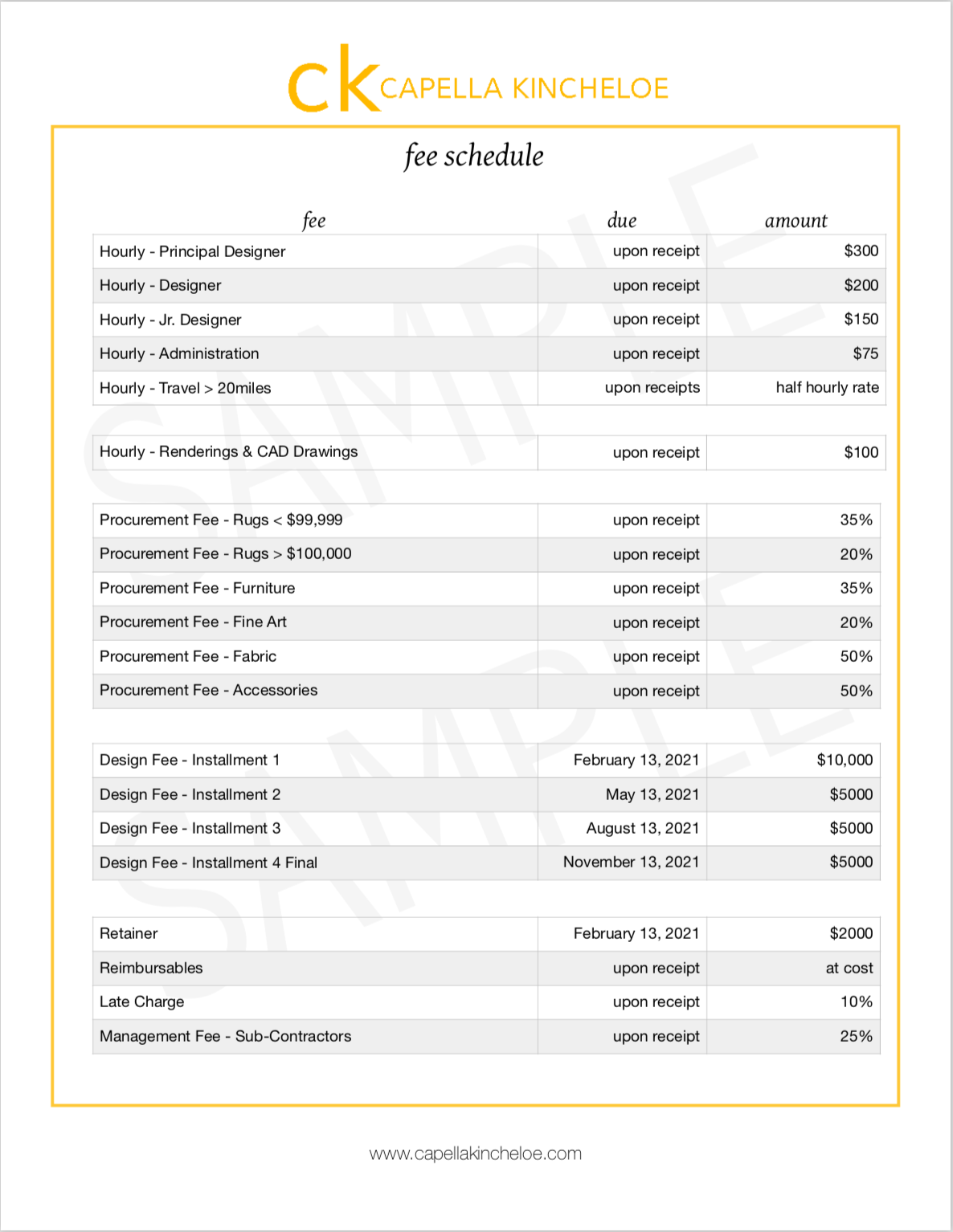
That’s where a clear, comprehensive fee schedule comes into play. It’s more than just a list of prices; it’s a professional statement that sets expectations, builds trust, and allows you to focus on what you do best – creating beautiful, functional spaces. Having a solid framework, perhaps starting with an interior design fee schedule template, can transform how you present your services and ensure both you and your clients are on the same page from day one.
Understanding Different Interior Design Fee Structures
When it comes to charging for your interior design services, there isn’t a one-size-fits-all solution. Different projects and client relationships call for different approaches to billing. Getting familiar with the common fee structures will empower you to choose the best method for each unique situation, ensuring transparency and appropriate compensation for your expertise.
Hourly Rate
This is perhaps the most straightforward method: you charge a specific rate for every hour you spend working on a project. It’s great for smaller, less defined projects, consultations, or when the scope of work might change frequently. Clients appreciate the clear time-tracking, but it can sometimes feel open-ended to them, making budget prediction a challenge.
- Best for: Consultations, small design tasks, projects with evolving scopes.
- Pros: Flexible, ensures compensation for all time spent, good for building trust on smaller tasks.
- Cons: Can be unpredictable for clients, requires meticulous time tracking.
Fixed Fee or Flat Rate
For projects with a clearly defined scope, a fixed fee offers both you and your client peace of mind. You agree on a single price for the entire project or a specific phase of it, regardless of the hours spent. This method requires a very detailed scope of work upfront to avoid scope creep, which can quickly erode your profit margins if not managed carefully.
- Best for: Well-defined projects, complete room designs, specific design packages.
- Pros: Predictable for both client and designer, simpler invoicing.
- Cons: Requires precise scope definition, risk of underpricing if scope expands.
Percentage of Project Cost
This fee structure involves charging a percentage of the total budget for the project, including furniture, fixtures, materials, and contractor labor. It often aligns your compensation with the overall scale and quality of the project, as a larger budget typically means more complex design decisions and procurement. However, clients sometimes perceive this as a disincentive to save money, even if it’s a standard industry practice.
- Best for: Larger, full-service design projects where you handle procurement and project management.
- Pros: Aligns with project scale, can be lucrative on high-budget projects.
- Cons: Clients might question the incentive, requires clear communication about what costs are included.
Cost-Plus or Mark-up
With this model, you charge your clients the net cost of goods (furniture, fixtures, etc.) plus an agreed-upon percentage markup. This compensates you for the time and effort involved in sourcing, purchasing, and managing the delivery of these items. It’s often combined with an hourly fee for your design services, offering a comprehensive approach to billing.
- Best for: Projects where you are heavily involved in procurement and installation.
- Pros: Clearly compensates for procurement efforts, clients see actual product costs.
- Cons: Can appear complex to clients, requires diligent tracking of all purchases.
Crafting Your Personalized Interior Design Fee Schedule
Now that you’re familiar with the various fee structures, the next step is to tailor them to fit your unique business model and the specific services you offer. A generic approach won’t do; your fee schedule should reflect your experience, your brand’s value, and the intricacies of your work. Think of it as developing a menu of your services, each with a transparent and fair price point.
Start by considering your overheads, desired profit margins, and the value you bring to your clients. Are you a seasoned veteran with a unique specialization, or are you just starting out? Where are you located, and what are the market rates in your area? The complexity of the project, the duration, and the extent of your involvement (from initial concept to final installation) will all play a significant role in determining your charges.
Transparency is key. Your clients should be able to look at your fee schedule and clearly understand what they’re paying for. This means breaking down your services into understandable components. For example, instead of a vague “design services” line item, you might list “initial consultation,” “conceptual design development,” “space planning and layout,” “material and finishes selection,” “furniture procurement,” and “project management” as distinct services, each with its own associated fee structure.
Utilizing an interior design fee schedule template can be incredibly helpful as a starting point. It provides a structured format that ensures you don’t miss any critical details. However, remember to customize it extensively. Populate it with your specific service offerings and their corresponding pricing methods. Consider offering different tiers or packages, perhaps a basic consultation package, a full-room design package, and a comprehensive renovation package, to cater to a wider range of client needs and budgets.
- Define Your Services: List every service you offer, from consultations to final styling.
- Choose Fee Methods: Decide which fee structure (hourly, fixed, percentage, cost-plus) applies best to each service.
- Set Your Rates: Research market rates, factor in your experience, overheads, and desired profit.
- Outline Inclusions/Exclusions: Clearly state what is covered and what isn’t for each service.
- Payment Terms: Specify payment schedules, deposits, and invoicing frequency.
Having a well-defined and clearly communicated fee schedule is a cornerstone of a successful interior design business. It not only streamlines your financial processes but also elevates your professional image, fostering trust and clarity with every client interaction. This organized approach empowers you to present your value confidently, turning potential clients into satisfied ones.
Ultimately, a robust fee schedule acts as a compass, guiding both you and your clients through the financial aspects of a design journey. It ensures everyone is aligned on expectations, allowing you to dedicate your energy to crafting beautiful and functional spaces, knowing your business is built on a solid foundation of fair and transparent pricing.