In today’s interconnected global economy, the smooth flow of raw materials is the lifeblood of countless businesses. From manufacturing to food production, the availability, quality, and price stability of these foundational inputs directly impact a company’s ability to operate efficiently, meet customer demands, and maintain profitability. However, relying on a complex supply chain inherently introduces a myriad of potential risks that can suddenly halt production, inflate costs, or even damage a brand’s reputation.

Navigating this intricate landscape requires more than just reactive problem-solving; it demands a proactive approach to identifying and mitigating potential disruptions before they escalate. This is where a robust raw material risk assessment template becomes an indispensable tool. It provides a structured framework for systematically evaluating your supply chain vulnerabilities, allowing you to develop effective strategies to safeguard your operations and ensure long-term resilience.
Why Your Business Needs a Robust Raw Material Risk Assessment
Every business, regardless of its size or industry, faces a unique set of challenges related to its raw material supply. These can range from geopolitical instability impacting sourcing regions to natural disasters disrupting transportation routes, or even unforeseen quality issues with a specific batch of materials. Without a clear understanding of these potential pitfalls, companies are constantly exposed to unexpected shocks that can lead to significant financial losses, production delays, and a decline in customer trust.
Consider the ripple effect of a single raw material shortage. It can bring an entire production line to a standstill, leading to missed deadlines, cancelled orders, and an inability to fulfill commitments. Beyond the immediate operational impact, there are often escalating costs associated with expedited shipping for alternative sources, or the need to reformulate products due to material unavailability. This highlights the critical need for a comprehensive system to not only identify these risks but also to quantify their potential impact and likelihood.
Key Elements of an Effective Template
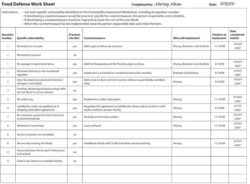
An effective raw material risk assessment template provides a methodical way to break down complex supply chains into manageable components for analysis. It encourages a systematic evaluation of various factors that could compromise your material flow, helping you to pinpoint weaknesses and devise targeted solutions. By diligently working through such a template, you gain invaluable insights into your risk exposure and the most critical areas requiring attention.
Here are some essential components often found within a comprehensive template:
- Detailed identification of all critical raw materials used in your operations.
- Assessment of each material’s source locations and the geopolitical stability of those regions.
- Evaluation of supplier reliability, including their financial health and track record.
- Analysis of material quality consistency and potential for defects.
- Consideration of price volatility for each raw material and its potential impact on costs.
- Review of regulatory compliance requirements and environmental risks associated with sourcing.
- Examination of transportation logistics and potential choke points.
Implementing such a template transforms risk management from a reactive scramble into a proactive, strategic advantage, ensuring your business can withstand unforeseen challenges and continue to thrive.
How to Implement Your Raw Material Risk Assessment Template Effectively
Putting your raw material risk assessment template into practice involves a systematic process that goes beyond merely filling out fields. It requires a dedicated effort to gather accurate information, collaborate across departments, and commit to continuous monitoring. The first step typically involves assembling a cross-functional team, including representatives from procurement, operations, quality control, and finance, to ensure a holistic perspective on all potential risks. This team will be responsible for populating the template with data and collectively assessing the various scenarios.
Once the team is established, the actual assessment begins by listing every significant raw material your business relies upon. For each material, you’ll delve into the specifics: who are the primary suppliers, where are they located, what are the alternative sources, and what is the typical lead time? This initial data collection forms the baseline for your risk analysis. It’s crucial to be thorough at this stage, as any overlooked material or detail could represent a blind spot in your overall risk profile.
Following the identification phase, the team will then rate each identified risk based on two primary criteria: likelihood and impact. Likelihood refers to the probability of a specific risk event occurring, while impact quantifies the severity of its consequences if it does happen. These ratings, often on a numerical scale, help prioritize risks. High-likelihood, high-impact risks demand immediate attention and robust mitigation strategies, while lower-priority risks can be monitored with less intensive measures. This prioritization allows your team to allocate resources effectively where they are most needed.
Finally, the assessment culminates in developing actionable mitigation and contingency plans for the most significant risks. This could involve diversifying your supplier base to reduce reliance on a single source, establishing buffer stock for critical materials, negotiating long-term contracts with fixed pricing, or even exploring alternative materials or product designs. It is not enough to just identify risks; a robust plan to address them is essential. This entire process is not a one-time exercise but rather an ongoing commitment, requiring periodic reviews and updates to remain relevant as market conditions, geopolitical landscapes, and your business needs evolve.
Embracing a structured approach to raw material risk assessment empowers businesses to move beyond simply reacting to crises. It fosters a culture of foresight and preparedness, allowing companies to build greater resilience into their supply chains. By proactively identifying and mitigating potential disruptions, organizations can protect their operational continuity, maintain financial stability, and ultimately strengthen their competitive position in an ever-changing global marketplace. This strategic foresight ensures that your business is not just surviving but thriving, even in the face of unexpected challenges.