Facing an unexpected job termination can be a challenging experience, often accompanied by a severance offer. While it might seem like a final offer, many severance packages are negotiable. Understanding how to approach this crucial conversation can significantly impact your financial future. This article will guide you through the process, helping you understand your rights and showing you how a well-crafted severance package negotiation letter template can empower you.
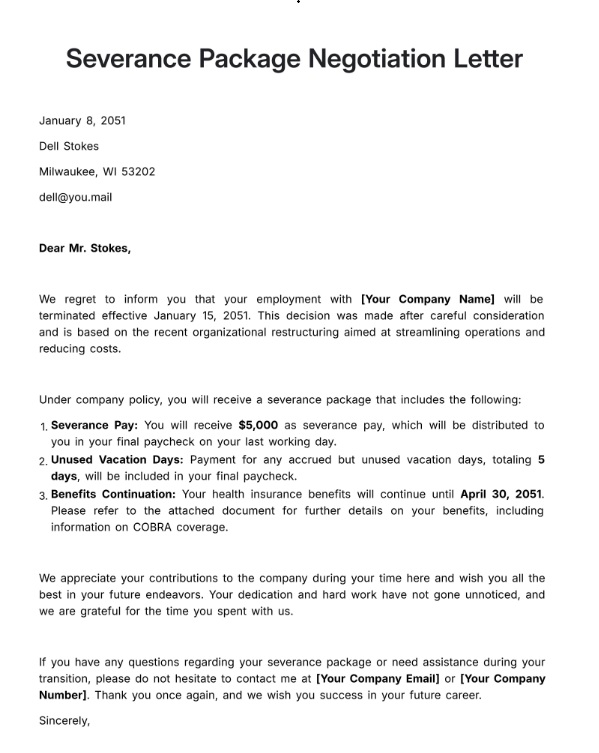
Many employees accept the first offer, unaware that there’s room for improvement. However, with the right strategy and a clear communication tool, you can advocate for better terms. We’ll explore the key components of a strong negotiation, common mistakes to avoid, and provide insights into crafting your own effective letter.
By the end of this comprehensive guide, you’ll feel more confident in your ability to negotiate your severance package. You’ll learn how to leverage your value and articulate your needs, ensuring you walk away with the best possible terms.
Crafting an Effective Severance Offer Counter
Receiving a severance offer is the first step in a potential negotiation. Your goal is to respond thoughtfully, demonstrating your understanding of the terms while clearly articulating your counter-proposal. A well-structured counter-offer letter, based on a solid severance package negotiation letter template, sets a professional tone and outlines your requests.
Approaching this phase with a strategic mindset is crucial. It’s not just about asking for more; it’s about justifying your requests with valid points related to your contributions, market standards, and the circumstances of your departure. Remember, the company is looking to mitigate risk and ensure a smooth transition.
Understanding Your Current Severance Agreement
Before you even think about negotiating, thoroughly review the severance agreement presented to you. Understand every clause, from the amount of pay and continuation of benefits to non-compete clauses and confidentiality agreements. This initial review helps you identify areas ripe for negotiation.
Pay close attention to release of claims language, which typically requires you to waive certain legal rights. Also, note the timeframe given for you to review and sign the document. In many jurisdictions, you have a specific period, often 21 or 45 days, to consider the offer and consult with legal counsel.
- Pay Duration: How many weeks or months of salary are offered? Is it based on your tenure or a fixed amount?
- Health Benefits: How long will your health, dental, and vision insurance continue? Are COBRA subsidies included?
- Equity/Bonuses: What happens to unvested stock options, restricted stock units (RSUs), or accrued but unpaid bonuses?
- Outplacement Services: Does the package include career counseling, resume writing, or job search assistance?
- References: Will the company provide a neutral or positive reference for future employment?
- Non-Compete/Non-Solicit: Are there clauses restricting your ability to work for competitors or solicit former clients/employees?
Researching Industry Standards and Your Value
To build a strong case for increased severance, research what comparable roles and companies offer in similar situations. Look at public company filings, industry reports, and consult with career advisors or employment lawyers who have insight into market norms. This research provides a data-driven foundation for your requests.
Consider your unique contributions to the company, especially recent achievements, long tenure, or specialized skills. Highlighting these points reminds the employer of your value and the potential cost of replacing someone with your experience. Framing your negotiation around your past performance strengthens your position.
Key Elements of a Strong Negotiation Strategy
A successful severance negotiation isn’t just about what you ask for; it’s about how you ask. Your approach should be professional, reasonable, and well-supported by facts. This strategy extends beyond the initial severance package negotiation letter template, influencing every interaction you have with the company.
Remember that negotiation is a two-way street. Be prepared for some back-and-forth and remain open to compromise. The goal is to reach a mutually agreeable outcome that provides you with adequate support during your transition and resolves the separation amicably for the employer.
Highlighting Your Value and Contributions
When drafting your negotiation letter, clearly articulate your positive impact on the company. Briefly list significant achievements, projects you led, or ways you contributed to revenue, cost savings, or operational efficiencies. This isn’t about bragging; it’s about demonstrating why you deserve more generous terms.
For example, if you consistently exceeded sales targets or spearheaded a critical product launch, mention these. Quantifiable results are particularly compelling. Presenting a factual account of your contributions strengthens your argument for an enhanced severance package, moving the conversation beyond mere requests to a recognition of your past worth.
Legal Considerations in Severance Talks
Consulting with an employment attorney before signing or even sending your negotiation letter is highly recommended. An attorney can review the proposed agreement, identify potential pitfalls, and advise on your legal rights and leverage. They can also help you understand the enforceability of certain clauses, like non-competes, in your specific jurisdiction.
An attorney can also help you determine if you have any potential claims against the employer, which can significantly increase your negotiation power. Even if you don’t pursue a claim, the potential for one can motivate an employer to offer a more favorable severance package to avoid future legal disputes.
| Severance Element | Initial Offer (Example) | Negotiation Goal (Example) | Why Negotiate? |
|---|---|---|---|
| Severance Pay | 4 weeks’ salary | 8-12 weeks’ salary | Based on tenure, market rate, lack of notice. |
| Health Benefits (COBRA) | 1 month of employer-paid premiums | 3-6 months of employer-paid premiums | To bridge gap until new employment/insurance. |
| Unvested Stock/Equity | Forfeited upon termination | Partial or full accelerated vesting | Recognition of long-term contributions, near-vesting dates. |
| Outplacement Services | Basic resume review | Full-service career coaching for 6 months | Support for job search, faster re-employment. |
| Reference Letter | Neutral employment verification | Specific, positive letter from manager/HR | Essential for future job prospects. |
| Non-Compete Clause | 12 months, 200-mile radius | Reduced to 6 months, smaller radius or removed | To allow reasonable opportunity for new employment. |
Navigating a job separation is never easy, but it doesn’t have to leave you feeling powerless. By understanding the elements of a severance offer and employing a strategic negotiation approach, you can secure more favorable terms for your transition. Remember that preparing your communication with a solid severance package negotiation letter template is a powerful first step, allowing you to clearly and professionally state your case.
Taking the time to research, consult with professionals, and articulate your value will empower you throughout this process. Don’t hesitate to advocate for yourself; a well-negotiated severance can provide crucial financial and professional support as you embark on your next career chapter.