In the intricate world of welding, precision, safety, and adherence to standards are paramount. Every weld, whether it’s for a high-rise building, a pressure vessel, or a critical pipeline, must meet stringent quality criteria. This is where proper documentation becomes not just helpful, but absolutely essential. Understanding and utilizing a robust welding procedure qualification record template is a cornerstone for ensuring that your welding processes are thoroughly vetted, documented, and compliant with industry codes and specifications. It serves as undeniable proof that your welding procedures have been tested and shown to produce welds of acceptable quality.
Think of it this way: without a clear record, how can you confidently say that a specific welding technique will consistently produce strong, reliable, and defect-free joints? The answer is, you can’t. This vital document, often referred to as a PQR, acts as the scientific evidence that your chosen Welding Procedure Specification (WPS) works as intended. It captures all the critical variables and the results of the subsequent tests, ensuring transparency and accountability in every project.
Navigating the complex landscape of welding standards can be daunting. From ASME to AWS and other international codes, each specifies what needs to be recorded and how the qualification process should unfold. Having a structured approach to this documentation simplifies compliance, minimizes errors, and ultimately contributes to safer and more durable welded constructions. It’s about building confidence, not just connections.
Understanding the Essentials of a Welding Procedure Qualification Record (PQR)
A Welding Procedure Qualification Record, or PQR, is much more than just a piece of paper; it’s the definitive record demonstrating that a particular welding procedure specification (WPS) is capable of producing welds with the required mechanical properties. It documents all the essential variables used during the actual welding of a test coupon and, crucially, the results of destructive and non-destructive tests performed on that coupon. This record then serves as the foundation for approving your WPS, giving you the green light to use that procedure in production.
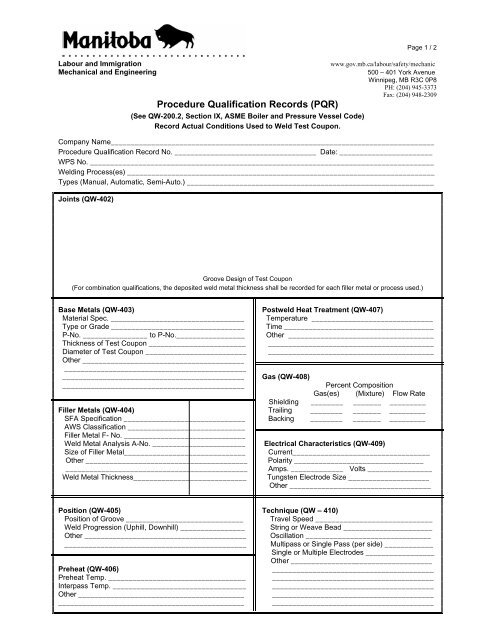
Typically, a PQR will detail an extensive list of information. This includes details about the base materials used, such as their type, grade, and thickness. It also covers the welding process itself, including the specific type of arc welding, gas shielding, and filler metals. The electrical parameters, such as voltage, amperage, and travel speed, are also meticulously recorded. Joint design, preheat and interpass temperatures, and post-weld heat treatment, if applicable, also find their place in this comprehensive document.
The core of the PQR lies in the test results. After the test coupon is welded according to the WPS, it undergoes a series of rigorous evaluations. These tests are designed to assess the weld’s integrity, strength, and ductility. The type and number of tests performed depend heavily on the applicable welding code and the intended application of the weld. Passing these tests is critical for the WPS to be deemed qualified and therefore ready for use in actual projects.
The Role of Testing in PQR
The testing phase for a PQR is where the rubber meets the road. Common mechanical tests include tensile tests, which measure the ultimate strength of the weld and base metal. Bend tests evaluate the ductility and soundness of the weld, revealing any internal defects by forcing the material to deform. Impact tests, particularly Charpy V-notch tests, are crucial for materials used in low-temperature applications, assessing their toughness and resistance to brittle fracture. Additionally, non-destructive examinations like visual inspection, radiography (X-ray), or ultrasonic testing might be performed to check for internal flaws without damaging the coupon.
Each test has specific acceptance criteria outlined in the relevant welding code. If any part of the test coupon fails to meet these criteria, the WPS is considered unqualified, and adjustments must be made before another test coupon can be welded and re-tested. This rigorous process ensures that only welding procedures proven to produce high-quality welds are approved for production use.
The completed PQR, with all its detailed parameters and successful test results, then stands as undeniable evidence. It shows that your organization has developed a specific welding procedure that can reliably create sound welds under defined conditions. This is not just good practice; it’s often a mandatory requirement by regulatory bodies and clients, ensuring that structural integrity and safety standards are consistently met in all applications.
Beyond compliance, a well-documented PQR offers significant operational advantages. It promotes consistency across projects, reduces the likelihood of costly rework, and helps in troubleshooting potential issues by providing a clear reference point. Ultimately, investing in thorough PQR development and maintenance is an investment in the overall quality and reliability of your welding operations.
Streamlining Your Documentation with a Robust Template
Developing a PQR from scratch for every single welding procedure can be incredibly time-consuming and prone to errors. This is precisely why having a standardized welding procedure qualification record template is an absolute game-changer for any fabrication shop or engineering firm involved in welding. A well-designed template provides a structured framework, guiding you through all the necessary fields and ensuring that no critical information is overlooked, thereby saving valuable time and reducing the risk of non-compliance.
What makes a good welding procedure qualification record template truly effective? It’s one that is comprehensive, yet intuitive. It should align with common industry codes (like ASME Section IX or AWS D1.1), providing dedicated sections for essential variables, supplementary essential variables, and non-essential variables. This structure ensures that all the data required for qualification and auditing purposes is captured systematically, making the entire documentation process much more efficient and less burdensome.
Such a template acts as a checklist, prompting you for every detail from the joint configuration and base metal group number to specific welding parameters like current, voltage, and travel speed, right down to the actual test results and the signature of the certifying authority. It ensures uniformity across all your qualified procedures, making it easier to manage, retrieve, and present documentation when required for audits or client reviews.
Utilizing a template also significantly minimizes common mistakes, such as incomplete data entries or inconsistencies in reporting. When every team member uses the same format, there’s less confusion, better data integrity, and a smoother flow of information. This standardization is incredibly valuable for maintaining quality control and ensuring that your welding operations consistently meet the highest industry standards, enhancing both safety and reputation.
The careful construction of a PQR is not just a regulatory hurdle to clear; it’s a fundamental component of quality assurance in the welding industry. It provides the empirical data necessary to prove the capability of a welding process, ensuring that every joint produced meets the specified mechanical properties and integrity requirements. This meticulous approach safeguards against failures, protects investments, and ultimately, saves lives.
By embracing standardized tools like a comprehensive template for your welding procedure qualification records, organizations can streamline their documentation processes, enhance compliance, and foster a culture of quality and accountability. It empowers teams to efficiently manage complex technical information, allowing them to focus on executing exceptional welds with confidence, knowing that their procedures are robustly qualified and thoroughly documented.