Navigating co-parenting after a separation or divorce can feel like an intricate dance, especially when it comes to deciding where the children will spend their time. Crafting a consistent and fair schedule is often the cornerstone of a successful co-parenting relationship, providing much-needed stability for everyone involved. It is a journey that requires careful consideration, open communication, and a shared commitment to the children’s well-being.

Among the many options available for dividing time, the 2 2 3 parenting schedule template has emerged as a particularly popular and effective choice for many families. This specific arrangement aims to provide children with frequent, regular contact with both parents, ensuring that neither parent goes too long without seeing their little ones. It balances parental time while offering a predictable rhythm that can greatly benefit children as they adjust to their new family dynamic.
What Exactly Is the 2 2 3 Parenting Schedule and Why Does It Work?
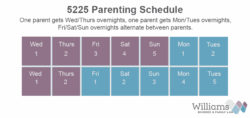
The 2 2 3 parenting schedule template is a cyclical arrangement that repeats every two weeks. In essence, one parent has the children for two consecutive days, then the other parent has them for two consecutive days, and finally, the first parent has them for three consecutive days (which typically covers a weekend). The following week, the roles reverse, ensuring that both parents enjoy the two-day and three-day segments over the two-week period. This continuous rotation means children spend short, frequent blocks of time with each parent.
This schedule is often favored because it allows children to spend approximately equal time with both parents over the course of a two-week cycle. The pattern ensures that each parent gets an alternating weekend with the children, which is often a significant point of contention in other scheduling models. The short increments of two days with each parent before a longer three-day block minimize the time children are away from either parent, which can be particularly beneficial for younger children who thrive on consistent contact.
The beauty of the 2 2 3 lies in its predictability. Children quickly learn the routine, understanding where they will be on any given day. This sense of knowing what to expect can reduce anxiety and make transitions smoother. For parents, it offers a clear structure, simplifying planning for school, activities, and personal time. It fosters a sense of shared responsibility and equal involvement in the children’s daily lives, which is crucial for building a healthy co-parenting partnership.
While every family is unique and what works for one might not work for another, the inherent structure and flexibility within the 2 2 3 template make it a strong contender for many. Its focus on frequent contact and balanced time is often a win-win for both parents and children, contributing to greater stability and happiness in a divided household.
Key Advantages of Adopting the 2 2 3 Schedule
- Promotes equal parenting time over a two-week period, ensuring both parents feel equally involved.
- Offers frequent contact with both parents, which is crucial for children’s emotional well-being and attachment.
- Provides a predictable routine for children, reducing anxiety and making transitions easier to manage.
- Naturally includes alternating weekends, a common desire for many co-parents.
- Can be adapted as children grow, although the core structure remains consistent.
Practical Tips for Implementing Your 2 2 3 Parenting Schedule Template
Once you and your co-parent have decided that the 2 2 3 parenting schedule template is the right fit for your family, the next step is successful implementation. This isn’t just about drawing lines on a calendar; it involves establishing clear communication, fostering cooperation, and maintaining a child-focused approach. A well-implemented schedule can significantly reduce conflict and enhance the stability of your children’s lives.
One of the most important aspects is creating a detailed parenting plan or agreement that formally outlines the schedule. This document should specify not only the daily rotation but also details about holidays, vacations, special occasions, and how exchanges will occur. Having everything in writing helps prevent misunderstandings and provides a clear reference point if any questions arise. Remember to review and update this plan periodically as your children grow and their needs change.
Effective communication between co-parents is absolutely essential for the 2 2 3 schedule to thrive. Even with a clear plan, life happens, and unexpected events may require flexibility. Being able to calmly discuss changes, share information about the children’s activities, school performance, or health, and make joint decisions will contribute greatly to the schedule’s success. Tools like shared online calendars or co-parenting apps can be invaluable for keeping everyone on the same page and minimizing direct, potentially emotional, communication.
Ultimately, the success of any co-parenting schedule, including the 2 2 3, hinges on both parents’ willingness to prioritize their children’s needs above their own differences. Focus on consistency, positive transitions, and ensuring your children feel loved and secure in both homes. This might mean being flexible when circumstances demand it, even if it slightly deviates from the established pattern. Keeping the children’s best interests at heart will guide you through any challenges and reinforce the benefits of your chosen schedule.
- Utilize a shared digital calendar to mark all transitions, appointments, and activities.
- Establish consistent drop-off and pick-up locations and times to create routine.
- Keep communication focused on the children’s needs and avoid unnecessary conflict.
- Be prepared for minor adjustments; flexibility can be a sign of a strong co-parenting relationship.
- Ensure children have comfort items or necessities at both homes to ease transitions.
Adopting a structured approach like the 2 2 3 parenting schedule can provide a solid foundation for co-parenting, offering predictability and stability that children truly thrive on. It empowers both parents to maintain active and meaningful roles in their children’s lives, fostering strong bonds and a sense of belonging in both households. The consistent rhythm it establishes helps children navigate their two-home reality with greater ease and confidence.
Ultimately, the goal is to create an environment where children feel secure, loved, and supported, regardless of their parents’ living arrangements. By thoughtfully implementing a well-defined schedule and committing to open communication, families can successfully navigate the complexities of co-parenting, ensuring a bright and stable future for their children.