Navigating co-parenting after separation or divorce can often feel like a complex puzzle, especially when it comes to creating a custody schedule that truly works for everyone involved. Finding that sweet spot between fairness for both parents and stability for the children is key, and it’s a journey many families embark on with great care and consideration. The goal is always to minimize disruption and foster a loving environment across two households.
Among the various options available, some schedules stand out for their ability to offer a balanced approach to time-sharing. One such popular and often highly effective option is the 5 2 2 5 parenting schedule template. This particular arrangement aims to provide significant time for children with each parent, while also introducing a predictable rhythm that can be incredibly beneficial for a child’s sense of security and routine.
Exploring the 5 2 2 5 Parenting Schedule Template in Detail
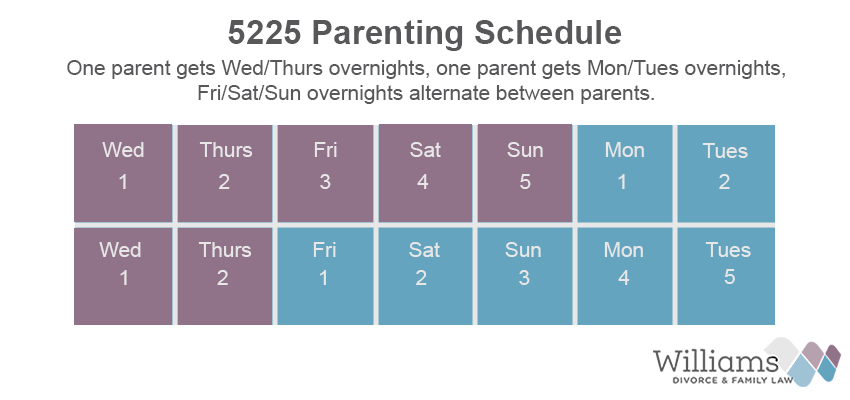
The 5 2 2 5 custody schedule is a rotation that unfolds over a two-week period, designed to ensure that children spend five days with one parent, then two days with the other, followed by another two days with the first parent, and finally five days with the second parent. This pattern then repeats, creating an almost equal split of time over the two-week cycle. It’s a highly structured yet flexible model that many families find strikes an excellent balance between consistency and equitable time distribution.
For example, imagine Parent A has the children for the first five days. On the sixth day, the children transition to Parent B for two days. After these two days, they return to Parent A for another two days. Finally, they transition back to Parent B for the remaining five days of the two-week cycle. This rotation gives both parents substantial time blocks with their children, allowing for deeper engagement in daily life, school activities, and weekend fun, rather than just short, frequent exchanges.
One of the significant advantages of the 5 2 2 5 schedule is its inherent predictability. Children thrive on routine, and knowing exactly where they will be and when, reduces anxiety and makes transitions smoother. Parents also benefit from this clarity, enabling them to plan their work, personal lives, and children’s activities with a clear understanding of their upcoming responsibilities. It fosters a sense of consistency that can be invaluable in a co-parenting dynamic.
While it offers a near 50/50 split over the full two weeks, which is often a goal for co-parents, it also presents slightly varied blocks of time. The longer 5-day blocks allow for a more immersive experience in each home, while the shorter 2-day blocks ensure that children don’t go too long without seeing the other parent. This blend can be particularly effective for school-aged children who adapt well to structured transitions but still benefit from longer periods of time to settle into each household.
How the Rotation Works Week by Week
- **Week 1:**
- Monday to Friday: Children with Parent A (5 days)
- Saturday to Sunday: Children with Parent B (2 days)
- **Week 2:**
- Monday to Tuesday: Children with Parent A (2 days)
- Wednesday to Sunday: Children with Parent B (5 days)
- **Cycle Repeats:** The schedule then restarts with Parent A having the children for the first five days of Week 1.
Is the 5 2 2 5 Schedule the Right Fit for Your Family?
Deciding on the perfect parenting schedule involves a lot of introspection and consideration of your unique family circumstances. The 5 2 2 5 schedule, while popular, isn’t a one-size-fits-all solution, and it’s important to weigh its potential benefits against any challenges it might present for your specific situation. Factors like your children’s ages, their temperament, the distance between homes, and your co-parenting relationship all play a crucial role in determining suitability.
For instance, younger children, especially toddlers or preschoolers, might find the 2-day blocks a bit challenging due to more frequent transitions. While older children, particularly those in school, often adapt very well to this type of rotation because it aligns nicely with school weeks and allows for full weekends with each parent on alternating cycles. It provides enough time with each parent to feel connected without overly long stretches away from either home.
Another aspect to consider is the level of cooperation and communication between co-parents. Any shared custody schedule, including the 5 2 2 5 parenting schedule template, thrives on clear and consistent communication. Successful implementation requires both parents to be on the same page regarding exchange times, school events, extracurricular activities, and general rules within each household to maintain consistency for the children.
Ultimately, the best schedule is one that prioritizes the children’s well-being and allows them to flourish in both parental homes. If you and your co-parent are able to communicate effectively and maintain a relatively low-conflict environment, the 5 2 2 5 schedule offers a highly structured and equitable way to share time, promoting stability and strong bonds with both parents.
Things to Consider Before Implementing
- **Children’s Ages and Needs:** How well do your children handle transitions?
- **Distance Between Homes:** Will exchanges be practical and not overly disruptive?
- **Co-Parenting Relationship:** Is communication open and respectful?
- **Parental Work Schedules:** Can this schedule accommodate both parents’ professional commitments?
- **Flexibility for Special Events:** How will you handle holidays, birthdays, or school breaks?
Choosing a parenting schedule is a significant decision that impacts everyone in the family. The 5 2 2 5 schedule offers a compelling framework for co-parents seeking a balanced and predictable approach to time-sharing. Its strength lies in its ability to provide children with consistent, quality time with both parents, fostering a sense of security and belonging in two loving homes.
By carefully considering your family’s unique dynamics and maintaining open lines of communication, you can adapt or tailor this model to create a schedule that truly supports your children’s growth and happiness. The journey of co-parenting is ongoing, and finding the right rhythm for your family is a testament to your commitment to their well-being.