In the bustling world of business, keeping things running smoothly often hinges on one critical element: effective staffing. For operations that never sleep, like manufacturing plants, emergency services, or customer support centers, finding a shift schedule that balances employee well-being with continuous coverage can feel like a perpetual puzzle. It’s a delicate act, ensuring your team is energized and productive while your services remain uninterrupted.
That’s where innovative scheduling patterns come into play, designed to offer structure, predictability, and fairness. Among the many options available, one particular system has gained significant traction for its clever approach to balancing work and rest: the 4 3 3 4 shift schedule template. Let’s explore why this pattern is becoming a go-to solution for so many organizations aiming for operational excellence and higher employee morale.
The Genius Behind the 4 3 3 4 Shift Schedule Template
The 4 3 3 4 shift schedule is a popular rotational pattern, primarily designed for environments requiring 24/7 coverage, typically with 12-hour shifts. The numbers in its name directly describe the employee’s work and rest cycle over a two-week period. An employee works 4 consecutive days, then gets 3 days off. Following that, they work 3 consecutive days, and finally, enjoy 4 consecutive days off. This complete cycle stretches over 14 days, offering a consistent and predictable rhythm that many find highly beneficial.
One of the key advantages of this structure is the significant improvement in work-life balance for employees. Those longer stretches of 3 and 4 days off are highly valued, allowing ample time for personal errands, family commitments, or simply decompressing and recharging. This predictability helps reduce stress and burnout, contributing to a more engaged and satisfied workforce, which, in turn, often translates to lower absenteeism and higher retention rates.
From an employer’s perspective, the 4 3 3 4 shift schedule template provides efficient coverage without necessarily incurring excessive overtime. When implemented with four teams rotating through these patterns, it ensures round-the-clock staffing. The fixed nature of the cycle simplifies planning and forecasting, making it easier to manage staffing levels and anticipate future needs. It’s a win-win, offering stability to both the business and its people.
Deconstructing the Two-Week Cycle
Let’s break down exactly how an individual employee experiences this schedule over the course of 14 days. During this period, an employee will work a total of 7 shifts. If these are 12-hour shifts, that amounts to 84 hours over two weeks, averaging out to 42 hours per week, which often requires careful consideration of overtime laws depending on jurisdiction. The beauty lies in the structured breaks that punctuate the work periods, preventing long stretches of continuous work.
- Employee works 4 consecutive days.
- Employee enjoys 3 consecutive days off.
- Employee works 3 consecutive days.
- Employee enjoys 4 consecutive days off.
- The cycle then repeats, offering a consistent and predictable rhythm.
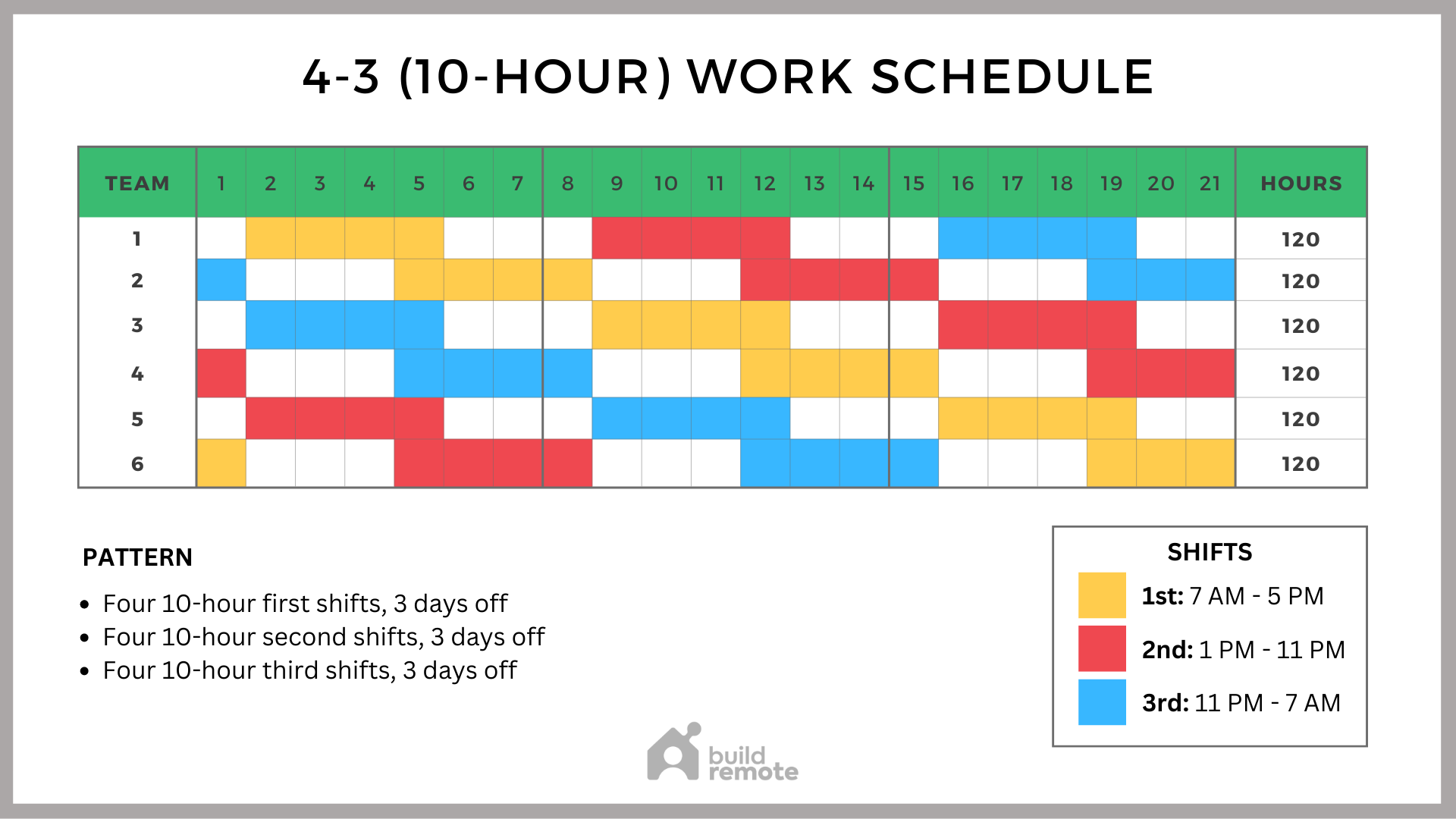
This systematic rotation, when applied across different teams, allows for continuous operation. For instance, while Team A is on their 4 days on, Team B might be on their 3 days off, and so forth. A well-designed 4 3 3 4 shift schedule template ensures that all positions are covered, all the time, leveraging the alternating patterns of work and rest across your entire workforce.
Making the 4 3 3 4 Shift Schedule Template Work for Your Team
Implementing a new shift schedule, especially one as structured as the 4 3 3 4, requires careful planning and a clear understanding of your organization’s unique needs. The first step involves a thorough assessment of your operational requirements: how many positions need to be filled per shift, what are your peak and off-peak hours, and what are the specific skills required for each role. Understanding your current staffing levels and anticipating future growth are also crucial.
Communication is paramount when introducing any change to employee schedules. Clearly explain the benefits of the 4 3 3 4 shift schedule to your team, addressing any concerns they might have. Transparency about how the schedule works, how it impacts their work-life balance, and what to expect during the transition period can significantly help with buy-in and reduce resistance. Consider holding informational sessions or creating a detailed FAQ document.
While the template provides a solid framework, tailoring it to your specific situation is key. You might need to adjust for specific regulatory requirements concerning breaks, meal times, or overtime. There are many tools available, from simple spreadsheet templates to sophisticated scheduling software, that can help you visualize and manage your schedule effectively. These tools can often automate the rotation, making the administrative burden much lighter.
Expect some challenges during the initial rollout. Employees might need time to adjust to the new rhythm, and unforeseen absences or staffing fluctuations can always occur. Having contingency plans in place for these situations is vital. Regular check-ins with your team and supervisors can help identify pain points early, allowing you to make minor adjustments and fine-tune the schedule as needed, ensuring its long-term success.
- Assess your operational needs and current team size meticulously.
- Clearly communicate the new schedule and its benefits to your staff.
- Utilize a template or dedicated software for easy management and customization.
- Plan for contingencies and unexpected absences with backup strategies.
- Review and adjust the schedule periodically based on feedback and performance.
Ultimately, a successful transition to a 4 3 3 4 shift schedule template can lead to a more stable and efficient work environment. By prioritizing both operational needs and employee well-being, businesses can cultivate a workforce that is not only productive but also deeply appreciative of a schedule that respects their time and energy.
Adopting the right shift schedule can truly revolutionize how your business operates and how your employees experience their work. The 4 3 3 4 pattern stands out as a robust and employee-friendly option, providing the predictability and extended breaks that foster a healthier work-life balance, while simultaneously ensuring seamless, 24/7 operational coverage for the organization.
By thoughtfully implementing and customizing this powerful framework, businesses can unlock significant advantages, from boosted morale and reduced turnover to enhanced productivity and greater overall stability. Exploring the benefits of a well-structured 4 3 3 4 shift schedule template is a smart move for any organization seeking to optimize its workforce management.