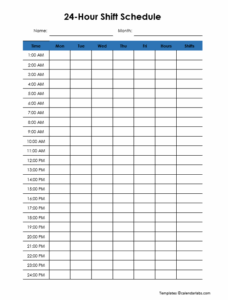
Running an operation that never sleeps presents a unique set of challenges. Whether you manage a hospital, a manufacturing plant, a customer support center, or a security firm, ensuring continuous coverage around the clock requires meticulous planning and seamless execution. The complexity of balancing employee availability, labor laws, operational demands, and staff well-being can quickly become overwhelming, often leading to burnout, scheduling conflicts, and decreased productivity if not handled effectively.
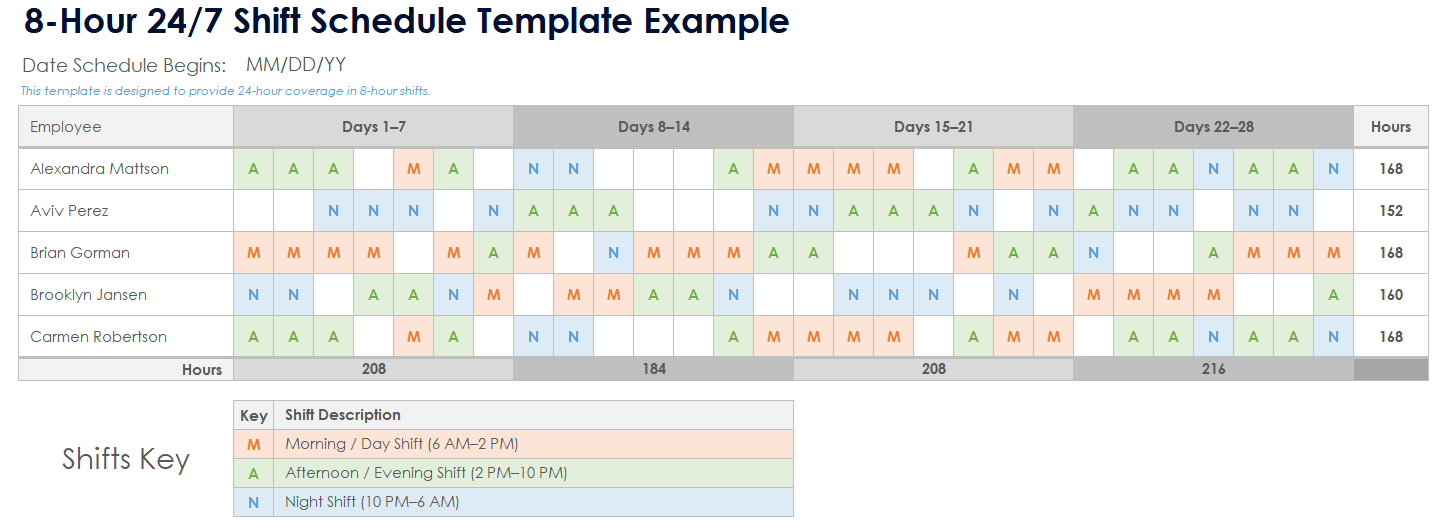
This is where a well-designed 24 7 work schedule template becomes an invaluable asset. Far more than just a simple timetable, a comprehensive template provides a structured framework that not only helps you allocate shifts efficiently but also supports employee satisfaction and operational continuity. It empowers managers to create fair, transparent, and sustainable schedules that keep your business running smoothly, day and night, without missing a beat.
Understanding the Fundamentals of 24/7 Scheduling
A 24/7 operation means that your business is active and requires staffing 24 hours a day, seven days a week, including holidays. This type of continuous service is critical in many essential industries, from healthcare and emergency services to utilities, transportation, and certain sectors of technology and manufacturing. The primary goal of 24/7 scheduling is to ensure that there is always adequate personnel to meet operational demands, maintain safety standards, and deliver consistent service.
However, achieving this consistent coverage comes with inherent complexities. Managers must contend with varying shift lengths, ensuring proper breaks, managing overtime, adhering to local labor laws, and addressing the impact of night shifts and rotating schedules on employee health and morale. Poorly managed schedules can lead to fatigue, errors, high turnover rates, and ultimately, a decline in service quality and business performance. This makes understanding the different approaches to 24/7 scheduling absolutely essential.
Common 24/7 Schedule Types
Different industries and organizational needs call for different scheduling models. Exploring common 24/7 schedule types can help businesses choose the best fit for their specific requirements, aiming for a balance between operational efficiency and employee well-being.
- The Dupont Schedule: This rotation often involves 12-hour shifts, where employees work four consecutive shifts (e.g., two day, two night) followed by four days off. It offers extended periods of time off, which many employees appreciate, but the 12-hour shifts can be demanding.
- The Continental Schedule: A popular 12-hour shift pattern, it often follows a 2-2-3 rotation, meaning an employee works two days, then has two days off, works three days, then has two days off, and then two days on, followed by three days off. This pattern ensures even coverage and predictable blocks of time off.
- The Pitman Schedule (or 2-3-2): Another common 12-hour shift pattern, similar to the continental but with slightly different breaks. It often means working two days, two off, three days, two off, two days, three off. It provides a good balance for many continuous operations.
- Modified Fixed Schedules: Some businesses opt for a more traditional 8-hour shift structure but implement them in a rotating or overlapping manner to achieve 24/7 coverage. This might involve fixed day, evening, and night shifts with rotating weekends or specific teams assigned to each block.
Choosing the right type of 24 7 work schedule template involves careful consideration of your workforce size, the nature of the work, and the specific demands of your industry. A well-chosen template provides a solid foundation for managing a complex, always-on environment, promoting fairness and clarity for everyone involved.
Crafting Your Own Effective 24/7 Work Schedule Template
Developing a 24/7 work schedule template that truly works for your organization requires more than just picking a popular pattern; it demands a strategic approach tailored to your unique operational needs and employee base. Begin by thoroughly assessing your staffing requirements for each hour of the day and night, considering peak times, critical tasks, and minimum staffing levels for safety and service delivery. This detailed analysis forms the bedrock of your schedule, ensuring that no essential role is left unfilled.
Next, focus on the human element. Employee well-being is paramount in 24/7 operations, as continuous night shifts or rapidly rotating schedules can take a significant toll. Factor in reasonable shift lengths, adequate rest periods between shifts, and predictable rotation patterns where possible. Engaging with your employees during this planning phase can yield invaluable insights and increase their buy-in, leading to higher morale and reduced absenteeism. Remember to review local labor laws and collective bargaining agreements to ensure full compliance with hours of work, overtime, and break regulations.
Leveraging technology can significantly streamline the creation and management of your 24/7 work schedule template. While basic spreadsheets can get you started, specialized scheduling software offers powerful features like automatic shift assignments, conflict detection, time-off requests, and even mobile access for employees. These tools can reduce administrative burden, minimize errors, and improve communication across your team, making the scheduling process far more efficient and adaptable.
Finally, understand that your schedule isn’t a static document; it’s a living tool that requires ongoing evaluation and adjustment.
- Identify Your Operational Needs: Clearly define the minimum number of staff required for each role across all shifts to ensure smooth operation and safety.
- Factor in Employee Wellbeing: Design shifts that minimize fatigue, ensure adequate rest, and comply with all labor regulations regarding breaks and work hours.
- Leverage Technology: Utilize scheduling software to automate parts of the process, track hours, manage time-off requests, and communicate changes efficiently.
- Review and Adapt Regularly: Gather feedback from employees and managers, track key performance indicators, and be prepared to make adjustments as operational needs or circumstances change.
Regularly solicit feedback from both employees and managers, monitor key metrics like overtime hours and turnover rates, and be prepared to make adjustments as operational needs evolve or new challenges arise. A flexible and responsive approach ensures that your scheduling system remains effective and supportive of both your business goals and your workforce.
A well-constructed schedule is more than just a logistical necessity; it’s a cornerstone of operational excellence and employee satisfaction in any continuous operation. By thoughtfully designing and implementing a robust framework, businesses can ensure seamless coverage, mitigate the risks associated with round-the-clock work, and foster a stable, productive environment for their teams.
Investing the time to develop a comprehensive and adaptable scheduling system empowers your organization to meet its demanding operational requirements while simultaneously supporting the health and well-being of its most valuable asset: its people. This proactive approach ensures sustainable growth and consistent service delivery, positioning your business for long-term success in an ever-active world.