Navigating co-parenting after separation can be one of life’s most challenging yet rewarding journeys. For many families, creating a clear and consistent custody schedule is paramount to ensuring children thrive and both parents remain actively involved in their lives. While a 50/50 split is often ideal, it’s not always practical or suitable for every situation, leading many parents to explore alternative arrangements that still prioritize the child’s well-being.
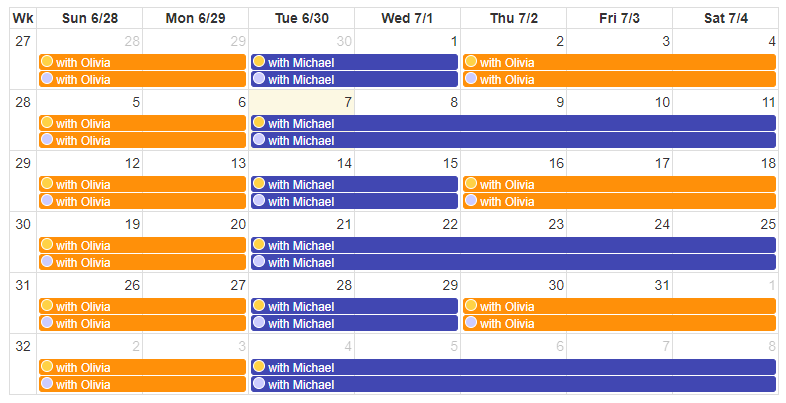
That’s where a 60/40 custody schedule template comes into play, offering a balanced approach that gives one parent slightly more overnight time while still ensuring the other parent has significant and regular involvement. This model provides stability for the child, often aligning with school routines, while allowing both parents to contribute meaningfully to their upbringing. It’s a popular choice for families seeking a structured yet flexible framework that reflects their unique circumstances.
Understanding the 60/40 Custody Split
A 60/40 custody schedule means that one parent has the children approximately 60% of the time, and the other parent has them for the remaining 40%. This split usually translates to around 219 overnights for the primary parent and 146 overnights for the other parent in a calendar year. It’s often chosen when one parent lives a bit further away, has a more demanding work schedule that makes frequent transitions difficult, or simply when it’s determined that the children benefit from a more consistent primary residence.
This arrangement provides a sense of stability for the children, as they typically have a primary home base, which can be particularly beneficial during the school week. However, it’s crucial that the parent with 40% of the time still feels fully involved and has ample opportunity to participate in school events, extracurricular activities, and daily routines. The success of a 60/40 split hinges on strong communication and cooperation between co-parents, ensuring that both parents are kept informed and can make decisions together.
The beauty of a 60/40 custody schedule template is its inherent flexibility within the established parameters. While the percentages remain consistent, the actual weekly or bi-weekly pattern can be customized to fit the family’s needs. This means you aren’t stuck with a one-size-fits-all solution but can adapt the structure to align with school breaks, holidays, and special events.
It’s important to remember that any custody schedule should be designed with the child’s best interests at its core. This includes considering their age, their established routines, and their comfort with transitions. A well-thought-out 60/40 plan can offer the perfect blend of consistency and active engagement for both parents, fostering strong relationships all around.
Common 60/40 Schedule Patterns
- **The 4-3-3-4 Schedule:** This is a popular option where one parent has the children for four days, then the other parent has them for three days. The following week, the pattern reverses (three days with parent A, four days with parent B). This provides regular, shorter transitions.
- **The 5-2-2-5 Schedule:** Similar to the above, this schedule gives one parent five days, then the other parent two days. The next week, it flips. It works well for parents who want a full school week with one parent and consistent weekend time with the other.
- **Alternating Weekends Plus One Weeknight:** One parent has the children during the week and every other weekend. The other parent has the children on the opposite weekend, plus often one specific weeknight overnight (e.g., Wednesday night). This is often the most straightforward way to achieve a 60/40 split.
- **The Every Other Week Schedule with Extra Time:** One parent has the children for a full week, and the other parent has them for a full week. To achieve the 60/40 split, the parent with 60% of the time might get an additional overnight or two during their “off” week, or consistently pick up the children early/drop them off late on transition days.
Crafting Your Own 60/40 Custody Schedule Template
When it comes to putting together your own 60 40 custody schedule template, the most important thing is to consider the unique needs and routines of your children and your family. There isn’t a single perfect template that works for everyone, but rather a framework that you adapt to your specific circumstances. Start by mapping out the non-negotiables, such as school days, extracurricular activities, and any standing appointments the children might have. These fixed points will help you build around them.
Think about the children’s ages and temperaments. Younger children often benefit from more frequent, shorter transitions, while older children might handle longer stretches of time with each parent more easily. Also, consider the distance between the parents’ homes. If homes are far apart, daily or even bi-weekly transitions might be impractical, making an every-other-week schedule with additional time for the 60% parent a more suitable option. Open and honest communication with your co-parent during this planning phase is absolutely essential to create a functional and sustainable schedule.
Don’t forget to factor in holidays, school breaks, and summer vacations. These longer periods often require separate scheduling arrangements that deviate from the regular weekly template. Many co-parenting plans include specific clauses for splitting major holidays (e.g., alternating Thanksgiving and Christmas each year) or outlining how extended summer breaks will be divided. Planning these in advance can prevent future disputes and ensure both parents get to enjoy special times with their children.
It can be incredibly helpful to visualize the schedule before implementing it. Using a calendar or a dedicated co-parenting app to plot out the proposed overnights for a few months can help you identify any potential issues or imbalances. Once you have a working draft, consider doing a trial run if possible, or at least discussing it thoroughly with your co-parent to iron out any kinks. Remember, a good schedule is one that is clear, consistent, and puts the children’s well-being at the forefront, allowing them to feel secure and loved by both parents.
Creating a balanced and effective custody schedule is a cornerstone of successful co-parenting. A well-designed 60/40 arrangement can provide children with the stability they need while ensuring both parents play an active and meaningful role in their daily lives. By considering your family’s unique dynamics and prioritizing open communication, you can establish a framework that supports your children’s growth and happiness.
Ultimately, the best custody schedule is one that is flexible enough to adapt to life’s changes, yet structured enough to provide consistency for the children. Taking the time to craft a thoughtful plan, whether it’s a 60/40 split or another arrangement, lays a strong foundation for your family’s future, fostering strong parent-child bonds and reducing potential conflict.