Working alone presents a unique set of challenges that can often go unnoticed until an incident occurs. For many businesses, lone working is an unavoidable part of their operations, whether it involves field service engineers, healthcare professionals visiting patients, or security personnel working overnight. Ensuring the safety and well-being of these employees isn’t just a legal requirement; it’s a moral imperative that fosters a culture of care and reduces potential liabilities.
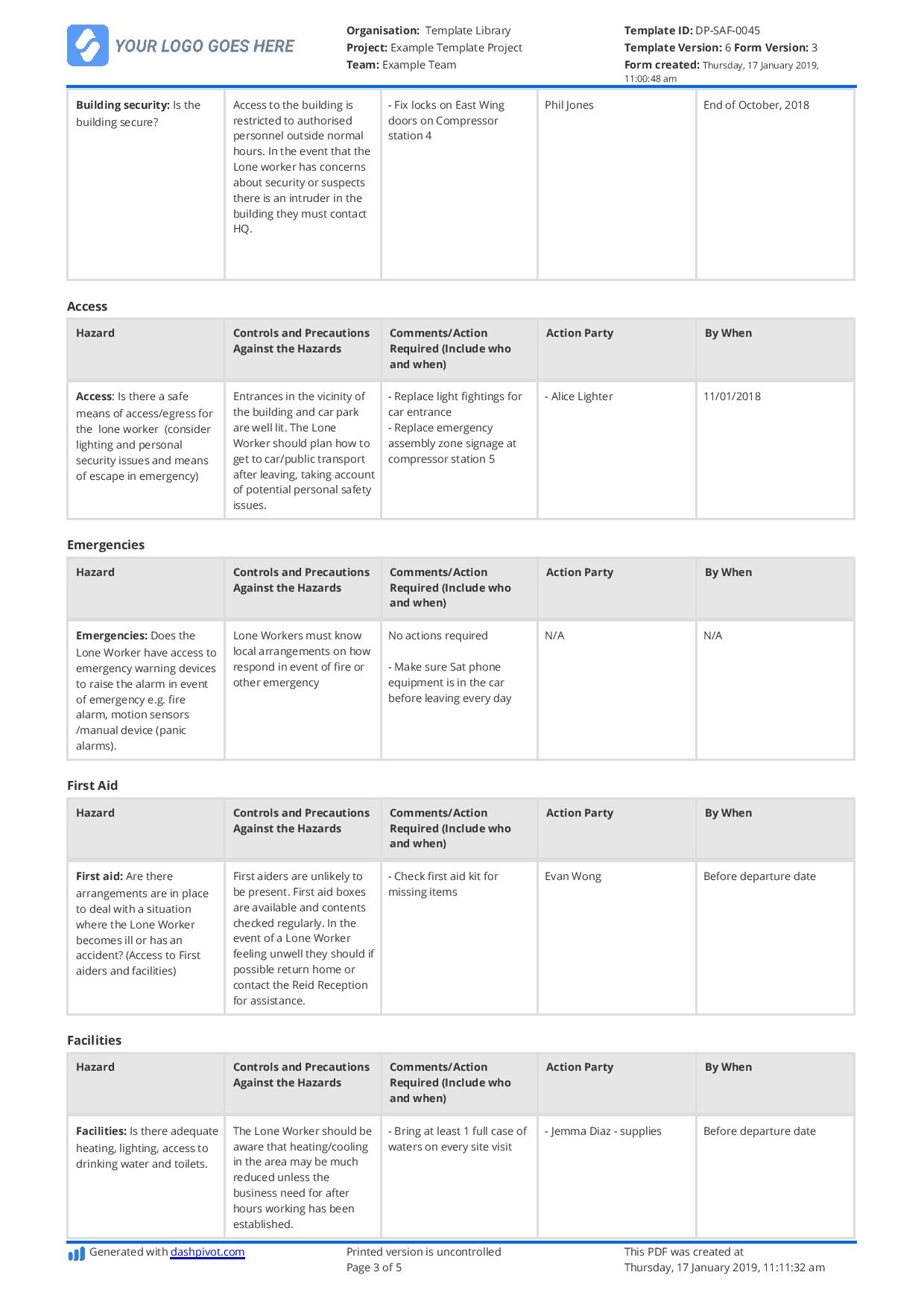
Effectively managing the risks associated with lone working requires a systematic approach. Simply being aware of the dangers isn’t enough; you need a structured method to identify, assess, and control those risks. This is precisely where a well-designed lone worker risk assessment template becomes an invaluable tool, providing a clear framework to protect your most vulnerable employees and give you peace of mind.
Understanding the Unique Challenges of Lone Working and Why a Risk Assessment is Essential
A lone worker is generally defined as an employee who performs an activity in isolation from other colleagues, without close or direct supervision. This can range from working in remote locations, at unusual hours, or even simply being the only person in an office building. The absence of immediate support means that if an emergency arises, from a minor accident to a serious medical event or an act of aggression, response times can be significantly delayed, escalating the severity of the situation.
The risks faced by lone workers are multifaceted and can be broadly categorized into physical, psychological, and environmental hazards. Physical risks include slips, falls, injuries from equipment, or even the potential for violence from clients or members of the public. Psychologically, isolation can lead to increased stress, anxiety, or a feeling of being unsupported, especially when dealing with challenging situations. Environmentally, working outdoors in adverse weather or in unfamiliar, potentially hazardous locations adds another layer of complexity.
Given these unique vulnerabilities, conducting a formal risk assessment isn’t just good practice; it’s a fundamental step in fulfilling your duty of care as an employer. It demonstrates due diligence, helps you comply with health and safety regulations, and most importantly, provides a proactive strategy to prevent incidents before they happen. Without a structured assessment, you’re essentially leaving your lone workers’ safety to chance, which is a gamble no responsible organization should take.
A comprehensive lone worker risk assessment template guides you through identifying specific tasks, pinpointing potential hazards for each task, evaluating the likelihood and severity of harm, and then implementing appropriate control measures. It transforms an abstract concern into a concrete action plan, ensuring that every lone worker, regardless of their role or location, benefits from a considered and robust safety strategy tailored to their individual circumstances.
Common Hazards Faced by Lone Workers
- **Physical Injury:** Accidents such as slips, trips, falls, or injuries from operating machinery or handling equipment without immediate assistance.
- **Medical Emergencies:** An existing health condition worsening, or a new medical emergency occurring, without anyone present to raise an alarm or provide first aid.
- **Violence or Aggression:** Lone workers, particularly those in public-facing roles or visiting private residences, can be vulnerable to verbal abuse, threats, or physical assault.
- **Environmental Hazards:** Exposure to extreme weather conditions, working at height, in confined spaces, or in remote areas with limited access or communication.
- **Psychological Stress:** Feelings of isolation, increased pressure due to lack of immediate support, or anxiety about potential risks can impact mental well-being.
Key Components of an Effective Lone Worker Risk Assessment Template
When you’re ready to put together your lone worker risk assessment template, think of it as a detailed roadmap for safety. The first crucial step involves clearly defining who your lone workers are and what specific tasks they perform. This means listing job roles, detailing the environments they work in, and outlining the tools and equipment they use. Understanding these fundamentals helps you to narrow down the scope and focus your assessment on the most relevant areas.
Next, you need to systematically identify the hazards associated with each of these tasks and environments. Don’t just think about the obvious; consider everything from the possibility of a fall on uneven ground to the risk of a medical emergency while far from help, or even the psychological strain of isolation. Once hazards are identified, you then assess the risks by considering how likely it is that harm will occur and how severe that harm could be. This step helps prioritize your efforts, focusing on the highest-risk scenarios first.
Following the risk assessment, the template should guide you through developing and implementing control measures. These are the actions you’ll take to eliminate or reduce the risks. This might involve providing personal safety devices, establishing regular check-in procedures, ensuring robust communication systems, offering specific training, or even redesigning tasks to minimize lone working where possible. The goal is to put practical, effective safeguards in place.
Finally, a truly effective template emphasizes the importance of documentation, review, and continuous improvement. All findings, decisions, and control measures should be recorded meticulously. Furthermore, risk assessments are not a one-time event; they need to be reviewed regularly, especially when there are changes in tasks, environments, or personnel, or following any incidents. This ensures your safety protocols remain relevant and effective over time, adapting to new challenges as they arise.
- **Identify Lone Worker Tasks and Environments:** Clearly define the roles, responsibilities, locations, and tools used by lone workers.
- **Assess Specific Hazards and Risks:** Pinpoint potential dangers for each task, considering physical, psychological, and environmental factors.
- **Determine Likelihood and Severity:** Evaluate how probable it is for a hazard to cause harm and the potential impact of that harm.
- **Implement Control Measures:** Develop and apply practical steps to eliminate or reduce identified risks, such as specialized equipment, communication protocols, or training.
- **Document Findings and Actions:** Keep clear records of the assessment process, including identified risks, chosen control measures, and responsible persons.
- **Review and Update Regularly:** Periodically revisit the assessment to ensure it remains current and effective, especially after incidents or changes in work procedures.
Implementing a structured approach to lone worker safety is a clear demonstration of your commitment to your employees’ well-being. By utilizing a comprehensive framework, you are not only meeting your legal obligations but also cultivating a supportive and secure work environment that values every individual. This proactive stance ensures that potential issues are addressed before they escalate, providing a foundation of trust and reliability.
Ultimately, ensuring that all your team members, especially those working independently, are well-protected simplifies the complex task of workplace safety. A thoughtful and regularly updated process helps you anticipate challenges, mitigate dangers, and empowers your lone workers with the confidence that their safety is a top priority, enabling them to carry out their duties securely and effectively.