In today’s interconnected digital world, the volume of personal and sensitive data handled by organizations of all sizes is unprecedented. From customer details to employee records, financial transactions, and proprietary information, this data forms the lifeblood of modern business operations. However, with great data comes great responsibility, and the risks associated with its mishandling, loss, or unauthorized access are substantial, potentially leading to severe financial penalties, reputational damage, and a loss of customer trust.

Navigating this complex landscape requires a proactive and structured approach to identifying, assessing, and mitigating potential vulnerabilities. This is where a robust data protection risk assessment becomes indispensable. It serves as your organization’s roadmap to understanding where data resides, what threats it faces, and how to build resilient safeguards, ensuring you meet regulatory obligations and protect your most valuable digital assets effectively.
Understanding the Core Components of a Data Protection Risk Assessment
Embarking on a data protection risk assessment can seem like a daunting task, but at its heart, it is a systematic process designed to shine a light on potential weaknesses before they can be exploited. It involves more than just checking boxes for compliance; it is about cultivating a deep understanding of your data environment and building a culture of security. Essentially, you are mapping out your data’s journey, identifying potential pitfalls along the way, and strategizing how to keep it safe. This foundational work helps organizations to not only meet the stringent requirements of regulations like GDPR or CCPA but also to build genuine resilience against ever-evolving cyber threats.
The assessment begins by meticulously cataloging all data assets within your organization. This includes not just databases, but also physical files, cloud storage, employee devices, and third-party vendor systems where your data might reside. Once these assets are identified, the next step involves recognizing the potential threats they face, such as cyberattacks, human error, system failures, or even natural disasters. It is crucial to consider both internal and external threats, as vulnerabilities can arise from various sources within your operational framework.
Following threat identification, you must pinpoint vulnerabilities. These are the weaknesses in your systems, processes, or even human behavior that an identified threat could exploit. For example, outdated software might be a vulnerability that a ransomware attack could target. Once threats and vulnerabilities are matched, you then assess the likelihood of a risk event occurring and the potential impact it would have on your organization and the individuals whose data is involved. This involves a thoughtful evaluation of existing controls and their effectiveness.
Finally, with a clear understanding of your risk landscape, you move to the mitigation phase. This involves developing and implementing appropriate control measures to reduce the identified risks to an acceptable level. These controls can be technical, like encryption or firewalls, or organizational, such as staff training and clear data handling policies. Regularly monitoring and reviewing these controls is also essential, as the risk environment is constantly changing, necessitating an adaptive approach to data protection.
Key Stages in Your Assessment Journey
- Identify Data Assets: Catalog all personal and sensitive data, its location, and how it is processed.
- Recognize Potential Threats: List all possible events that could compromise data, both malicious and accidental.
- Pinpoint Vulnerabilities: Identify weaknesses in systems, processes, and people that could be exploited by threats.
- Assess Likelihood and Impact: Determine the probability of a threat exploiting a vulnerability and the severity of the consequences.
- Determine Risk Levels: Combine likelihood and impact to prioritize risks, often using a matrix.
- Implement Control Measures: Design and apply safeguards to reduce identified risks to an acceptable level.
- Monitor and Review: Continuously evaluate the effectiveness of controls and update the assessment as circumstances change.
How a Data Protection Risk Assessment Template Simplifies Your Process
Starting a comprehensive data protection risk assessment from scratch can feel like an overwhelming endeavor. Knowing where to begin, what questions to ask, and how to structure the findings often presents a significant hurdle for many organizations. This is precisely where a well-designed data protection risk assessment template proves invaluable. It provides a structured framework, guiding you through each necessary step, ensuring that no critical area is overlooked and that your assessment is both thorough and consistent. It acts as a ready-made blueprint, allowing you to focus on the specifics of your organization rather than building the assessment structure itself.
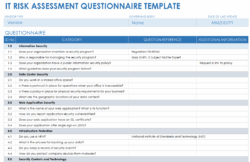
A good template is more than just a list of questions; it is a meticulously organized document that typically includes sections for asset identification, threat and vulnerability analysis, likelihood and impact scoring, existing control evaluation, and recommendations for new controls. It might also incorporate a risk matrix to visually represent and prioritize identified risks. The beauty of using such a template lies in its ability to standardize the assessment process across different departments or projects within an organization, leading to a unified and comparable risk profile.
The benefits of leveraging a robust data protection risk assessment template are manifold. Firstly, it dramatically streamlines the entire process, saving considerable time and resources that would otherwise be spent on developing an assessment methodology from the ground up. Secondly, it helps to ensure a consistent approach, meaning that all data protection risks are evaluated using the same criteria, leading to more accurate and reliable results. Moreover, templates often incorporate best practices and regulatory requirements, helping to ensure that your assessment covers all necessary compliance angles.
While a general data protection risk assessment template provides an excellent starting point, it is crucial to remember that it should be adapted to fit the unique context and specific needs of your organization. Every business has different data types, processing activities, technologies, and regulatory obligations. Therefore, customize the template by adding or removing sections, tailoring questions, and ensuring it reflects your operational reality. Think of it as a robust foundation upon which you build your organization’s specific data protection strategy, evolving alongside your business and the ever-changing digital threat landscape.
Having a clear framework for assessing and managing data protection risks is no longer a luxury but an essential operational requirement. By systematically identifying vulnerabilities and implementing robust controls, organizations can significantly reduce their exposure to data breaches and regulatory penalties. This proactive stance not only safeguards sensitive information but also builds trust with customers and stakeholders, reinforcing your commitment to responsible data stewardship.