Ensuring the well-being of patients and staff is the bedrock of any healthcare institution. In a dynamic environment like a hospital, where countless complex procedures occur daily, the potential for unforeseen risks is ever-present. Proactively identifying and managing these risks isn’t just a best practice; it’s a moral imperative and a regulatory necessity that safeguards lives and maintains trust.
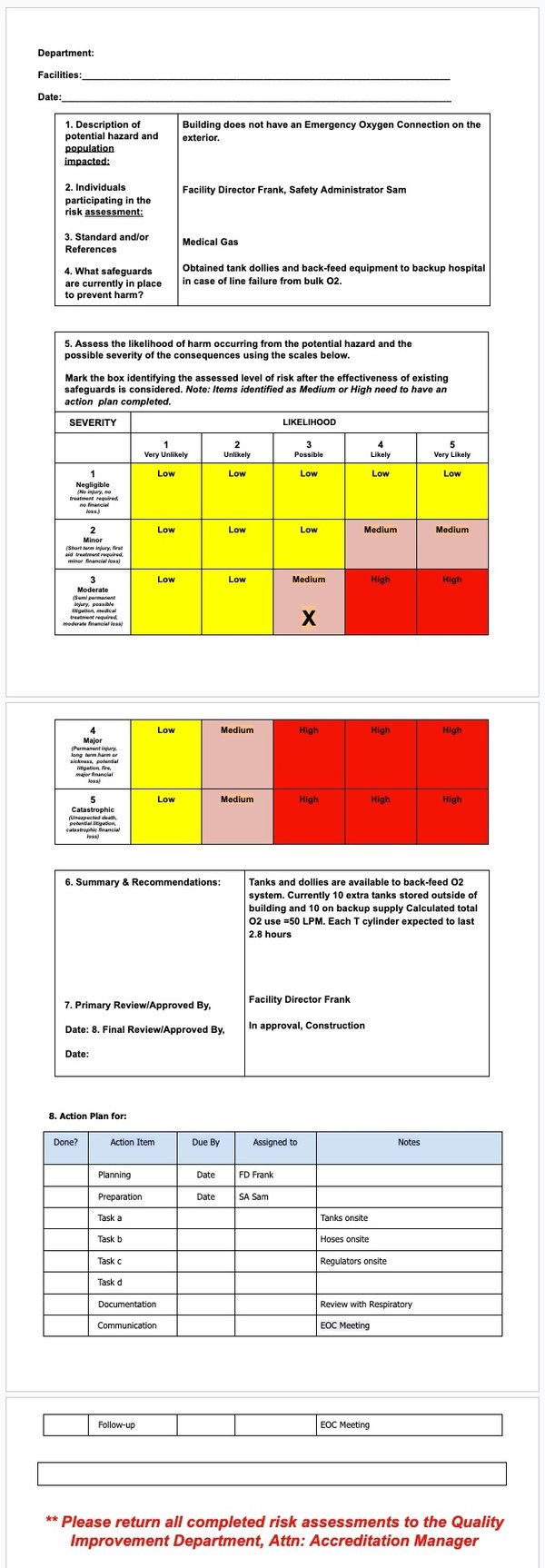
This proactive approach hinges on a structured methodology to pinpoint potential hazards, evaluate their severity, and implement effective mitigation strategies. While the goal is clear, the path to achieving it can seem daunting without a systematic framework. That’s where a well-designed hospital safety risk assessment template becomes an invaluable tool, providing the guidance needed to navigate the intricate landscape of hospital safety with clarity and precision.
Understanding the Core Components of a Robust Hospital Safety Risk Assessment
A comprehensive hospital safety risk assessment involves a methodical process of identifying, analyzing, and mitigating potential hazards that could compromise patient safety, staff well-being, or operational continuity within a healthcare facility. It’s not a one-time task but an ongoing, dynamic process that adapts to changes in procedures, equipment, staff, and the physical environment. The scope extends far beyond clinical errors, encompassing everything from physical infrastructure and equipment maintenance to infection control protocols and emergency preparedness.
Such an assessment demands a holistic view, considering all facets of the hospital’s operations. This means looking at patient care areas, surgical suites, pharmacies, laboratories, administrative offices, and even the external premises. Each area presents its own unique set of risks, which, if left unaddressed, could lead to adverse events, injuries, or even fatalities. The ultimate goal is to create a safer environment for everyone who walks through the hospital doors, fostering a culture where safety is paramount.
Key Steps in Conducting a Risk Assessment
- Identify Hazards: This initial phase involves systematically pinpointing potential sources of harm. This could include biological hazards (e.g., infectious agents), chemical hazards (e.g., cleaning agents, medications), physical hazards (e.g., slips, trips, falls, radiation), ergonomic hazards (e.g., improper lifting techniques), and psychosocial hazards (e.g., workplace violence, stress).
- Analyze the Risk: Once hazards are identified, the next step is to evaluate the likelihood of an event occurring and the potential severity of its consequences. This often involves a matrix where probability and impact are rated to give a risk score.
- Evaluate the Risk: Based on the analysis, determine if the risk is acceptable or unacceptable. This helps in prioritizing which risks require immediate attention and which can be managed with existing controls.
- Determine Control Measures: For unacceptable risks, develop and implement strategies to eliminate, reduce, or control the risk. This might involve engineering controls (e.g., safer equipment), administrative controls (e.g., new policies, training), or personal protective equipment (PPE).
- Review and Monitor: Risk assessments are not static. They must be regularly reviewed and updated, especially after incidents, changes in procedures, or the introduction of new equipment. This ensures that control measures remain effective and relevant.
A well-structured hospital safety risk assessment template provides the framework for these steps, ensuring consistency and thoroughness across all departments. It prompts teams to ask the right questions, document findings systematically, and track mitigation efforts, preventing critical areas from being overlooked. This systematic approach not only enhances patient and staff safety but also improves operational efficiency and demonstrates compliance with regulatory standards.
Implementing and Customizing Your Hospital Safety Risk Assessment Template
Successfully integrating a hospital safety risk assessment template into daily operations requires more than just filling out a form; it demands a cultural shift towards proactive safety management. While a template provides an excellent starting point, its true value lies in its adaptability and how effectively it’s customized to fit the unique context of each healthcare facility. No two hospitals are exactly alike, and neither are their specific risk profiles, patient populations, or operational complexities. Therefore, treating the template as a living document that can be tailored to specific departments, equipment, and even historical incident data is crucial.
Customization involves modifying the template to reflect the particular hazards prevalent in different areas, such as the unique risks associated with an operating room compared to a pediatric ward or a diagnostic imaging department. It also means incorporating hospital-specific policies, procedures, and regulatory requirements that may vary by region or specialty. The aim is to create a tool that is not only comprehensive but also highly relevant and actionable for the teams using it on the ground.
Implementing the template effectively also requires a multidisciplinary approach. Safety is everyone’s responsibility, and input from various departments—clinical staff, facilities management, IT, infection control, pharmacy, and even administrative leadership—is invaluable. Each perspective brings a different understanding of potential risks and viable solutions. This collaborative effort ensures that the assessment is thorough and that the resulting control measures are practical and sustainable.
Here are key aspects to consider during implementation and customization:
- Team Formation: Assemble a diverse team representing various hospital departments and roles. This ensures a holistic view of potential risks and encourages widespread buy-in.
- Data Collection: Leverage existing data such as incident reports, near-miss analyses, staff feedback, and regulatory audit findings. This historical context can illuminate recurring issues and high-risk areas.
- Regular Review Cycles: Establish a schedule for periodic review and update of the risk assessments. Risks evolve, and so should the assessment. Significant changes in equipment, procedures, or facility layout should trigger an immediate review.
- Training and Communication: Ensure all relevant staff are trained on how to use the template, identify risks, and report concerns. Effective communication channels are vital for a transparent safety culture.
Ultimately, the process of using and adapting a hospital safety risk assessment template fosters a continuous improvement loop. It empowers staff to identify and report potential issues, drives leadership to allocate resources effectively for mitigation, and ensures that patient and staff safety remains at the forefront of all hospital operations. This commitment to ongoing evaluation and adaptation transforms a simple document into a powerful engine for safety excellence.
Embracing a systematic approach to identifying and mitigating risks is fundamental to cultivating a safe and reliable healthcare environment. By proactively addressing potential hazards, hospitals not only protect their patients and staff but also enhance their reputation and operational resilience. The journey towards optimal safety is continuous, marked by ongoing vigilance, learning, and adaptation.
A well-utilized risk assessment strategy strengthens the very fabric of patient care, creating a culture where safety is not merely a goal, but an intrinsic part of every decision and action. It fosters an environment of trust and transparency, ensuring that everyone involved in healthcare delivery is empowered to contribute to a safer, more secure future for all.