Navigating the financial landscape of any business can feel like steering a ship through sometimes turbulent waters. Understanding where potential icebergs might lurk, or where the currents could shift unexpectedly, is absolutely crucial for long-term survival and growth. Without a clear picture of your financial health, making informed decisions becomes incredibly difficult, leaving your enterprise vulnerable to unforeseen challenges.
This is precisely where a structured approach to identifying and evaluating financial risks comes into play. Instead of guessing or reacting to problems as they arise, imagine having a systematic way to proactively pinpoint vulnerabilities. A well-designed tool can transform complex financial data into actionable insights, providing clarity and foresight.
Understanding the Core Elements of Financial Risk Assessment
At its heart, financial risk assessment is all about looking beneath the surface of your company’s numbers to identify potential threats that could impact its stability, profitability, and overall financial health. It involves a deep dive into various financial reports, scrutinizing trends, ratios, and anomalies that might signal trouble ahead. This isn’t just an academic exercise; it’s a vital component of strategic planning and operational resilience for any organization, regardless of its size or industry.
Why bother with such an intensive review? Simply put, a thorough risk assessment empowers better decision-making. It helps management allocate resources more effectively, secure financing more easily by demonstrating sound governance, and build trust with investors and stakeholders who want assurance that their investments are in capable hands. Ignoring these risks is akin to driving blind, hoping for the best but often preparing for the worst outcomes.
Key Areas a Template Should Cover
When you’re building or utilizing a framework for this critical analysis, it’s important to consider the breadth of financial risks that can affect a business. These typically fall into several categories, each demanding specific attention and analysis through relevant financial statements. A robust template acts as a checklist and guide, ensuring no critical area is overlooked during your review process.
The specific risks can vary widely, but common categories include:
- Liquidity Risk: The inability to meet short-term obligations.
- Solvency Risk: The inability to meet long-term debts.
- Operational Risk: Risks arising from internal processes, systems, or human error.
- Market Risk: Exposure to changes in market prices (interest rates, exchange rates).
- Credit Risk: The potential for losses due to a customer or counterparty’s failure to pay.
Each of these areas contributes to the overall risk profile of a company. A comprehensive financial statement risk assessment template ensures you systematically evaluate your exposure across all these dimensions, translating raw data into meaningful insights about your company’s financial resilience. This systematic approach is the cornerstone of proactive financial management.
Building and Utilizing Your Financial Statement Risk Assessment Template Effectively
Creating or adapting a financial statement risk assessment template for your specific needs is a process that balances structure with flexibility. While there are universal principles in financial analysis, every business has unique characteristics, industry specific challenges, and operational nuances that need to be reflected in its risk profile. The beauty of a template lies in its ability to provide a consistent framework while allowing for customization to truly capture your company’s particular vulnerabilities and strengths.
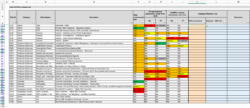
The foundational input for any such template will always be your primary financial statements: the balance sheet, income statement, and cash flow statement. These documents hold a wealth of information. Your template should guide you in extracting key data points and calculating essential financial ratios, such as current ratio, debt-to-equity ratio, gross profit margin, and cash conversion cycle. Interpreting these ratios over time, and comparing them against industry benchmarks, helps to reveal underlying trends and potential areas of concern that might not be immediately obvious.
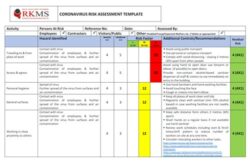
Once the data is populated and ratios are calculated, the assessment phase begins. This involves both quantitative analysis, looking at the numbers and their trends, and qualitative analysis, understanding the context behind those numbers. For instance, a declining profit margin might be a red flag, but understanding if it’s due to increased competition, a strategic investment in R&D, or inefficient operations provides the critical insight needed to assess the true risk. Your template should include sections for documenting these observations and categorizing risks by severity and likelihood.
Ultimately, a financial statement risk assessment template is not a static document to be filled out once and forgotten. It is a dynamic tool designed for ongoing use and iterative improvement. Regular reviews, ideally on a quarterly or annual basis, are essential to keep abreast of changes in your business environment, market conditions, and operational performance. A well-designed template helps you not only identify risks but also track the effectiveness of your mitigation strategies, ensuring that your financial decision-making remains robust and forward-looking.
Having a clear, structured approach to evaluating your company’s financial health provides invaluable peace of mind. It allows you to move beyond speculation, basing your strategic decisions on solid data and a thorough understanding of potential pitfalls. This proactive stance empowers businesses to not only survive economic shifts but to thrive by adapting quickly and intelligently.