Ever found yourself on a video set feeling like you’re herding cats, with crew members asking what’s next, talent wondering when their call time actually is, and the director scrambling to keep things on track? It’s a common scenario in the fast-paced world of video creation, where countless moving parts need to align perfectly for a successful outcome. Without a clear roadmap, even the most talented team can quickly descend into disarray, leading to wasted time, budget overruns, and ultimately, a less-than-stellar final product.
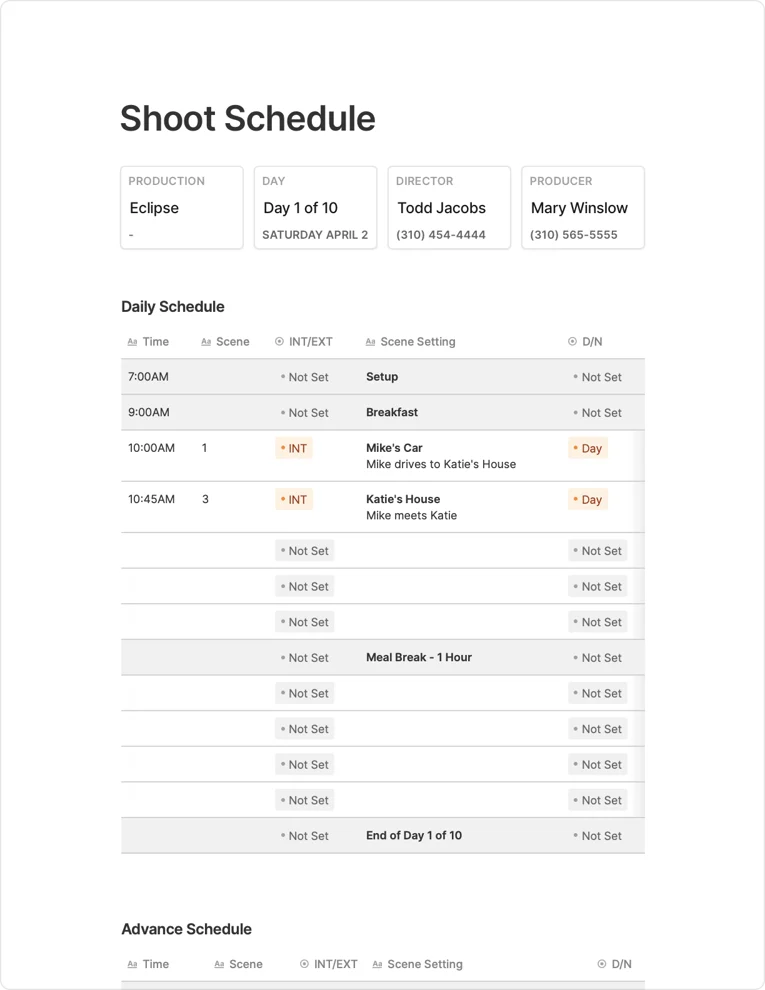
This is precisely where a well-crafted shoot schedule becomes your best friend. It’s more than just a list of times; it’s the backbone of your production, providing clarity, efficiency, and peace of mind. By laying out every detail from start to finish, a solid schedule ensures everyone knows their role, when they need to be ready, and what’s expected of them. Let’s explore how a comprehensive video production shoot schedule template can transform your next project from a potential headache into a smooth, streamlined operation.
Why Every Video Production Needs a Detailed Schedule
Imagine a symphony orchestra trying to perform without a conductor or sheet music. The individual musicians might be incredibly skilled, but without coordination, the result would be cacophony, not harmony. A video production is no different. Each department and individual plays a crucial role, and a detailed schedule acts as both the conductor and the sheet music, orchestrating every moment to ensure a harmonious flow. It’s the ultimate tool for managing time, resources, and personnel, ensuring that your vision translates smoothly from concept to screen.
One of the biggest advantages of a meticulously planned schedule is its ability to preempt common production pitfalls. Think about the hidden costs of inefficiency: an extra hour on set due to confusion can mean thousands of dollars in crew overtime, equipment rental extensions, and delayed post-production. A clear schedule minimizes these risks by explicitly defining scene breakdowns, shot lists, talent availability, and equipment needs for each segment of the day. This proactive approach saves not only money but also precious creative energy, allowing your team to focus on their craft rather than logistical headaches.
Moreover, a robust shoot schedule isn’t just for the production team; it’s a vital communication hub for everyone involved. From the director of photography knowing which lenses are needed for an upcoming shot to the catering team understanding when lunch breaks are scheduled, transparency is key. When everyone has access to a centralized, easy-to-understand document, miscommunications plummet, and the entire crew can operate with a unified purpose. This level of organization fosters a professional environment where everyone feels valued and informed.
Ultimately, the impact of a well-organized shoot extends beyond just the day-to-day operations. It builds confidence among your crew, demonstrates professionalism to your clients, and contributes significantly to the overall quality of the final product. When a set runs smoothly, creativity flourishes, problems are solved efficiently, and the energy remains positive. This positive atmosphere is infectious and translates directly into better performances, better shots, and a better film.
Key Elements to Include in Your Schedule
- Date and Day of Week: Essential for tracking and planning, especially across multiple days.
- Time Blocks: Detailed hourly or half-hourly segments for each activity.
- Scene Number and Description: Linking directly to your script and shot list.
- Location: Specific address or area for each scene.
- Cast/Talent: Who needs to be on set and when.
- Crew Members: Specific crew roles required for particular setups.
- Equipment Needs: Any specialized gear required for a shot.
- Notes/Special Instructions: Important details like prop readiness, special effects, or safety warnings.
- Meal Breaks and Wrap Times: Crucial for legal compliance and crew morale.
Crafting Your Own Effective Video Production Shoot Schedule Template
Building an effective video production shoot schedule template doesn’t have to be an intimidating task. It’s an iterative process that begins long before the first camera rolls. Your journey starts in pre-production, where the script is broken down into individual scenes and shots, informing every single entry in your schedule. Each line of dialogue, every camera movement, and every prop placement will eventually find its place in the meticulously planned timeline. This initial breakdown helps you visualize the flow of the shoot day by day, hour by hour.
When you sit down to compile your schedule, think of it as mapping out a journey. You’ll need to consider logistical realities like travel time between locations, the availability of specific talent, and the sun’s position for exterior shots. Begin by allocating sufficient time for setup and breakdown for each new scene or location. Rushing these critical phases often leads to errors or forgotten details that can derail subsequent shots. A good template allows for this granular detail, helping you account for every minute of your production day.
A smart way to approach scheduling is to group similar shots or scenes together to maximize efficiency. Can you shoot all the scenes at one location back-to-back, even if they appear at different points in the script? This “blocking” of scenes reduces the amount of time spent moving equipment, resetting lighting, and getting talent into new costumes. Remember to factor in buffer time for the unexpected – equipment malfunctions, weather changes, or a scene taking longer than anticipated are all part of the production reality. Being flexible within a rigid structure is the mark of a seasoned producer.
Moreover, the best schedules are living documents, especially on set. While your template provides a solid foundation, be prepared to make adjustments on the fly. Regularly communicate updates to your team, perhaps through a designated PA or via a shared digital document that everyone can access. Ensure there’s a clear chain of command for scheduling changes and that everyone understands the revised plan. A shoot day often involves problem-solving, and a flexible schedule, coupled with clear communication, is your most powerful tool.
- Start with the Script Breakdown: This is the foundation for all scheduling.
- Factor in Travel Time: Allocate realistic travel time between different locations.
- Group Scenes Logistically: Shoot scenes at the same location or with the same actors consecutively to save time.
- Include Buffer Time: Always add extra minutes or hours for unexpected delays.
- Schedule Meals and Breaks: Legally required and vital for crew energy and morale.
- Distribute Widely and Update: Ensure everyone has the latest version and knows of any changes.
- Be Prepared to Adapt: Production is dynamic; embrace flexibility.
Ultimately, the success of any video project hinges on effective planning and execution. While creative vision and skilled craftsmanship are undeniably important, it’s the underlying structure provided by a comprehensive shoot schedule that truly allows these elements to shine. It transforms potential chaos into coordinated action, ensuring every person and every piece of equipment contributes meaningfully to the shared goal. From the initial concept meeting to the final wrap, a well-managed schedule keeps your production moving forward with purpose and precision.
Investing time in creating a detailed and adaptable schedule is one of the most valuable decisions you can make for your production. It’s the secret weapon that empowers your team to focus on storytelling and artistry, rather than logistics. When your set operates like a well-oiled machine, the creative process is liberated, leading to higher quality content, happier clients, and a more fulfilling production experience for everyone involved.