Managing a workforce that operates outside of standard 9-to-5 hours can be one of the trickiest aspects of running many businesses, from healthcare and emergency services to manufacturing and retail. The constant need for coverage, often across 24 hours a day, seven days a week, presents unique challenges in ensuring fairness, preventing burnout, and maintaining consistent productivity. Without a clear, organized system, employees can feel unfairly burdened, leading to low morale and high turnover rates, while operational gaps can severely impact service delivery and profitability.
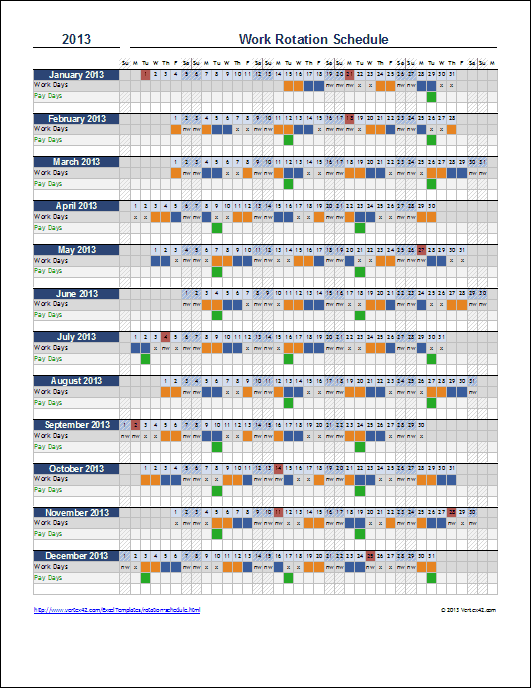
This is where a well-designed rotating shift work schedule template becomes an invaluable tool. It’s more than just a calendar; it’s a strategic framework that brings structure and predictability to complex staffing needs. By systematically rotating shifts among employees, these templates aim to distribute the burden of less desirable hours evenly, give everyone a fair share of weekend and holiday shifts, and ultimately foster a healthier, more balanced work environment. Let’s explore how to effectively implement and benefit from such a powerful scheduling solution.
Understanding the Benefits of a Well-Structured Rotating Shift
Implementing a rotating shift system, especially one guided by a robust template, offers a multitude of advantages that extend to both employees and the organization as a whole. At its core, the primary benefit is fairness. Instead of a fixed group of employees always working nights or weekends, a rotating schedule ensures that all team members share in the less conventional shifts, preventing resentment and promoting a sense of equity across the workforce. This balanced approach can significantly boost morale and reduce the likelihood of burnout, as employees know their turn for less favorable shifts will eventually pass.
Beyond just fairness, a well-structured rotating schedule can also lead to improved work-life balance for employees. While working non-traditional hours can be demanding, the predictability offered by a consistent rotation pattern allows individuals to plan their personal lives more effectively. Knowing well in advance when they will have stretches of days off, or when they will be working certain shifts, empowers them to arrange childcare, appointments, or social activities without constant uncertainty. This level of predictability is a huge stress reliever for many.
From an operational standpoint, a thoughtful rotating shift work schedule template ensures consistent coverage without overstaffing or understaffing. It helps management forecast staffing needs weeks or even months in advance, making it easier to account for vacations, training, and potential absences. This foresight translates into fewer last-minute scrambles to find replacements and a more stable, reliable workforce ready to meet the demands of the business around the clock.
Furthermore, a well-designed rotation can actually enhance employee skill development. As team members experience different shifts and the unique challenges each one presents, they gain a broader understanding of the operation. A day shift might focus on customer interaction, while a night shift could involve equipment maintenance or inventory management. This varied exposure helps create more versatile and adaptable employees, capable of handling a wider range of tasks, which is a significant asset to any organization.
Key Advantages for Employees
Operational Gains for Management
Designing Your Own Rotating Shift Work Schedule Template
Creating an effective rotating shift work schedule template isn’t a one-size-fits-all endeavor, as the optimal solution depends heavily on your specific business needs, employee count, and legal requirements. However, there are fundamental principles and common patterns that can serve as excellent starting points. The first step involves clearly defining your operational requirements: how many employees do you need on each shift? What are the peak and off-peak hours? And what is the standard length of a shift in your organization?
Once you have a clear understanding of your needs, you can begin exploring popular rotation patterns. One widely used pattern is the “2-2-3” or “Pitman” schedule, which is often seen in 12-hour shifts. This pattern involves working two days, two nights, then having three days off, followed by two days, two nights, and then three days on, completing a full cycle. This allows for extended time off periods and a relatively balanced distribution of shifts. Another option is the DuPont schedule, which uses a 4-on, 3-off, 3-on, 4-off, 4-on, 3-off pattern over 28 days for 12-hour shifts.
Consideration of employee preferences and feedback is also crucial when designing your template. While a perfect schedule might be elusive, involving your team in the planning process or at least gathering their input can lead to higher adoption rates and greater satisfaction. Factors like commute times, childcare arrangements, and the impact of shift changes on sleep patterns are important to acknowledge. A schedule that works on paper may not work in practice if it significantly disrupts the personal lives of your employees.
Finally, think about the tools you’ll use to manage and distribute your rotating shift work schedule template. While basic spreadsheets can work for smaller teams, dedicated scheduling software can offer greater flexibility, automate rotations, handle time-off requests, and ensure compliance with labor laws. Whatever method you choose, ensure it’s easy to understand, accessible to all employees, and allows for clear communication regarding any changes. The goal is to create a living document that can adapt as your business evolves.
- Determine your precise operational needs and required staffing levels for each shift.
- Research and choose a rotation pattern (e.g., 2-2-3, DuPont) that best suits your industry and team size.
- Incorporate break times, handover periods, and training slots directly into the template.
- Communicate clearly and transparently with your team about the new schedule structure and reasoning behind it.
- Gather feedback from employees after the initial implementation phase and be prepared to make iterative adjustments.
- Utilize digital tools or a robust spreadsheet to create, manage, and distribute your rotating shift work schedule template efficiently.
A well-implemented rotating shift schedule provides the backbone for a productive and fair working environment in businesses that operate continuously. It’s an investment in employee well-being and operational efficiency, reducing the stress associated with unpredictable hours and ensuring that all necessary roles are adequately covered. By carefully planning and utilizing a structured template, organizations can create a stable and equitable system that benefits everyone involved.
Ultimately, the success of any shift schedule lies in its ability to adapt and serve the evolving needs of both the business and its people. Regularly reviewing and refining your rotating shift patterns, based on feedback and operational data, will ensure that your scheduling remains a strategic asset rather than a source of frustration. Embracing this proactive approach will lead to a more harmonious workplace and stronger, more resilient operations for years to come.