Navigating the complexities of rental agreements can often feel overwhelming for property owners. Whether you need to regain possession of your property or simply conclude a lease term, issuing a formal notice is a critical step. A clear and legally compliant landlord tenancy termination letter template is an indispensable tool, ensuring you communicate effectively and adhere to the law. This comprehensive guide will walk you through the necessities of ending a tenancy legally and smoothly.
Understanding the correct procedures for terminating a rental agreement protects both landlords and tenants. Proper documentation, especially a well-crafted notice, minimizes disputes and potential legal issues down the line. We will explore the various reasons for ending a lease, the essential components of a robust termination letter, and provide a sample to guide your process.
This article aims to simplify the process, offering actionable insights and a reliable framework. By the end, you will be equipped with the knowledge and resources to confidently prepare your own tenancy termination notice, ensuring a professional and lawful conclusion to any rental arrangement.
Understanding Legal Grounds for Ending a Lease Agreement
Terminating a tenancy is a serious legal action that requires adherence to specific rules and regulations. Landlords cannot simply ask a tenant to leave without proper cause or notice, except in very specific circumstances. Knowing the legal grounds for termination is the first step in preparing any formal notice, including a landlord tenancy termination letter template.
When a Landlord Can Legally End a Tenancy
There are several common legal reasons why a landlord might terminate a lease agreement. The most frequent reason involves a tenant’s breach of the lease terms. This could include failure to pay rent on time, significant property damage beyond normal wear and tear, or engaging in illegal activities on the premises.
Another common scenario is the natural expiration of a fixed-term lease, where neither party wishes to renew the agreement. In month-to-month or periodic tenancies, a landlord can often terminate the agreement without cause, provided they give the legally required notice. Some jurisdictions also allow “no-fault” evictions, such as when a landlord plans to move into the property or undertake substantial renovations, though these often come with strict conditions and longer notice periods.
State and Local Laws Governing Notice Periods
It is crucial to understand that landlord-tenant laws vary significantly by state, county, and even city. The required notice period for termination depends on the type of tenancy, the reason for termination, and local regulations. For instance, a 30-day notice might be sufficient for a month-to-month tenancy in some areas, while others may require 60 or even 90 days.
Failure to provide adequate notice can render your termination letter invalid and delay the entire process. Always consult your local housing authority or legal resources to confirm the specific notice requirements applicable to your property. Staying informed ensures compliance and protects you from legal challenges.
Avoiding Common Legal Pitfalls
Mistakes in the termination process can lead to costly legal battles and extended vacancies. A common pitfall is attempting an illegal eviction, such as changing locks, removing tenant property, or shutting off utilities. Such actions are strictly prohibited and can result in significant penalties. Retaliation against a tenant for exercising their rights is also illegal.
Always ensure your reasons for termination are legitimate and well-documented. Using a standardized landlord tenancy termination letter template helps ensure all necessary information is included. When in doubt, seeking legal advice from an attorney specializing in landlord-tenant law can prevent serious errors and ensure a smooth, lawful transition.
Essential Components of an Effective Termination Letter
A well-drafted termination letter serves as official documentation of your intent to end a tenancy. Beyond simply stating that the lease is over, it must contain specific information to be legally binding and effective. Precision and clarity are paramount in this document.
Key Information to Include in Your Notice
An effective termination letter should clearly identify all parties and the property in question. Begin with the full names and addresses of both the landlord (or property manager) and the tenant(s). Include the complete address of the rental property, including unit numbers if applicable. The date the notice is issued is also vital for establishing timelines.
Crucially, specify the exact date by which the tenancy will terminate and the tenant must vacate the premises. If the termination is for cause, such as non-payment of rent, briefly state the reason. The letter should also contain instructions regarding move-out procedures, such as property condition expectations, returning keys, and scheduling a final inspection. Information about the security deposit, including how it will be handled and when it will be returned, should also be included. Finally, ensure there are clear spaces for the landlord’s signature and printed name.
Delivering the Notice Properly
The method of delivery is just as important as the content of the letter. To prove that the tenant received the notice, you need verifiable proof of delivery. The most common and recommended method is certified mail with a return receipt requested. This provides a legal record that the letter was sent and received.
Other acceptable methods might include hand-delivery with a witness present or having the tenant sign an acknowledgment of receipt. In some cases, especially if a tenant is uncooperative, professional process serving might be necessary. Never rely on regular mail, email (unless explicitly agreed upon in the lease and legally permissible), or simply leaving the notice on the door without additional proof of service. Proper delivery safeguards your position should any legal disputes arise.
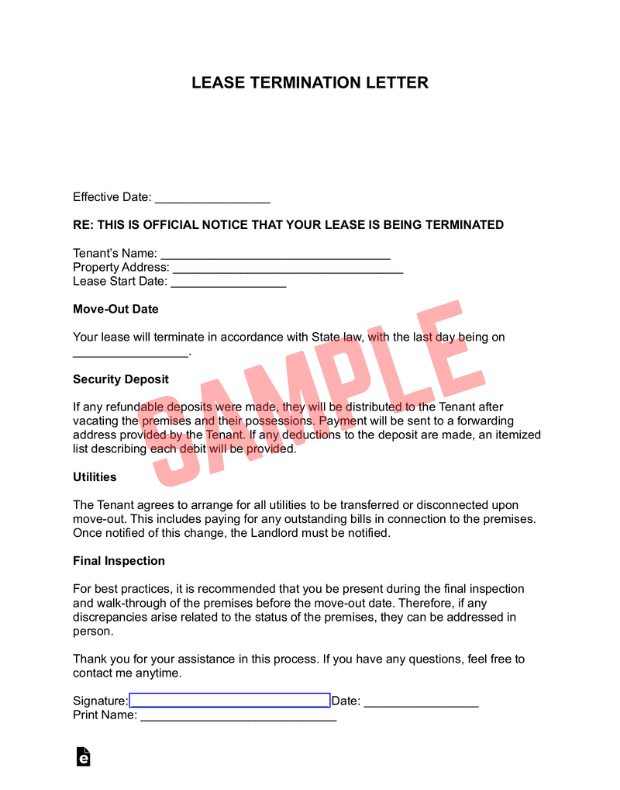
Sample Landlord Tenancy Termination Letter Template
Using a structured template can significantly simplify the process of drafting a termination letter. This sample provides a clear framework, allowing you to fill in the specific details for your situation. Remember to customize this landlord tenancy termination letter template to align with your local laws and the specifics of your lease agreement.
[Your Name/Landlord's Name]
[Your Address]
[Your City, State, Zip Code]
[Your Phone Number]
[Your Email Address]

[Date]

[Tenant's Name]
[Tenant's Current Address - Rental Property Address]
[Tenant's City, State, Zip Code]

Subject: Notice of Tenancy Termination / Notice to Vacate

Dear [Tenant's Name],

This letter serves as a formal notice to terminate your tenancy at the property located at [Full Rental Property Address, including unit number if applicable], [City, State, Zip Code].

Your tenancy will officially terminate on [Date of Termination, e.g., November 30, 2024]. You are required to vacate the premises and remove all personal belongings by this date.

[Choose ONE of the following paragraphs based on your situation, or adapt as needed:]

[Option 1: For fixed-term lease ending]
This termination is in accordance with the terms of your lease agreement, which naturally expires on [Original Lease End Date]. We will not be renewing the lease.

[Option 2: For periodic (e.g., month-to-month) tenancy without cause, if permitted by local law]
This termination is in accordance with [Number] days' notice as required by [Your State/Local Law or Lease Agreement]. Please note that this notice is not a reflection of any fault on your part but is issued as per the terms of our agreement.

[Option 3: For breach of lease, provide specific details but keep it concise and factual]
This termination is due to a breach of your lease agreement, specifically [State specific reason(s), e.g., "non-payment of rent for the month of October 2024," or "violation of the no-pets clause," or "unauthorized occupants"]. You were previously notified of this breach on [Date of Previous Notice, if applicable].

Upon vacating the property, please ensure the premises are left in a clean and undamaged condition, reasonable wear and tear excepted. All keys, garage remotes, and access fobs must be returned to [Your Name/Property Management Company] by the termination date.

We will conduct a final walk-through inspection of the property on or about [Date/Time, or state that you will contact them to arrange]. This inspection will determine the condition of the property and any deductions that may be made from your security deposit. Your security deposit of $[Amount] will be handled in accordance with [Your State] landlord-tenant laws. An itemized statement and any remaining balance will be mailed to your forwarding address within [Number] days after you vacate.

Please provide a forwarding address where your security deposit refund and any further correspondence can be sent.

Thank you for your cooperation in this matter.

Sincerely,

[Your Signature]

[Your Printed Name]
[Your Title, e.g., Landlord/Property Manager]
This template is designed to be clear and direct, covering the essential information. Remember to replace the bracketed placeholders [ ] with your specific details. It is always a good practice to print multiple copies: one for the tenant, one for your records, and an extra if you are having it hand-delivered with an acknowledgment signature.
Concluding a tenancy, while sometimes challenging, can be a smooth process when handled professionally and legally. Utilizing a well-structured landlord tenancy termination letter template like the one provided ensures clarity and adherence to legal requirements. This not only protects you as a landlord but also provides your tenant with clear expectations and a fair opportunity to comply.
Always remember the importance of accurate information, proper notice periods, and verifiable delivery methods. Should you face any complex situations or have doubts about local regulations, consulting with a legal professional specializing in landlord-tenant law is highly recommended. Taking these proactive steps will help facilitate a peaceful and lawful end to any tenancy, safeguarding your investment and fostering positive future landlord-tenant relationships.