Navigating housing with an emotional support animal (ESA) can often feel like a complex journey for tenants. The need for proper documentation is paramount to ensure a smooth process with landlords, adhering to federal housing laws. Understanding what constitutes a legitimate ESA letter and how to present it correctly is vital for securing reasonable accommodation. 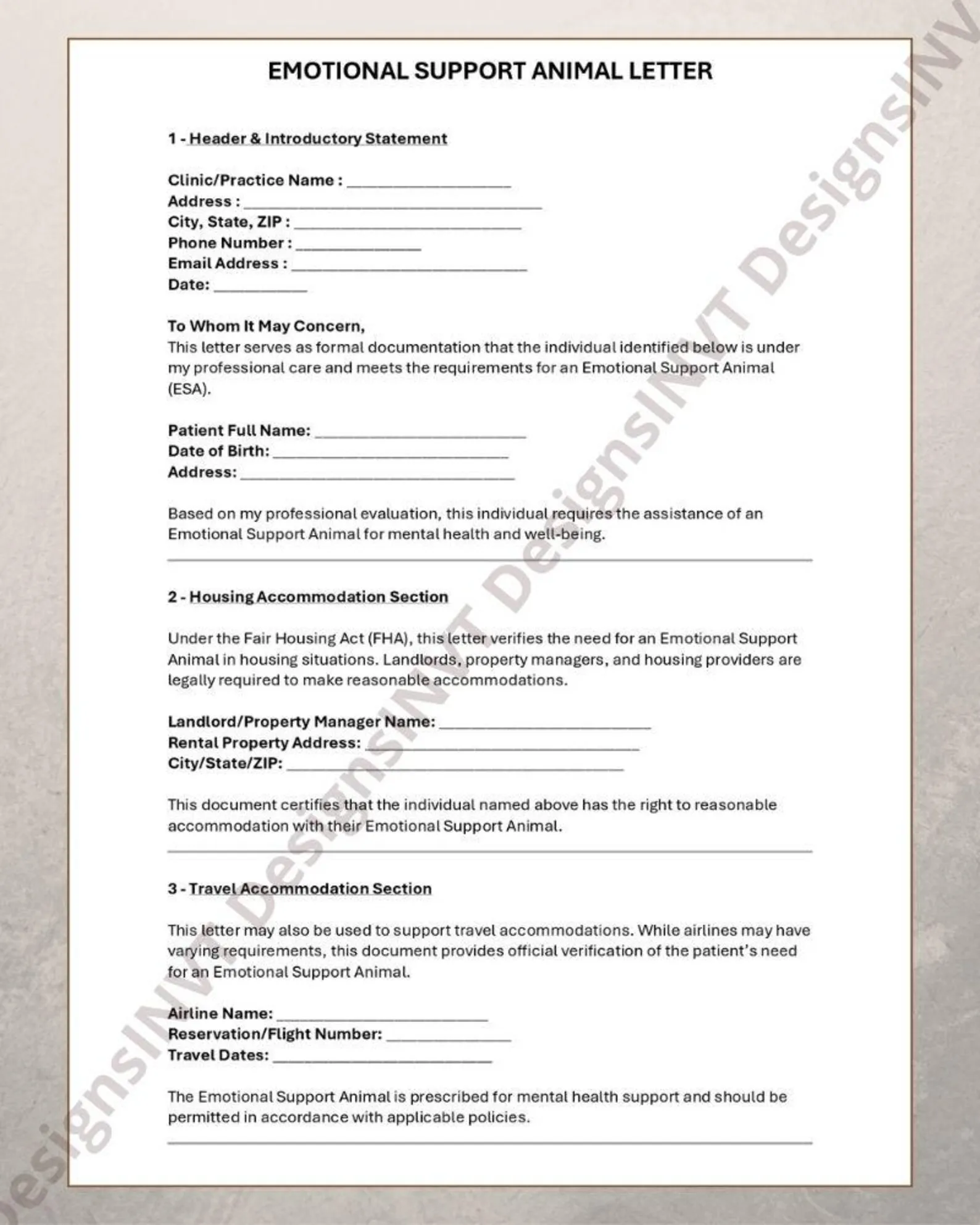
This article will demystify the process, explaining the requirements for an emotional support animal letter and providing a comprehensive guide. We will delve into the essential components that make an ESA letter valid and discuss how a reliable landlord emotional support animal letter template can be an invaluable tool. Prepare to learn how to effectively communicate your need for an ESA to your housing provider, ensuring compliance and peace of mind.
Crafting a Compliant Emotional Support Animal Letter for Landlords
The Fair Housing Act (FHA) protects individuals with disabilities, requiring landlords to make reasonable accommodations for emotional support animals. These animals provide therapeutic benefits to individuals with mental or emotional disabilities. However, landlords are entitled to receive proper documentation to verify the need for such an accommodation.
A legitimate emotional support animal letter serves as this crucial documentation. It’s not just a request but a formal verification from a licensed mental health professional (LMHP) or other healthcare provider. This letter confirms that the individual has a disability and that the ESA mitigates symptoms of that disability. Without a proper letter, landlords are not obligated to accommodate an ESA.
Using a well-structured landlord emotional support animal letter template ensures all necessary information is included, making the process straightforward for both tenant and landlord. It helps avoid misunderstandings and potential legal issues down the line. A clear template guides the healthcare provider on what details to include, preventing omissions that could cause delays or denials.
Essential elements that must be included in an effective ESA letter for housing:
- Professional Letterhead: The letter must be on the official letterhead of the healthcare provider.
- Date of Issuance: A recent date ensures the letter is current and relevant.
- Healthcare Professional’s Information: Full name, title, license number, and state of licensure.
- Patient-Provider Relationship: Confirmation that the professional has an ongoing therapeutic relationship with the tenant.
- Confirmation of Disability: A statement that the tenant has a disability under the FHA’s definition, without disclosing specific diagnoses.
- Need for ESA: An explanation that the ESA is necessary for the tenant’s mental health and alleviates symptoms of their disability.
- Recommendation of ESA: A clear recommendation for the specific animal (type, if known) as an emotional support animal.
- Signature: The original signature of the healthcare professional.
Here is a sample landlord emotional support animal letter template to guide your healthcare provider:
[Healthcare Professional Letterhead]

[Date]

[Landlord/Property Management Name]
[Landlord/Property Management Address]

**Subject: Verification of Need for Emotional Support Animal for [Tenant's Name]**

Dear [Landlord/Property Management Name],

I am writing on behalf of my patient, [Tenant's Name], who resides at or is applying to reside at your property located at [Property Address, if applicable]. I am a [Healthcare Professional's Title, e.g., Licensed Psychologist, Psychiatrist, Social Worker, Physician] licensed in [State] with license number [License Number].

I have been providing ongoing therapeutic care to [Tenant's Name] since [Start Date of Treatment]. During our professional relationship, I have determined that [Tenant's Name] has a disability as defined by the Fair Housing Act. This condition substantially limits one or more major life activities.

Due to their disability, I have prescribed and recommend an emotional support animal to help mitigate the symptoms and effects of their condition. The presence of their emotional support animal, a [Type of Animal, e.g., dog, cat], is essential for their mental and emotional well-being and allows them to fully use and enjoy their dwelling.

This animal is not a pet but rather a necessary accommodation to help [Tenant's Name] manage their disability. I confirm that the animal in question provides therapeutic benefits and is directly related to [Tenant's Name]'s ability to function within a housing environment.

Please feel free to contact me should you require further verification.

Sincerely,

[Healthcare Professional's Signature]
[Healthcare Professional's Printed Name]
[Healthcare Professional's Title]
[Contact Information: Phone Number, Email Address]
This template provides a clear framework for healthcare providers to ensure all necessary legal and medical information is included. Remember, an ESA letter should always come directly from a qualified professional who has assessed the tenant’s needs. Landlords are legally prohibited from asking for specific diagnoses or medical histories.
It’s important for tenants to communicate proactively with their landlords regarding their emotional support animal. Providing a valid and comprehensive ESA letter promptly facilitates a smoother accommodation process. This adherence to legal guidelines protects both the tenant’s rights and the landlord’s obligations under federal law.
Securing a legitimate emotional support animal letter is a crucial step for tenants seeking housing accommodations. Utilizing a robust landlord emotional support animal letter template simplifies this process, ensuring all necessary information is conveyed clearly and professionally. This proactive approach minimizes potential disputes and fosters a respectful understanding between tenant and landlord regarding ESA housing rights.
By carefully preparing and presenting a compliant ESA letter, tenants can navigate the rental market with greater confidence. This commitment to proper documentation helps ensure that individuals with disabilities receive the reasonable accommodations they are entitled to, promoting access to stable and supportive living environments.