Navigating the world of military documentation can sometimes feel like learning a new language, filled with acronyms, specific formats, and a particular way of communicating. Among the essential documents you’ll encounter, the army memorandum for record template stands out as a crucial tool for formalizing informal discussions, documenting events, or simply providing a clear, concise written account of a particular situation or decision. It serves as a permanent record, ensuring clarity and accountability within the often fast-paced environment of military operations.

Think of an MFR as your personal note-taker, but with official backing. Whether you’re a junior Soldier documenting a training event, a NCO recording a counseling session, or an officer formalizing a policy decision, knowing how to properly construct an MFR is a skill that will serve you well throughout your military career. It helps prevent misunderstandings, provides a historical reference, and supports future actions or decisions by having a clear trail of what transpired.
This article aims to demystify the process, guiding you through the components of an effective memorandum for record. We’ll explore why they are so important, what key information they should contain, and how to approach writing one that is clear, professional, and serves its intended purpose. Get ready to enhance your administrative prowess and confidently tackle your next MFR.
Understanding the Memorandum for Record (MFR)
A Memorandum for Record, often abbreviated as MFR, is essentially an official, written documentation of an event, decision, conversation, or policy guidance. It’s used when there isn’t another specific form or template available for the type of documentation needed. Its primary purpose is to create a permanent record of something that happened or was decided, making it accessible for future reference and accountability. Without an MFR, important details can be lost to memory or misinterpretation, leading to confusion down the line.
Imagine a situation where a verbal agreement was made about a specific task or a deviation from a standard operating procedure was approved. Without an MFR, proving that conversation took place or that approval was granted can become incredibly difficult. This document eliminates such ambiguity by providing a timestamped, authored account. It acts as a reliable reference point for individuals, units, and even higher commands, ensuring everyone is on the same page regarding past actions and decisions.
MFRs are incredibly versatile and can be used in a wide array of military contexts. They might document a significant event that occurred during a field exercise, record the details of a disciplinary action, formalize the outcome of a meeting, or even clarify a specific instruction given verbally by a superior. Their flexibility makes them indispensable for maintaining an accurate administrative trail within the Army.
One of the key strengths of an MFR lies in its ability to condense complex information into a digestible format. While it needs to be comprehensive enough to capture all relevant details, it also benefits from being concise and to the point. The aim is to inform, not to overwhelm. Therefore, carefully selecting what information to include and how to present it is paramount to its effectiveness.
The authorship of an MFR typically falls to the individual who witnessed the event, participated in the conversation, or made the decision being documented. This person is responsible for the accuracy and completeness of the information presented. It’s not uncommon for MFRs to be routed through a chain of command for review and endorsement, adding further layers of verification and approval.
Ultimately, mastering the MFR is about mastering clear, professional communication. It’s about ensuring that your words accurately reflect reality and can withstand scrutiny should questions arise later. It’s a testament to good leadership and responsible administration, skills that are highly valued at every level within the Army.
Crafting Your Army Memorandum For Record
When it comes to putting together your army memorandum for record template, precision and clarity are your best friends. The goal is to provide a comprehensive yet concise account that leaves no room for misinterpretation. Start by understanding the core purpose of your MFR; what specific event, conversation, or decision are you trying to document? Having this clear in your mind from the outset will guide every word you write.
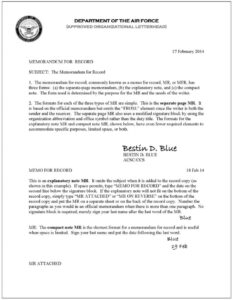
A standard MFR usually begins with essential administrative data. This includes the date, the subject line (which should be descriptive and specific), and the individual or office originating the memorandum. Following this, the body of the MFR will detail the specifics. This is where you lay out the facts in a logical, chronological order if applicable. Be objective, stick to verifiable facts, and avoid opinions or emotional language. If you are documenting a conversation, state who was present, what was discussed, and any decisions or actions agreed upon.
To ensure your MFR is thorough and professional, consider including the following elements:
- **Date and Subject:** Always clearly state when the MFR was written and what it is about. The subject line should be brief but informative.
- **Originator:** Identify who created the MFR, including their rank, name, and unit or office.
- **Purpose:** Briefly explain why this MFR is being created (e.g., “To document a counseling session,” “To record a significant event”).
- **Background or Facts:** Provide all relevant details leading up to or surrounding the event. Use clear, factual language.
- **Discussion:** If necessary, elaborate on any points of discussion, decisions made, or actions taken.
- **Conclusion or Recommendation:** Summarize the MFR’s outcome or any future actions required.
- **Signature Block:** Include a signature block for the originator and any individuals who need to acknowledge or endorse the MFR.
Remember, an MFR is a living document in the sense that its relevance can extend far beyond its initial creation. It becomes part of a larger official record, potentially influencing future decisions, investigations, or personnel actions. Therefore, take the time to proofread carefully for any grammatical errors or factual inaccuracies. A well-written army memorandum for record template reflects positively on your attention to detail and professional commitment, reinforcing trust and efficiency within your unit.
Mastering the art of writing an effective memorandum for record is an invaluable skill that bolsters administrative efficiency and ensures institutional memory. By meticulously documenting key events and decisions, you contribute to a culture of accountability and clarity that benefits everyone. This foundational ability will serve you well, making you a more effective and reliable member of your team.
Developing confidence in drafting these crucial documents means you are not just ticking a box; you are actively contributing to the accurate historical record of your unit and the Army at large. Your efforts in creating clear, concise, and factual MFRs empower informed decision-making and uphold the high standards of military professionalism. Keep practicing, and you will find yourself navigating military administration with greater ease and expertise.