Understanding where your business processes stand in terms of efficiency, consistency, and overall effectiveness is more than just good practice; it is a critical driver for sustainable growth and competitive advantage. Many organizations operate day-to-day without a clear picture of their operational strengths and weaknesses, often leading to inefficiencies, wasted resources, and missed opportunities for innovation.

This is precisely where assessing your business process maturity comes into play. It provides a structured way to evaluate your current state, identify areas ripe for improvement, and map out a clear path towards operational excellence. A well-designed business process maturity assessment template serves as your compass, guiding you through this crucial evaluation.
Why Assess Your Business Process Maturity?
Assessing your business process maturity is akin to getting a health check-up for your organization’s operational heart. It’s about understanding how well your processes are defined, managed, measured, and optimized. Businesses that fail to regularly review their process maturity often find themselves battling a cycle of recurring problems, inconsistent outputs, and an inability to adapt to market changes swiftly. By contrast, organizations with higher process maturity tend to be more agile, responsive, and ultimately, more profitable.
The benefits extend beyond mere problem-solving. A thorough assessment helps you pinpoint bottlenecks, eliminate redundant steps, and streamline workflows, leading to significant cost savings and improved productivity. It also empowers better resource allocation, as you gain clarity on where to invest your efforts and technology for maximum impact. Moreover, understanding your maturity level fosters a culture of continuous improvement, embedding a mindset of constant evolution within your team.
The Stages of Process Maturity
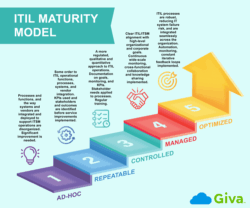
Typically, business process maturity models categorize organizations into several distinct stages, providing a clear roadmap for improvement. While models might vary slightly, they generally follow a progression from chaotic to highly optimized operations.
- Initial or Ad-Hoc: Processes are unstructured, undocumented, and often depend on individual heroics. There is little consistency, and outcomes are unpredictable.
- Managed or Defined: Processes are documented and repeatable, though they may not be consistently applied across the organization. There is a basic understanding of roles and responsibilities.
- Standardized or Optimized: Processes are standardized across the organization, regularly measured, and actively managed. Data is collected to understand performance, and improvement initiatives are common.
- Predictable or Innovating: Processes are highly optimized, continuously monitored for performance, and actively adapted to changing business needs. Data-driven decisions are the norm, and the organization proactively seeks out innovation in its processes.
Moving through these stages is not an overnight task but a strategic journey. Each step up the maturity ladder brings increased efficiency, reduced risk, and greater adaptability. A business process maturity assessment template is designed to help you objectively determine your current stage and provide actionable insights for progression.
Key Components of an Effective Business Process Maturity Assessment Template
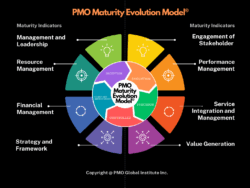
A truly effective business process maturity assessment template isn’t just a checklist; it’s a comprehensive framework designed to elicit deep insights into your operational landscape. It should be structured in a way that allows for objective evaluation across various dimensions of your processes, ensuring a holistic view rather than a superficial glance. The goal is to gather consistent data that can be analyzed to form a clear picture of your current state and identify critical areas for development.
Such a template typically delves into aspects like process documentation completeness and accessibility, the clarity of process ownership and accountability, the extent of technology integration supporting your workflows, and the mechanisms in place for performance measurement and continuous improvement. It asks the critical questions that reveal not just if a process exists, but how well it is executed, monitored, and evolved over time.
For instance, a robust template would guide you to consider:
- Is each core business process clearly documented, including its steps, inputs, and outputs, and is this documentation easily accessible to all relevant stakeholders?
- Are process owners explicitly identified, and do they possess the necessary authority and resources to manage and improve their respective processes?
- Are key performance indicators KPIs established and regularly tracked for each process to measure its effectiveness, efficiency, and quality?
- To what extent is technology leveraged to automate process steps, enhance data accuracy, and improve overall workflow visibility?
- Are there formal mechanisms and a culture of continuous improvement embedded within the organization, encouraging regular review and enhancement of processes?
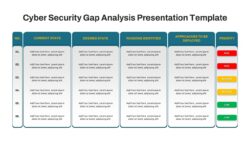
By systematically addressing these and other pertinent questions, the template helps you to score or rank your processes against defined criteria. This quantitative and qualitative data then forms the basis for developing targeted improvement plans. It transforms abstract observations into concrete action items, ensuring that your assessment translates directly into tangible operational enhancements.
Leveraging a business process maturity assessment template allows organizations to systematically uncover the hidden potential within their operations, moving beyond reactive problem-solving to proactive strategic planning. It fosters an environment where efficiency and innovation are not just aspirational goals but achievable outcomes through structured evaluation and deliberate action. By consistently applying such a template, businesses can ensure they remain adaptable, resilient, and well-positioned to thrive in an ever-evolving market.