Getting started on a new construction project, whether it is building your dream home or a new commercial space, is an incredibly exciting journey. From blueprints to breaking ground, every step brings you closer to realizing your vision. However, behind the excitement lies a complex financial structure, especially when it comes to funding the project through a construction loan. Unlike traditional mortgages, construction loans disburse funds in stages, rather than all at once.

This is where understanding and utilizing a well-structured construction loan draw schedule template becomes absolutely essential. It is your roadmap for managing finances, ensuring your project stays on track, and maintaining a clear line of communication with your lender and contractor. Without a clear plan for when funds will be released and for what purpose, you risk delays, budget overruns, and unnecessary stress. This article will help demystify the process and guide you through creating an effective draw schedule for your building endeavors.
Understanding the Construction Loan Draw Schedule
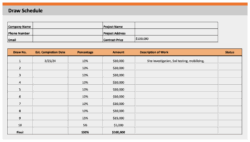
A construction loan draw schedule is essentially a detailed payment plan that outlines when specific portions of the construction loan will be disbursed to the builder or contractor as various stages of the project are completed. It is a critical document agreed upon by the borrower, the lender, and the builder, designed to protect all parties involved. Instead of handing over the entire loan amount upfront, which carries significant risk, funds are released in “draws” or installments, typically after an inspection confirms that the previous stage of work has been satisfactorily completed.
The primary purpose of this schedule is to ensure that the loan funds are being used appropriately and that the construction progresses according to the agreed-upon timeline and budget. For the lender, it mitigates risk by tying payments to tangible progress and verified work. They want to ensure their investment is secured by a property that is actually being built to specification. For you, the borrower, it provides peace of mind, knowing that your money is being spent wisely and that your contractor is meeting their obligations before receiving further payments.
This systematic approach prevents a contractor from potentially overbilling for work not yet done or abandoning the project with a large upfront payment. It establishes clear benchmarks and accountability. Furthermore, it helps you manage your budget more effectively, allowing you to foresee upcoming expenses and confirm they align with the agreed-upon costs for each phase of construction. A well-defined draw schedule is a cornerstone of a successful and stress-free building experience.
A typical draw schedule breaks down the entire construction project into manageable phases, each with an allocated percentage of the total loan amount. These phases are usually logical construction milestones, ensuring that funds are tied directly to physical progress on site. Before each draw is released, an inspector or appraiser, often appointed by the lender, will visit the site to verify that the work designated for that stage is indeed complete and meets quality standards.
Key Components of an Effective Draw Schedule
Creating a robust draw schedule involves identifying several key elements that need to be clearly defined for each stage of your project:
- Project Milestones: These are the specific, measurable stages of construction, such as foundation pouring, framing completion, rough-ins (plumbing, electrical, HVAC), drywall installation, exterior finishes, and final completion.
- Associated Costs: For each milestone, a detailed breakdown of the costs involved, including labor and materials, should be clearly stated. This often represents a percentage of the total construction cost.
- Percentage of Loan Allocation: Each draw is typically assigned a percentage of the total loan amount. For instance, the foundation might be 15 percent, framing 25 percent, and so on.
- Inspection Requirements: Explicitly state that an inspection must occur and be approved before funds for the next draw are released. This is non-negotiable for most lenders.
- Contingency Reserve: While not a draw item itself, it is crucial to factor in a contingency fund within your overall budget, usually 5-10 percent, for unforeseen issues that might arise during construction.
Crafting Your Personalized Construction Loan Draw Schedule Template
While there are many generic examples available, the most effective construction loan draw schedule template is one that is customized to your specific project, your lender’s requirements, and your contractor’s workflow. No two construction projects are exactly alike, so a one-size-fits-all approach rarely works perfectly. The goal is to create a living document that guides your project from start to finish, providing clarity and financial control.
The first step in crafting your own template is to have a comprehensive and detailed construction budget. This budget should break down every aspect of your build, from site preparation to landscaping. Work closely with your contractor to ensure all costs are accurately estimated and allocated to the appropriate construction phase. This collaborative effort is crucial because your contractor’s experience will be invaluable in identifying realistic milestones and their associated expenses.
Once you have a detailed budget, you can begin to delineate the draw schedule phases. Think of the construction process logically. What needs to happen before something else can? For example, the foundation must be poured before framing can begin. Each of these major steps becomes a “draw” point. Ensure that each draw covers enough work to justify the expense, but not so much that the contractor is waiting too long for payment or the lender feels the risk is too high.
Engage in open dialogue with your lender throughout this process. They will have specific requirements regarding draw requests, inspection protocols, and the overall structure of the draw schedule. Their input is vital to ensure that your template aligns with their lending policies. Remember, the construction loan draw schedule template is a tripartite agreement, and all parties must be comfortable with its terms before construction begins.
To make your template truly effective, consider adding columns for actual completion dates, actual draw amounts, and a section for any notes or variations that might arise. This turns your static schedule into a dynamic tracking tool. Flexibility is key; while the schedule provides a framework, unexpected issues can and do occur, so having a mechanism to track changes and approvals is highly beneficial. A well-prepared construction loan draw schedule template sets the stage for a smooth building process, keeping everyone informed and accountable, and helping you avoid common financial pitfalls associated with new construction.
By meticulously planning out each stage of your build and clearly defining the financial disbursements, you are establishing a solid foundation for your project’s success. A thoughtfully developed draw schedule not only streamlines the funding process but also fosters trust and transparency among you, your contractor, and your lender. It minimizes disputes and ensures that progress is consistently validated.
Ultimately, your commitment to creating a detailed and well-understood construction loan draw schedule provides a clear pathway to bringing your vision to life without unnecessary financial complications. It empowers you to maintain control over your investment, ensuring that every dollar spent contributes directly to the realization of your dream home or commercial property. With a solid draw schedule guiding your project, you are setting the foundation for success and a rewarding building experience.