In today’s interconnected digital world, the question isn’t if your organization will face a data breach, but when. With headlines constantly revealing new security incidents, from massive corporate hacks to accidental disclosures, the imperative to protect sensitive information has never been clearer. The potential repercussions of a breach – financial penalties, reputational damage, and loss of customer trust – are severe and long-lasting, making proactive preparation an absolute necessity for businesses of all sizes.

This is where a structured approach becomes invaluable. Understanding your vulnerabilities and the potential impact of a security incident is the first crucial step toward building robust defenses. A well-designed data breach risk assessment template serves as your roadmap, guiding you through the intricate process of identifying, analyzing, and mitigating the specific risks your data faces, ensuring you’re not just reacting to threats but anticipating them.
Understanding the Core Components of a Robust Data Breach Risk Assessment
A comprehensive risk assessment for data breaches isn’t just about ticking boxes; it’s about gaining deep insights into your organization’s security posture. It involves systematically identifying your most critical data assets, understanding the threats they face, and evaluating the vulnerabilities that could be exploited. This foundational work allows you to prioritize your security investments and allocate resources effectively, focusing on what matters most. Without this clarity, security efforts can often be scattered and inefficient.
The initial phase often involves meticulous data mapping. You need to know precisely what sensitive data you collect, process, store, and transmit, where it resides, and who has access to it. This includes personal identifiable information (PII), protected health information (PHI), intellectual property, and financial data. Once identified, you can then begin to understand the potential exposure of each data set, considering its lifecycle from creation to deletion across various systems and applications.
Next, you delve into threat identification. This involves considering a wide range of potential adversaries and events, both internal and external. Common external threats include cybercriminals, nation-state actors, and hacktivists, leveraging methods like phishing, malware, ransomware, and denial-of-service attacks. Internal threats can stem from disgruntled employees, accidental errors, or insider espionage. Even environmental factors like natural disasters or system failures must be considered for their potential to disrupt data availability and integrity.
Finally, vulnerability analysis becomes critical. This phase examines the weaknesses in your systems, networks, applications, processes, and even your people, that could be exploited by identified threats. This could range from unpatched software and weak authentication protocols to inadequate employee training or poorly defined security policies. Each vulnerability presents a potential opening that an attacker could leverage to gain unauthorized access or cause data disruption.
Key Steps in Performing Your Assessment
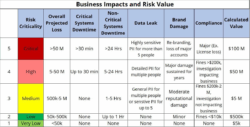
Once threats and vulnerabilities are identified, the next step in a data breach risk assessment template is to analyze the risk. This involves determining the likelihood of a threat exploiting a vulnerability and the potential impact if it does. This analysis often culminates in assigning a risk level, which helps in prioritizing which risks need immediate attention. You might use a qualitative scale (low, medium, high) or a more quantitative approach, depending on your organization’s risk appetite and resources.
Developing a clear risk matrix is invaluable here, plotting likelihood against impact to visually represent your risk landscape. This allows for a quick understanding of your most critical risks. After assessing the risks, you must then consider appropriate risk treatment strategies. These strategies might involve mitigating the risk through new controls, accepting the risk if the cost of mitigation outweighs the benefit, transferring the risk (e.g., through cyber insurance), or avoiding the risk by changing processes or discontinuing certain activities. Evaluating the effectiveness of existing controls is also a crucial part of this step, ensuring they are adequately reducing identified risks.
Implementing and Maintaining Your Data Breach Risk Assessment Template
Having a thoroughly completed data breach risk assessment template is an excellent start, but its true value comes from its implementation and continuous maintenance. This isn’t a one-time project; it’s an ongoing process that adapts to the evolving threat landscape and your organization’s changing operations. Treat your assessment as a living document that informs your security strategy and operational procedures, rather than a static report to be filed away.
Effective implementation means translating the findings of your assessment into actionable security controls and policies. This could involve deploying new security technologies, enhancing employee training programs, updating incident response plans, or refining data handling procedures. Each identified risk should ideally be addressed with a specific countermeasure, and the effectiveness of these countermeasures should be regularly monitored and tested to ensure they are providing the intended protection.
Regular reviews are paramount. The digital environment is dynamic, with new threats emerging constantly and your own systems and data practices evolving. A periodic re-assessment, perhaps annually or whenever significant changes occur (like new system deployments, mergers, or shifts in regulatory requirements), ensures your data breach risk assessment template remains relevant and effective. This proactive approach helps your organization stay one step ahead of potential attackers and adapt to new challenges.
Furthermore, integrating the insights from your assessment into your broader organizational culture is vital. Data security is not solely the responsibility of the IT department; it’s a collective effort. Educating all employees about their role in protecting sensitive information, promoting a culture of vigilance, and encouraging adherence to security best practices derived from your risk assessment can significantly reduce the likelihood of human error leading to a breach. Consistent communication about the importance of data protection reinforces these efforts.
Embracing a proactive stance on data security is no longer optional; it’s a fundamental business requirement. By systematically analyzing your potential vulnerabilities and understanding the landscape of threats, organizations can build a resilient defense. This structured approach not only helps in preventing security incidents but also ensures a swifter, more organized response should a breach unfortunately occur, minimizing its impact and facilitating recovery.
The continuous cycle of identification, assessment, mitigation, and review ensures that your organization remains prepared for the ever-evolving challenges of digital security. It’s about cultivating an environment where data protection is ingrained in every process and decision, safeguarding your most valuable assets and preserving the trust of your customers and stakeholders in the long run.