Navigating the intricate world of medical device manufacturing and regulatory compliance can feel like a labyrinth. Every single product that leaves your facility needs a comprehensive story, a complete biography of its journey from raw material to finished good. This essential narrative is captured within what’s known as a Device History Record, or DHR. For many companies, the most effective way to manage this critical documentation is by utilizing a well-designed device history record template. It’s not just about ticking boxes; it’s about ensuring patient safety, product quality, and regulatory adherence.

A DHR isn’t just a simple log; it’s a living document that aggregates all the crucial information related to the production of a specific batch or unit of a medical device. From the initial component reception to the final inspection and release, every step, every test result, and every material lot number must be meticulously recorded. This level of detail can be daunting, especially for operations handling a high volume of diverse products.
The challenge lies in maintaining consistency and completeness across all records, ensuring no vital piece of information is overlooked. Without a standardized approach, you risk inconsistencies that could lead to compliance issues, product recalls, or even jeopardize patient safety. This is where a robust and thoughtfully constructed template becomes an invaluable asset, streamlining the documentation process and providing a clear, uniform framework for everyone involved.
Understanding the Device History Record and Its Importance
At its core, a Device History Record (DHR) serves as an exhaustive compilation of all production activities and events related to a specific medical device lot or unit. Think of it as the ultimate production dossier, tracing every step taken from the moment components are sourced until the device is packaged and ready for distribution. It’s the documented proof that a device was manufactured in accordance with its Device Master Record (DMR) and all applicable regulatory requirements. Without this detailed evidence, demonstrating compliance and quality would be nearly impossible.
The significance of a DHR extends far beyond mere record-keeping. It’s a cornerstone of quality assurance in the highly regulated medical device industry. Regulators, such as the U.S. Food and Drug Administration (FDA) and international bodies, mandate these records to ensure traceability and accountability. For instance, FDA’s 21 CFR Part 820 Quality System Regulation explicitly requires manufacturers to maintain DHRs. Similarly, ISO 13485, the international standard for medical device quality management systems, also emphasizes the need for comprehensive DHRs. These records provide the necessary evidence during audits and inspections, proving that your manufacturing processes consistently produce safe and effective devices.
Beyond regulatory compliance, DHRs are indispensable for product investigation and continuous improvement. Should a quality issue or a recall arise, the DHR allows manufacturers to quickly identify the affected batch, understand the specific manufacturing conditions, and trace components or processes that might be contributing factors. This rapid diagnostic capability is crucial for mitigating risks, protecting patients, and minimizing economic impact. It enables pinpointing the root cause of a problem and implementing corrective and preventive actions (CAPA) effectively.
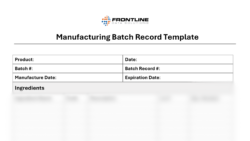
What exactly goes into a DHR? While specific content can vary depending on the device and manufacturing process, common elements include dates of manufacture, quantities manufactured, quantities released for distribution, unique device identification (UDI) if applicable, manufacturing and quality control records, acceptance records showing the device was manufactured according to the DMR, and packaging and labeling control records. Every detail, from the exact lot numbers of components used to the signature of the technician who performed a final inspection, finds its place here.
The sheer volume and complexity of information required make a standardized approach not just beneficial, but essential. A well-designed device history record template provides a structured format that guides personnel through the documentation process, ensuring all necessary data fields are completed accurately and consistently. It minimizes the risk of human error, reduces training time, and promotes uniformity across different production runs and personnel. This consistency is vital for maintaining an auditable trail and for quickly retrieving information when needed.
Ultimately, a robust DHR system, supported by an effective template, underpins the integrity of your medical devices. It’s a testament to your commitment to quality, patient safety, and regulatory excellence. It provides the confidence that every device you produce meets the highest standards and that you have the verifiable proof to back it up.
Implementing and Optimizing Your Device History Record Template
Adopting a comprehensive device history record template is a significant step towards manufacturing excellence, but its true power is unleashed through thoughtful implementation and continuous optimization. Begin by customizing a generic template to perfectly align with your specific device, processes, and internal quality system procedures. This means incorporating fields for unique identifiers, specific test parameters, and any proprietary information relevant to your product. Involve your quality, engineering, and production teams in this customization process to ensure the template is both comprehensive and practical for daily use on the shop floor.
Many organizations are transitioning from paper-based DHRs to electronic systems, and for good reason. Electronic DHR templates offer numerous advantages, including enhanced data integrity, automated data entry where possible, improved searchability, and robust version control. Moving digital can significantly reduce the potential for transcription errors, eliminate illegible handwriting, and ensure that only the most current version of the template is being used. Furthermore, electronic systems often integrate with other quality management software, creating a seamless data flow from design controls to production and post-market surveillance.
To truly optimize your DHR template, consider these practical tips. Regularly review your template for effectiveness and update it as processes change or new regulatory requirements emerge. Provide thorough training to all personnel responsible for completing and reviewing DHRs, emphasizing the importance of accuracy and completeness. Implement a robust change control system for the template itself, ensuring that any modifications are documented and approved. Finally, utilize the data collected in your DHRs for trend analysis and process improvement initiatives; these records are not just for compliance, but also for driving better quality and efficiency.
Implementing a well-structured DHR system, especially with the aid of a customized template, dramatically improves traceability and compliance within your medical device operations. It fosters a culture of accountability and precision, ensuring that every product you manufacture is backed by a complete and verifiable record of its creation. This meticulous approach not only satisfies regulatory demands but also instills greater confidence in your products, ultimately contributing to better patient outcomes. The investment in time and resources to establish and refine your DHR processes will undoubtedly yield significant returns in terms of quality, efficiency, and peace of mind.