Ensuring safety in any environment, be it a bustling office, a quiet school, or a busy construction site, begins with preparedness. One of the most critical aspects of this preparedness is having adequate first aid provisions. But how do you determine what “adequate” truly means for your specific circumstances? This isn’t a one-size-fits-all answer; it requires careful consideration and a systematic approach to identify potential risks and needs.

That’s where a comprehensive first aid needs assessment comes into play. It’s the cornerstone of any effective safety plan, helping you understand precisely what first aid equipment, personnel, and training are necessary to respond effectively to incidents. Developing a structured method for this analysis can seem daunting, but with the right tools, it becomes a straightforward and essential task for safeguarding everyone involved.
Understanding the Importance of a First Aid Needs Assessment
A first aid needs assessment is much more than a box-ticking exercise; it’s a vital process that underpins the health and safety framework of any organization. Its primary purpose is to systematically evaluate the risks and hazards present in a specific environment and determine the appropriate level of first aid provision required to manage those risks effectively. Without a thorough assessment, you could find yourself either over-prepared with unnecessary resources or, far worse, woefully under-prepared when an emergency strikes, potentially leading to more severe outcomes.
Beyond simply providing peace of mind, conducting a robust assessment often aligns with legal and regulatory obligations. Many jurisdictions require employers and organizations to assess their first aid needs to ensure they are meeting their duty of care towards employees, visitors, and customers. Failing to do so can result in penalties, not to mention the moral and ethical implications of not protecting individuals when they are most vulnerable.
The value of this assessment also lies in its ability to optimize resource allocation. By clearly identifying what is needed, organizations can avoid wasting money on superfluous equipment or training, instead directing resources to where they will have the most impact. This precision ensures that your first aid strategy is not only compliant but also cost-effective and highly responsive to actual threats. It’s about making smart, informed decisions based on a clear understanding of your environment’s unique demands.
Consider the varying contexts: a small retail shop will have vastly different first aid requirements than a large manufacturing plant dealing with heavy machinery, or a remote outdoor adventure company. Each scenario presents its own set of potential injuries, illnesses, and logistical challenges. A good first aid needs assessment delves into these specifics, guiding the decision-making process for everything from the number of trained first aiders to the contents of the first aid kits and the accessibility of medical assistance.
Key Elements to Consider
When undertaking this crucial assessment, several factors should always be at the forefront of your consideration:
- The nature of the work and specific hazards present, such as chemicals, machinery, or working at height.
- The number of employees, including shifts and peak times, as well as the presence of visitors or members of the public.
- The size and layout of the premises, including the number of floors, remote working areas, or multiple buildings.
- The history of accidents and ill-health in the workplace, which can highlight recurring risks.
- The remoteness of the site from emergency medical services and the time it would take for an ambulance to arrive.
- The presence of vulnerable individuals, such as those with known health conditions or disabilities, who may require specialized attention.
- Availability of first aid personnel, their training levels, and how they are distributed across the site.
By thoughtfully addressing these elements, you lay the groundwork for a first aid provision that is genuinely fit for purpose, ready to provide immediate and appropriate care.
Creating Your Own Effective First Aid Needs Assessment Template
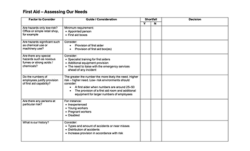
Developing a structured framework, or a first aid needs assessment template, is key to conducting this essential safety exercise consistently and thoroughly. A well-designed template ensures that no critical aspects are overlooked, providing a clear and organized method for documenting your findings and subsequent actions. It acts as a systematic guide, prompting you to consider all relevant variables and making the entire process more manageable and repeatable over time.
Your template should begin with basic administrative details, such as the date of the assessment, the name of the assessor, and the specific area or department being evaluated. This creates a clear record and helps with future reviews and updates. Following this, sections dedicated to identifying workplace hazards and the types of injuries or illnesses that could reasonably occur are crucial. This might involve looking at past accident reports, industry-specific risks, or even just a walk-through of the premises to spot potential dangers.
A significant portion of your template should focus on the human element. How many people are typically on site, including employees, contractors, and visitors? Are there any specific demographic considerations, like a higher proportion of elderly individuals or those with pre-existing medical conditions? Understanding your population helps determine the required number of first aiders and the types of medical support equipment you might need, like defibrillators for larger groups or sites with heart health risks.
Furthermore, an effective template will guide you in documenting your existing first aid provisions. This includes listing the number of trained first aiders, their qualifications, when their training expires, and their availability during all operating hours. It should also detail the location and contents of first aid kits, emergency contact information, and procedures for summoning external emergency services. The goal is to paint a complete picture of your current state and highlight any gaps that need addressing. Regularly reviewing and updating your first aid needs assessment template ensures it remains relevant and effective.
To ensure your template covers all essential ground, consider including these specific sections:
- Workplace Details: Name of organization, location, department, date of assessment, assessor’s name.
- Work Environment & Hazards: Description of the work activities, identified specific hazards (e.g., chemicals, machinery, heat, heights), and associated potential injuries/illnesses.
- Personnel & Occupancy: Number of employees (per shift), contractors, visitors, and any specific vulnerable groups.
- Existing First Aid Provisions: Number of trained first aiders, their certification details, location of first aid kits, specific first aid equipment (e.g., AEDs, eye wash stations).
- Emergency Response Time: Distance to nearest medical facility, typical ambulance response time, internal emergency procedures.
- Recommendations & Action Plan: Identified gaps, proposed improvements, responsible person, and target completion dates.
- Review Date: Schedule for the next assessment to ensure ongoing suitability.
By meticulously working through each section of a well-designed assessment, organizations can move from guesswork to a data-driven strategy for first aid. This proactive approach not only helps meet legal obligations but, more importantly, fosters a safer environment where individuals feel protected and cared for. It empowers decision-makers to implement targeted and appropriate first aid solutions, ensuring that when an emergency arises, the response is swift, effective, and potentially life-saving.
Ultimately, investing time in a comprehensive first aid needs assessment is an investment in the well-being of everyone who steps onto your premises. It demonstrates a commitment to safety that builds trust and confidence, creating a culture where health and safety are prioritized not just as a compliance requirement, but as a fundamental value. Continual re-evaluation and adaptation of your first aid provisions based on these assessments will ensure your readiness remains robust and responsive to evolving needs.